



Malaysia GE will end up with another fractious coalition, with splintering support

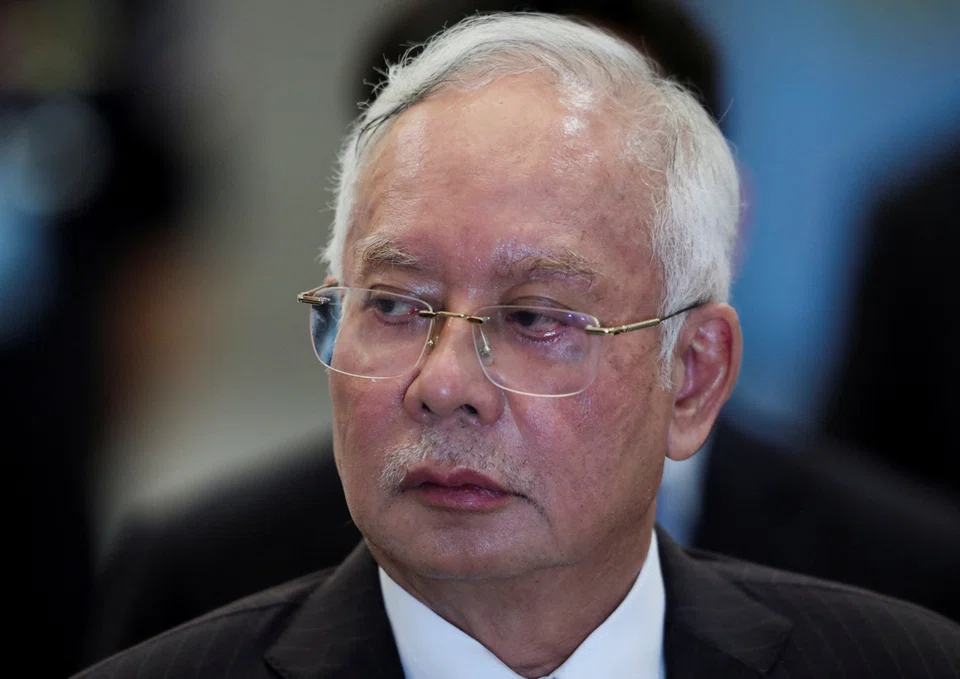
MALAYSIA’S parliament was dissolved on Monday (Oct 10), paving the way for a general election (GE) which the government hopes will end political instability, as well as help it move on from the embarrassment of one of the world’s biggest corruption scandals involving the 1Malaysia Development Berhad (1MDB) sovereign wealth fund.
But few people are optimistic that things will pan out that way. The ruling United Malays National Organisation (Umno) had rushed to hold polls that had only been due by September 2023 as some of its leaders – including former prime minister and ex-1MDB chairman Najib Razak and party president Ahmad Zahid Hamidi – face long jail terms over graft charges.
The GE – which must be held within 60 days from the dissolution of parliament, but is widely expected to take place in November – is unusual in many ways. Quite a number of states will not be conducting state elections, making the GE not so general, said Tan Teng Boo, the managing director of Capital Dynamics.
There is also the possibility of the GE timing coinciding with Malaysia’s year-end monsoon season. Major flooding will affect voter turnout, and that will produce different election results. The Election Commission will meet on Thursday (Oct 20) to decide on polling dates. Local media reports suggest that it is likely to be held in early to mid-November to avoid the wet season.
The coming GE will include new voters from the 18 to 21 age group, which would see the total number of voters rising to 21 million compared to 15 million in 2018, when the opposition ousted Umno which had held onto power for more than six decades.
According to data from UOB, this new group comprises 1.14 million voters (or 5.4 per cent) aged between 18 and 20 years, while the remaining 19.97 million voters (or 94.6 per cent) are aged above 21 years. This is the first time that voters in this age group will be eligible to vote, following an amendment to the Federal Constitution to lower the minimum voting age to 18. More than 190 of the 222 parliamentary areas nationwide would each see an increase in new voters.
What will not change is Malaysia’s crowded political landscape, with 19 political parties split largely between four alliances. The real fight will be between the two main coalitions: the Umno-led Barisan Nasional (BN), which is part of the current ruling coalition, and the opposition Pakatan Harapan. Sarawak will be the kingmaker. But no single person or party will be able to command even a simple majority, let alone two-thirds.
The winner has to work with many parties and factions. Malaysia will most likely end up with a situation similar to the last few years, where no one person has been able to call the shots. It will be a case of “too many cooks spoil the broth”, Tan said. One can only expect lots of horse-trading after the polls, with political and policy stability still uncertain post-GE.
In a global environment where there are intensifying headwinds, Malaysia needs a strong team to help it navigate the turmoil. The US dollar is trading at a 20-year high against major currencies and economists are predicting a serious recession in the US next year, and the Ukrainian crisis is escalating. Problems facing Malaysia are deep-seated and structural in nature. The immediate challenge is to have a strong central government that is able to implement appropriate long-term socio-economic policies. In the longer term, as a developing economy, Malaysia needs to stay competitive.
Then, together with strong and effective political leadership, Malaysia will be able to overcome the middle income trap. This will not be easy, as it requires substantial improvement in the quality of its workforce and education system. But with no clear mandate, the coming GE may not produce a strong government that can do its job. Instead, as Tan noted, it will probably be a case where “different people sleep on the same bed, but have different dreams”.
TRENDING NOW

Once staunchly pro-China, Malaysian Chinese businesses are now distancing themselves from Beijing

Cliff Tan has 7 million followers and a 4-month waitlist. Why won’t he expand his business?

Could stablecoins be the future of money?

Grab CEO’s wife Chloe Tong on life with Anthony Tan and finding her purpose

