Moody’s warning puts Indonesia’s policy choices under scrutiny
Analysts expect the lower rating outlook could drag the rupiah down and spur foreign outflows from sovereign debt
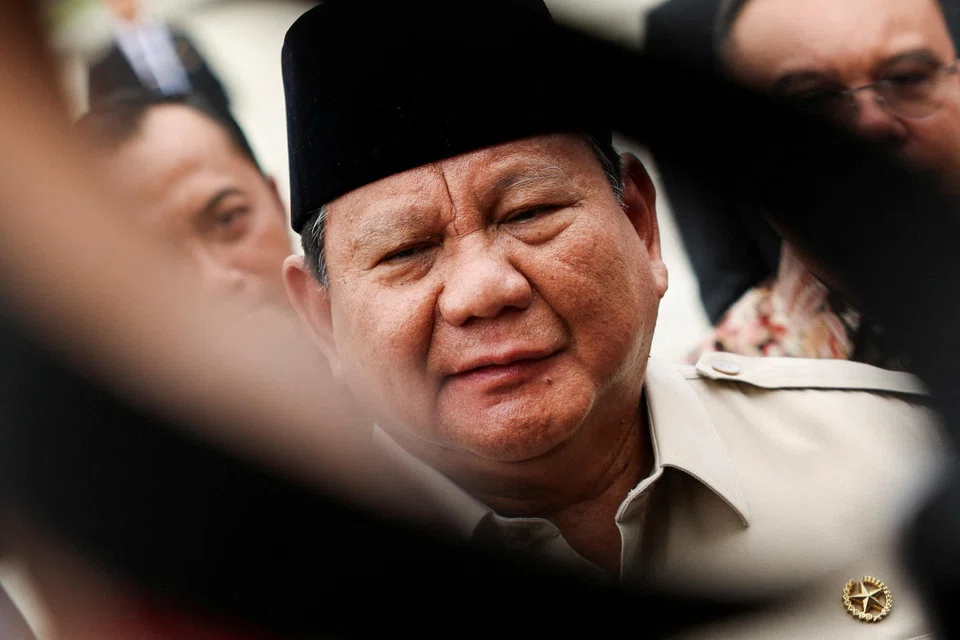
[JAKARTA] Moody’s Ratings lowered Indonesia’s credit outlook to negative, adding to growing warnings about policy uncertainty and weakening governance under President Prabowo Subianto’s administration.
The Baa2 rating outlook was cut on Thursday (Feb 5) from stable on concerns that policy has become more unpredictable and less cohesive under the roughly 15-month-old administration, Moody’s said. If sustained, it could weaken institutions and undermine the nation’s fiscal and economic strength, Moody’s said.
Indonesia could be downgraded if there is a sustained increase in the budget deficit, prolonged currency depreciation or capital flows that erode the country’s external profile, or a material weakening among state-owned firms.
A US-listed index fund tracking the MSCI Indonesia Index slumped 1.6 per cent on Thursday, underperforming US peers. Rupiah forwards weakened in offshore trading.
“The Moody’s outlook downgrade is a warning shot, which could trigger other ratings agencies to follow suit, particularly if the nature of policymaking remains subject to a heightened degree of uncertainty,” OCBC economist Lavanya Venkateswaran said.
It’s the latest in a flurry of bad news over the last two weeks that has rattled policymakers and investors anew in South-east Asia’s largest economy. It also quickly overshadowed news that Indonesia’s economic growth beat forecasts in the fourth quarter.
The Moody’s warning highlights the challenges facing the Prabowo administration as it tries to restore market confidence and avert another sell-off in Indonesian assets. The benchmark stock index suffered its worst two-day rout since 1998 last week after index compiler MSCI warned that the emerging market (EM) could be downgraded to frontier status because of a lack of liquidity and transparency in the stock market.
“Given the rapid way in which things appear to be deteriorating, we are probably not especially far from that downgrade coming down the track,” said Michael Brown, strategist at Pepperstone Group. “It’s definitely another reminder of the litany of downside risks facing Indonesian assets, and crystallises concerns that were lingering already.”
Policymakers promptly responded on Thursday.



Bank Indonesia governor Perry Warjiyo said that the outlook downgrade “does not reflect any weakening in Indonesia’s economic fundamentals”. The Finance Ministry pledged to continue to transform the economy and revive growth engines while ensuring that “every potential risk will be properly managed”.
Both authorities also committed to maintaining stability in prices, the rupiah and the financial system.
Moody’s cited poor communication by the government in its statement, which came just days after Finance Minister Purbaya Yudhi Sadewa gave a lengthy interview before investors in which he dismissed concerns about the country’s direction and ridiculed one critic’s academic qualifications.
The outlook downgrade was driven by “lower predictability in policymaking” and less effective communication, which risks undermining policy effectiveness and points to weakening governance, Moody’s said.
“If sustained, the trend could erode Indonesia’s long established policy credibility, which has supported solid economic growth and macroeconomic, fiscal and financial stability,” it said.
Analysts expect the lower rating outlook could drag the rupiah down to 17,000 per US dollar and spur foreign outflows from sovereign debt.
“This is pretty bad news,” said Lionel Priyadi, a macro strategist at Mega Capital in Jakarta. “Rupiah is at risk of hitting 17,000 per US dollar.”
Abrdn Investments, however, said that it is not overly concerned by Moody’s outlook cut, noting Indonesia would remain investment grade even if downgraded.
While expansionary fiscal policy bears watching, deficits and debt levels remain low by emerging-market standards, said the firm’s head of EM sovereign debt, Edwin Gutierrez.
The outlook downgrade is another blow to Prabowo, whose reign has been tumultuous, unsettling businesses and markets. His administration has seized mines and plantations, arrested professionals who worked for the government on corruption charges, restructured the nation’s powerful state-owned enterprises and rolled out costly social welfare programmes.
The president also sacked his respected former finance minister and cracked down on the country’s tycoons.
Moody’s flagged rising fiscal risks and pressure on the government to raise its budget deficit ceiling of 3 per cent of gross domestic product. The ratings company said the push to expand social programmes, including free school meals and affordable housing, could strain budget flexibility over time, especially if the increase in spending outpaces the government’s ability to raise revenues.
Lawmakers have also debated possible changes to Bank Indonesia’s mandate, while Prabowo recently appointed a family member as a deputy governor at the central bank, raising concerns about policy independence at the institution.
“Sentiment will likely remain volatile in the near-term,” said OCBC’s Venkateswaran. Investors will be watching responses from the authorities closely and “credible policy choices are needed to avert a full credit downgrade in the next 12 to 18 months”, she said. BLOOMBERG
Decoding Asia newsletter: your guide to navigating Asia in a new global order. Sign up here to get Decoding Asia newsletter. Delivered to your inbox. Free.
Share with us your feedback on BT's products and services