Moves to revive Johor’s Forest City hold promise but success hinges on SEZ and robust ecosystem
The real test for the project lies beyond tax incentives – it must attract top talent and build essential infrastructure to secure significant investment and become a competitive financial hub

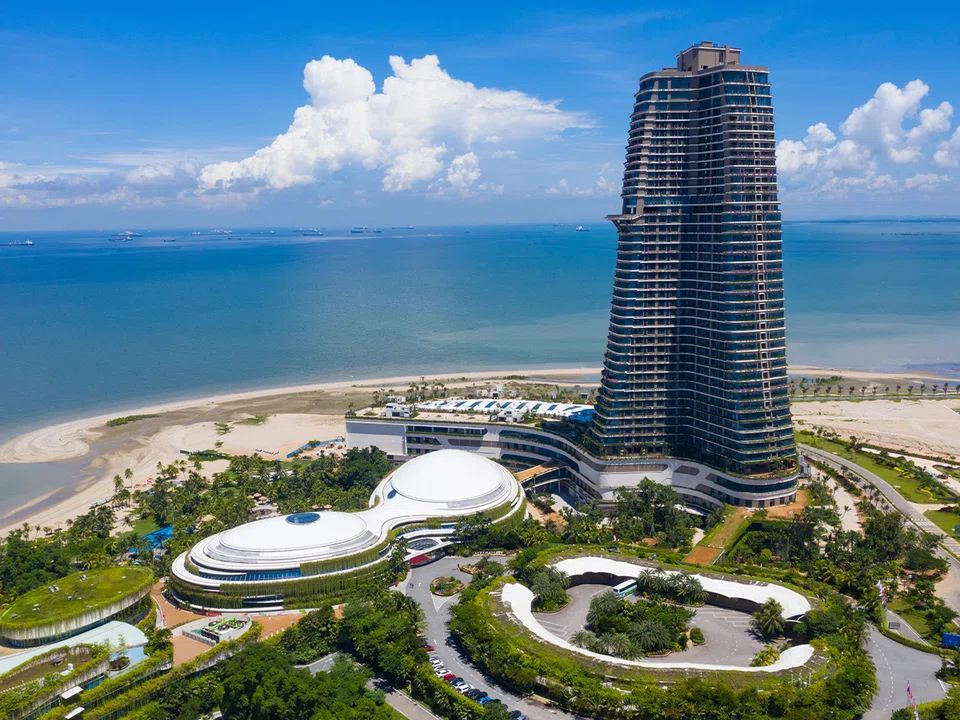
[KUALA LUMPUR] The centerpiece of Malaysia’s recently-unveiled new initiative to revive the struggling Forest City project in its southern state of Johor is a zero tax rate for family offices, set to take effect in the first quarter of 2025.
Observers believe this measure will make Forest City an attractive destination for managing family wealth, particularly as the number of family offices in Asia grows with rising affluence across the region.
Announced by Malaysian Finance Minister II Amir Hamzah Azizan on Friday (Sep 20), the initiative is part of a broader effort to reposition Forest City – a multi-billion dollar mixed-use project – as a special financial zone (SFZ). The goal is to transform the project from its current state into a financial powerhouse by offering a slew of incentives targeting high-net-worth individuals and institutional investors.
In addition to the zero tax rate for family offices, the SFZ will offer tax breaks and strategic incentives to attract both investors and companies. This ambitious plan aims to leverage Malaysia’s proximity to key financial hubs such as Singapore, positioning Forest City as a regional centre for wealth management and financial services
As Malaysia competes to woo capital and talent, the government is banking on these policies to inject new life into the once-faltering project and elevate it as a key player in Asia’s financial landscape.
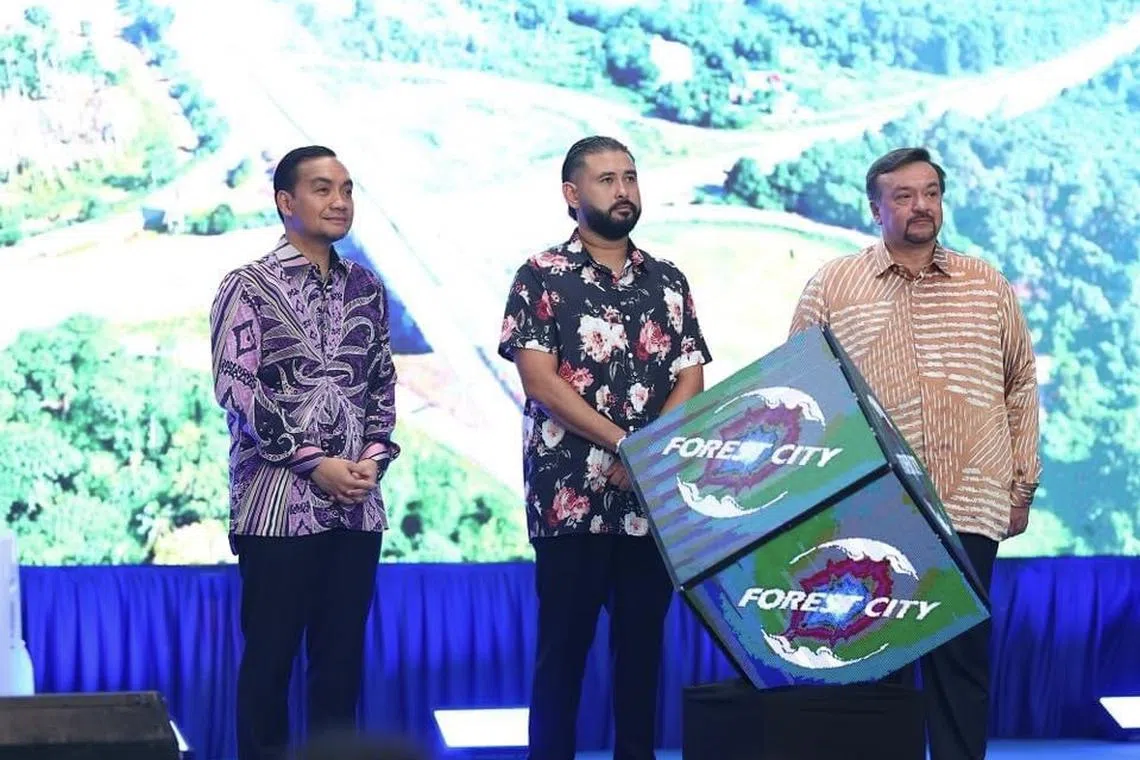
Amir Hamzah noted that the number of single family offices worldwide, currently estimated at 8,030, is expected to grow by 75 per cent to over 10,720 by 2030, with assets under management rising from US$3.1 trillion to US$5.4 trillion. He emphasised that the establishment of family offices will expand the investor base, channelling private capital into high-growth, high-value sectors.
The SFZ will offer corporate tax rates of zero to 5 per cent, along with a special 15 per cent individual income tax rate for knowledge workers and Malaysians employed in Forest City, incentivising businesses and fostering local expertise.
Fintech and foreign payment system operators will enjoy a reduced 5 per cent tax rate, aimed at spurring investment and innovation as the region grows into a fintech hub.
Family offices – region’s sweet spot
Alvin Lee, country CEO of Maybank Singapore, said that with the rising number of family offices across Asia, Forest City is now in a strong position to become one of the top destinations for high-net-worth individuals and institutional investors.
“Forest City’s designation as a SFZ offers an alternative to established hubs such as Singapore, Hong Kong and Dubai, and is expected to attract capital inflows that will benefit regional financial institutions through wealth management and advisory services for family offices,” he told The Business Times.
While the new incentives are promising, challenges remain. Loong Kok Wen, deputy director at RHB Investment Bank, highlighted stiff competition from established markets such as Singapore and Hong Kong. However, she noted that affluent individuals may still be drawn to Forest City for its family office potential. Though it may take years for the ecosystem to mature, early investors could benefit from first-mover advantages.
The SFZ incentives offer financial institutions, including insurers and capital market intermediaries, deductions on relocation costs, enhanced building allowances, and withholding tax exemptions. Loong pointed out that these, along with Iskandar Malaysia’s benefits, could make Forest City a more compelling proposition for domestic and foreign investors.
Challenges remain
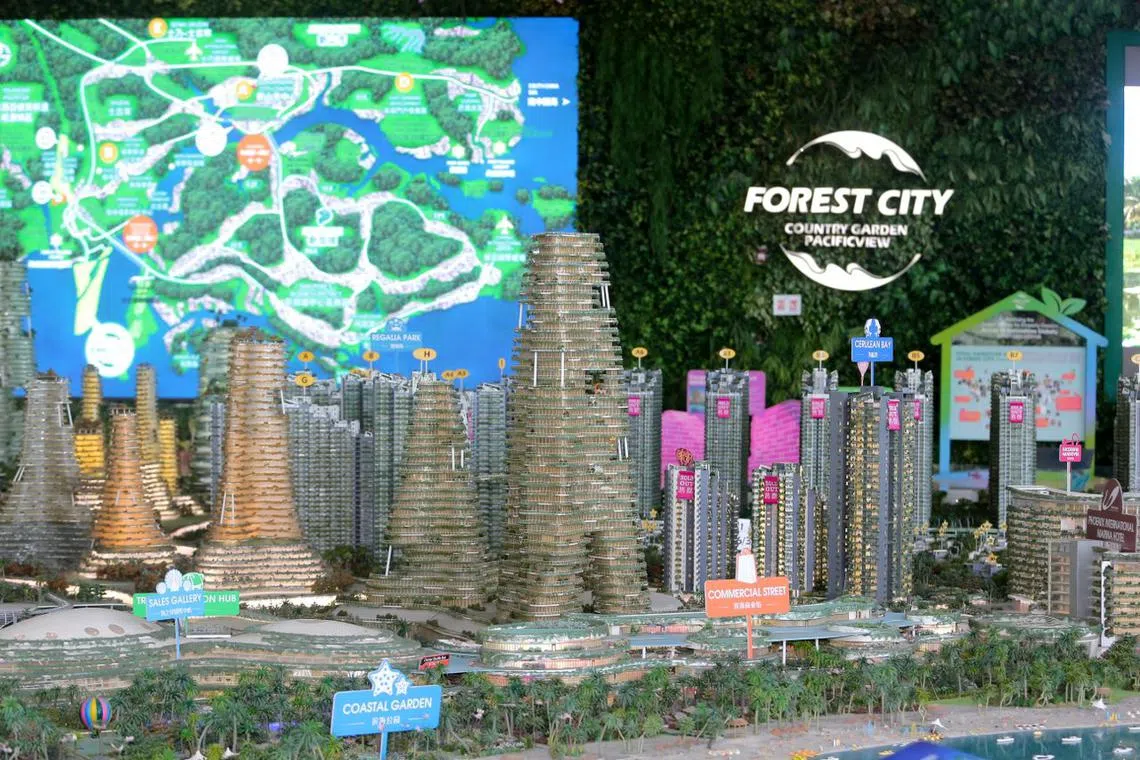
But the real test for Forest City lies beyond tax incentives – it must attract top talent and build essential infrastructure to secure significant investment and become a competitive financial hub.
Forest City is a US$100 billion development comprising four artificial islands in the Strait of Johor, designed to accommodate 700,000 residents by 2035. The project is a collaboration between China’s Country Garden Group and Esplanade Danga 88, a private firm backed by the Johor government and the Sultan of Johor.
Despite its initial hype, the project has struggled to gain traction, with only one per cent of the development currently occupied by residents and businesses.
Neoh Jia Man, portfolio manager at Tradeview Capital, stressed the need for a regulatory framework focused on favourable tax structures and minimal compliance for family offices, while prioritising attracting top talent to ensure long-term sustainability over just luring financial firms.
Lee Heng Guie, executive director of the Socio-economic Research Centre, emphasised that tax breaks alone will not attract family offices, which prefer cities with developed infrastructure and services. He likened it to a “chicken-and-egg” dilemma, warning that while the zero tax rate is appealing, it will not lure top-tier investors without substantial infrastructure improvements.
The SFZ-SEZ factor
Excitement is building around the integration of Forest City’s SFZ with the upcoming Johor-Singapore Special Economic Zone (JS-SEZ), a move expected to transform the region into a powerhouse for cross-border banking and fintech innovation.
Maybank’s Lee believes that these zones will complement each other, positioning Forest City as a strong alternative to established financial hubs. He added that this would greatly enhance the region’s investor appeal.
RHB’s Loong shares this optimism, noting that the JS-SEZ, slated for unveiling by end-2024, will play a pivotal role in Forest City’s future given the synergies. With sector-driven incentives spanning 16 key industries from electronics, medical and aviation to manufacturing, the JS-SEZ is set to stimulate economic growth in southern Johor.
A bright future?
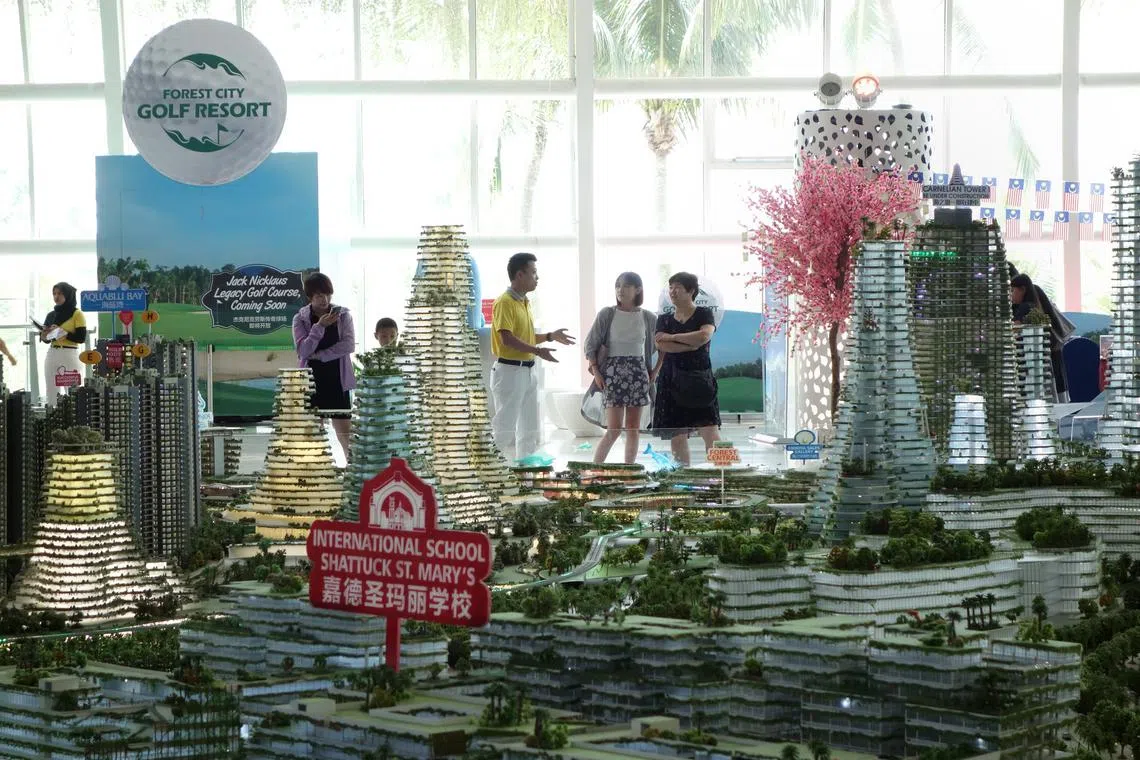
While Forest City SFZ is still in its early stages, the Malaysian government’s latest incentives are a clear step towards revitalising the area and positioning it as a competitive financial hub. For now, the incentives provide a strong foundation, and early investors could well reap significant rewards in the years to come.
However, its success will ultimately hinge on the JS-SEZ rollout and the creation of a robust ecosystem capable of driving sustainable, long-term growth. Without these crucial elements, the project risks falling short of its potential.