Asean Business logo
SPONSORED BYUOB logo

With a new PM in charge, Thailand’s economy shuffles forward amid political calm

Reviving the economy to achieve double-digit growth of the 1980s, or the 5.4% average under Thaksin Shinawatra – the father of current leader Paetongtarn – in the early 2000s will be a tough challenge
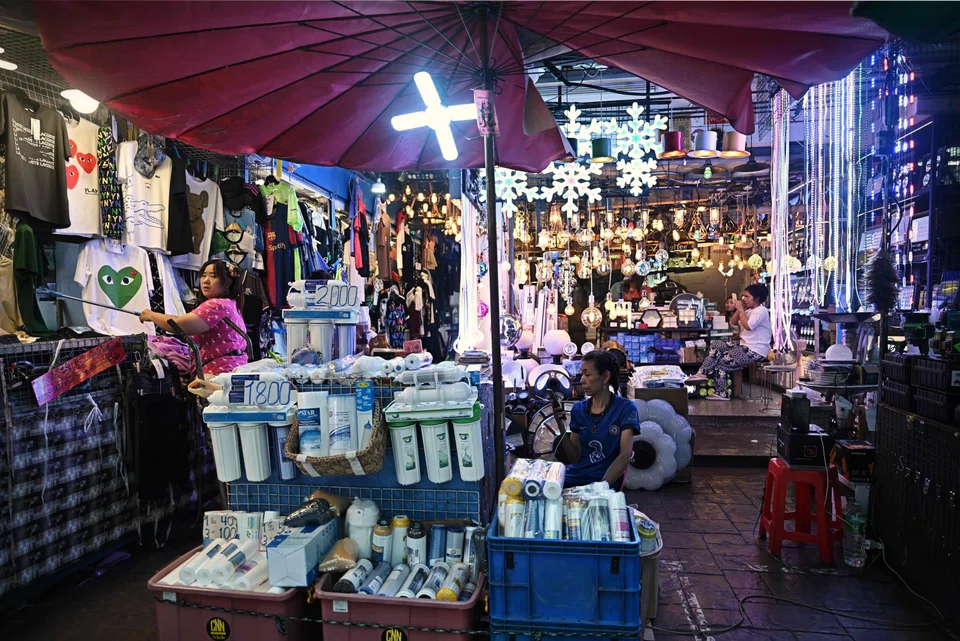
    • Thailand's new government is expected to bolster tourism and attract more foreign direct investment, both of which are key drivers of the economy.
    • Thailand's new government is expected to bolster tourism and attract more foreign direct investment, both of which are key drivers of the economy. PHOTO: AFP
    Published Fri, Sep 13, 2024 · 05:00 AM

    [BANGKOK] August was certainly an exciting month for Thai politics.

    The Constitutional Court dissolved the Move Forward Party on Aug 7, over allegations that its proposal to amend laws concerning defamation of the monarchy was seen as a threat to the constitutional monarchy, thus violating the constitution.

    Shortly thereafter, the same court dismissed Srettha Thavisin as prime minister, for having “grossly” violated ethics by appointing a minister with a criminal record to his Cabinet.

    But as the judicial system replaces the military as the chief force in deciding the fates of governments, Thai politicians have become more adept at reinventing themselves.

    Move Forward quickly rebranded itself as the People’s Party, retaining its position as the chief opposition with the same number of elected members of parliament.

    Meanwhile, the ruling Pheu Thai Party swiftly appointed Paetongtarn Shinawatra, the daughter of former premier Thaksin Shinawatra, as the new prime minister on Aug 16.

    A new coalition government and Cabinet were promptly assembled for royal endorsement by Sep 5.

    Despite the controversial court rulings, no street protests occurred, and the new Cabinet appears ready to tackle the challenges facing the second-largest economy in South-east Asia.

    New Thai Prime Minister Paetongtarn Shinawatra faces the challenge of reviving the economy to the level of growth achieved under her father Thaksin Shinawatra in the early 2000s. PHOTO: AFP

    Under the leadership of the 38-year-old Paetongtarn, who has the guidance of her father and de facto leader of the ruling party, the government is set to move forward.

    But reviving the Thai economy to the booming double-digit growth of the late 80s and early 90s, or even the solid 5.4 per cent average seen during Thaksin’s first administration (from 2001 to 2006), will be no easy feat.

    What not to expect

    Thailand’s gross domestic product is expected to grow about 2.5 to 3 per cent this year, fuelled by a recovery in tourism, modest export growth and increased foreign direct investment (FDI) inflows – better than the 1.8 per cent growth in 2023, but below the South-east Asian average.

    The economy faces long-term challenges, including a rapidly ageing population (with 20 per cent of its population above the age of 60), rising wages, high household debt (90 per cent of GDP) and declining competitiveness, which is blamed in part on the growing dominance of Thailand’s leading conglomerates.

    Not many expect a Pheu Thai-led government to tackle the conglomerates and create a more level playing field for small and medium-sized enterprises and foreign investors.

    Kirida Bhaopichitr, the research director of think tank Thailand Development Research Institute, said: “This government is allied to the big conglomerates in Thailand, so why would these conglomerates want more competition?”

    DBS recently forecast that the Thai economy was heading for a decade of sluggish growth at 2.8 per cent per annum, compared with the 5.1 per cent average for South-east Asia, because of demographic challenges and the “overconsolidation in key sectors, including retail, telecommunications”.

    Things could change, but that could take awhile.

    Kirida said: “I think it’s reversible, meaning that we could achieve a higher long-term growth rate if there were more structural reforms in skills training, infrastructure, energy regulations, liberalising the Foreign Business Act and streamlining business regulations, so there is a level playing field for large and small companies.”

    What to expect

    The Pheu Thai-led government is expected to push forward with its “digital wallet” scheme, its flagship campaign promise from the 2023 general election, in which it finished second in the popular vote, trailing Move Forward, which ran on a strong reform platform.

    The Pheu Thai-led government is expected to push forward with its “digital wallet” scheme, its flagship campaign promise from the 2023 general election. PHOTO: EPA-EFE

    In its initial form, the digital wallet, aimed at stimulating the economy, was to contain 500 billion baht (S$19.4 billion), from which 10,000 baht will be distributed to each of the 50 million Thais above the age of 16.

    The new government is likely to pare the scheme down a bit, to prevent it from ballooning Thailand’s public debt from 66 per cent of GDP now to 69 per cent by 2026, a number that is closely watched by credit rating agencies.

    “The government’s inability to stabilise the public debt ratio could be a driver of a negative rating action,” warned Fitch Ratings.

    One can also expect the Pheu Thai government to go ahead with legalising casinos; the so-called “Entertainment Complex Bill” is currently under debate.

    Although legalised casinos – perhaps limited to five licences – would arguably draw more foreign tourists to Thailand and result in more tax revenue for the government, as Thai punters shift from illegal gambling sites to legal casinos, the social impacts have yet to be fully explored.

    The property sector is hopeful that the new administration will implement the Srettha government’s proposed reforms, extending the leasehold duration for foreign buyers of condominiums from the current 30 years to 90.

    Nicholas Vettewinkel, director of research for CBRE Thailand, said: “I think that’s the key element that would have an impact of freeing up land value, as owners who don’t want to sell (their land) might be prepared to lease it (for 90 years).”

    He added: “Clearly, that would give banks more peace of mind in terms of funding projects.”

    Most also expect the new government to continue to support tourism and promote more FDI, which remain the two bright spots for the economy.

    Thailand is expecting to attract at least 36 million foreign tourists this year, generating 1.8 trillion baht in revenue. While this is still below the record 40 million arrivals pre-Covid in 2019, which brought in two trillion baht (about 12 per cent of GDP), it is still a significant rebound from the 28 million tourists who visited in 2023.

    This uptick signals a strong recovery for the tourism sector, which remains a vital pillar of Thailand’s economy.