No light at end of tunnel for Indonesia’s IPO market after dismal H1
Global economic uncertainty, high interest rates, and cautious investor sentiment following February’s presidential elections weigh heavily on the stock market

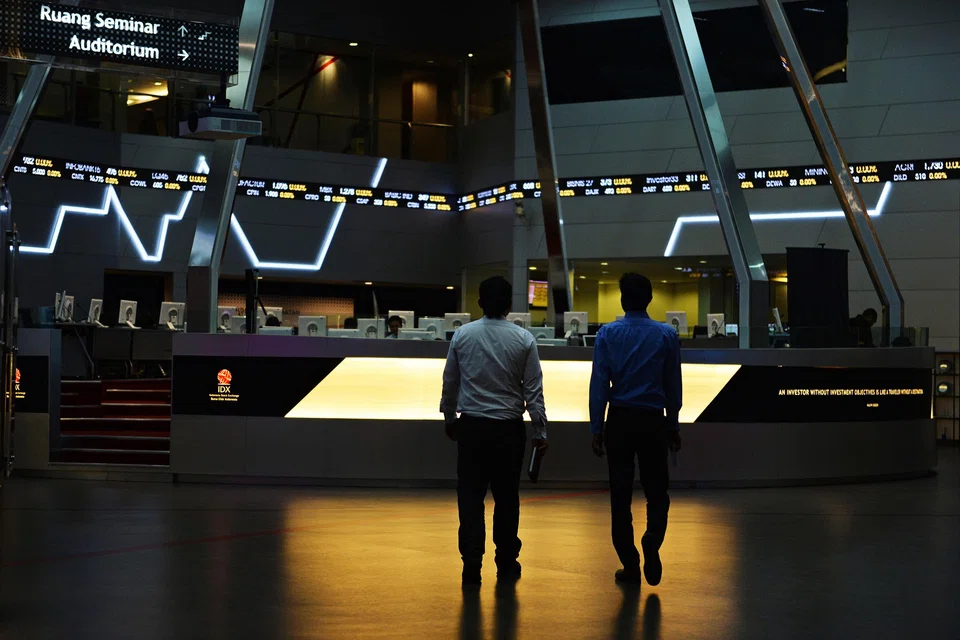
[JAKARTA] Indonesia – last year’s global leader in initial public offerings (IPOs) – is bracing for a sharp drop in both the number and value of IPOs for the remainder of 2024 due to global economic uncertainty and high interest rates, according to Schroders Indonesia.
Uncertainty over upcoming policies in the wake of the country’s presidential elections in February is also causing investors to tread cautiously, said Irwanti, chief investment officer of Schroders Indonesia at a press briefing on Monday (Jul 8) on the market outlook for South-east Asia’s largest economy.
“This year’s IPO market is estimated to be smaller in terms of liquidity and size compared to last year. It’s quite challenging given that investors are now seeking IPOs with larger sizes and substantial free float liquidity,” she said.
Indonesia’s equity market saw a significant slump in the first half of 2024 as investors and potential IPO participants took a cautious stance following the presidential elections, anticipating new policies.
Additionally, the Bank of Indonesia in April raised the interest rate to bolster the weakening rupiah.
Unlike last year’s flurry of blockbuster IPOs, H1 of this year saw new listings in the country nearly halved, plunging by over 43 per cent to 25 from 44 year on year, according to recent data by the Indonesia Stock Exchange (IDX).
The decline is steeper than the overall performance of the South-east Asian region, which saw a 21 per cent drop in new listings, falling to 67 from 85 in the first half of last year, according to Deloitte’s recently released mid-year IPO snapshot for the region.
With fewer listings, the Indonesia market capitalisation tumbled 92 per cent to US$1.2 billion from January to June, while IPO proceeds dropped by 89.1 per cent to US$240 million compared to the previous year.
The last IPO to raise over US$500 million was by mining and renewable energy company Amman Mineral Internasional, which garnered around US$700 million in proceeds in July last year.
For 2024, IDX has forecast 60 to 65 stock offerings.
On the back of global macroeconomic uncertainty and high interest rates, Liny Halim, head of research at Schroders Indonesia, highlighted that concerns about future government policies are causing investors to hold back from raising funds in the public market.
She noted that there is anticipation of a potential interest rate reduction that could stimulate listings in the consumer sector, supported by incoming president Prabowo Subianto’s plans to boost economic growth through sectors related to consumption.
“Market eagerly anticipates the lineup of the upcoming government cabinet. If the government can implement policies that improve consumption, this will be a positive sentiment for the market,” Halim said.
Indonesia’s consumer sector has led in terms of the number of IPO deals, with 70 listings over the last three years. She noted that this trend highlights the resilient purchasing power of the country’s middle class.
Schroders Indonesia also pointed out an increasing interest in stocks from sustainability-focused businesses, which is in line with the country’s efforts towards energy transition.
Irwanti further stated that Indonesia’s market outlook for the latter half of 2024 and beyond remains cautiously optimistic, with expectations of growth and improvement in market conditions.
Indonesia is currently the worst-performing market in the region, with the MSCI index falling 10.5 per cent in the second quarter of this year. The decline is attributed to the weakening of both mid-cap and large-cap stocks across various sectors, including banking, energy, manufacturing and telecommunications.
For instance, state-owned lender Bank Rakyat Indonesia, with a market capitalisation of 693 trillion rupiah (S$57.4 billion), saw a 16 per cent decline due to rising concerns over non-performing loans in its micro segments.
Astra International, Indonesia’s largest automotive firm, experienced a 19 per cent drop in valuation following a sluggish automotive sales performance.