No longer just a beach town, Vietnam’s Da Nang gaining reputation as a ‘startup hub by the sea’
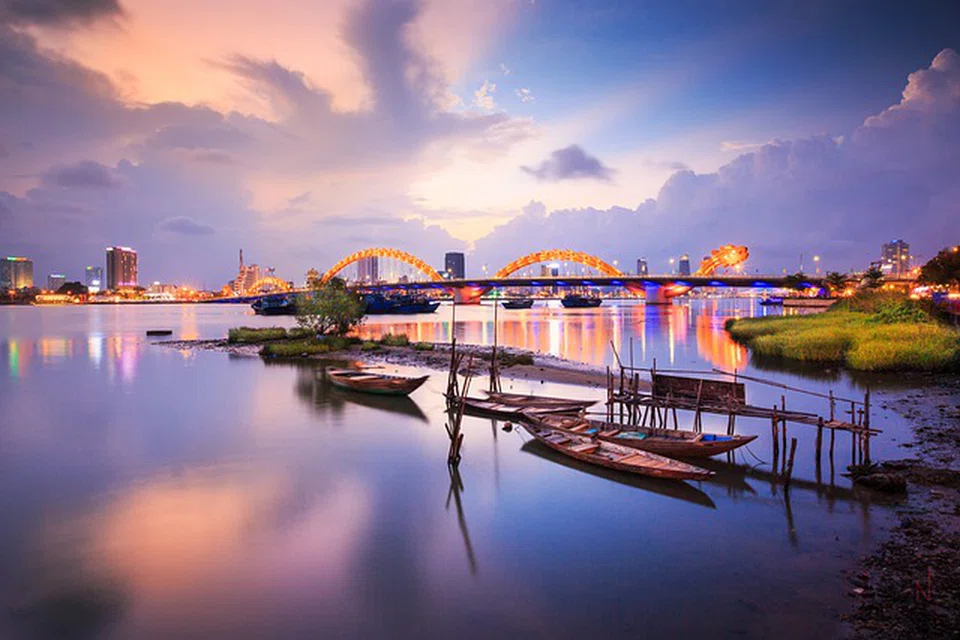
[HO CHI MINH CITY] Known more for its sandy beaches and luxury resorts, the Vietnamese coastal city of Da Nang has long been a favourite for tourists seeking an idyllic getaway.
These days, however, it is fast becoming a hot spot for startups and tech talent from Vietnam and elsewhere. They are drawn by the city’s lower cost of living compared to Hanoi and Ho Chi Minh City, and the promise of a more relaxed environment to work in.
Aaron Everhart, a US entrepreneur and investor who first came to Vietnam in 2005, relocated to Da Nang two years ago at the height of the Covid-19 pandemic.
The chief executive of Draper Startup House in Vietnam wants to help local startups and innovations to compete internationally and go global. He believes Da Nang can act as a springboard for them to do so.
Everhart moved to Da Nang when Draper Startup House acquired his entrepreneurship programme Hatch!, a move that expanded the former’s network of global hospitality and venture-building services to Vietnam.
Draper Startup House was formerly known as Tribe Theory, a Singapore-based hostel chain. It was rebranded after prominent US venture capitalist Tim Draper invested US$3.5 million in Jan 2020.
In Everhart’s view, Da Nang – widely regarded as Vietnam’s most liveable city – has many attributes that are attractive to his clients and employees. He cited its international flight connectivity, good infrastructure and city planning, as well as beautiful beaches and international-standard resorts and hotels.
“(There are many) highly skilled technical, scientific, design and artistic talents too. Da Nang has every characteristic to be a world-class hub for culture, food and technology,” he said. “I feel that the private sector and the government (in Da Nang) are more well connected (than those in Hanoi and Ho Chi Minh City).”
Draper Startup House organises weekly social gatherings for startups in Da Nang; these sessions draw many expatriates and local innovators to network and share ideas.
The hope is that these get-togethers can help fuel the entrepreneurial spirit in the city, and open doors for people to tap the incubation, acceleration and fund-matching schemes that are run by the government and private sector.
Magnet for investment
For years, Da Nang has stated its ambition to become Vietnam’s third startup and innovation centre, in addition to the capital Hanoi and the commercial hub Ho Chi Minh City.
According to latest available data from the Ministry of Planning and Investment, Da Nang is home to nearly 900 foreign-invested projects with a total investment capital of US$5.9 billion. In 2021, the city attracted more than US$172.3 million in foreign capital.
On the bank of the Han River in Da Nang, a private-owned innovation centre is being set up for tech startups. It will have facilities such as co-working spaces, conference rooms, cafes, as well as media and entertainment service providers.
Da Nang has a total of six incubators, two creative spaces, 10 co-working spaces, 10 startup clubs built within universities and colleges, and four startup investment funds. The startups in Da Nang cover a wide range of industries, from artificial intelligence and blockchain, to electric vehicles (EVs) and biotech.
Hoang Thi Kim Dzung, the country director of Genesia Ventures Vietnam who recently visited Da Nang, said: “It has the luxury of being a sandbox – a suitable environment for startups to test and perfect their products before scaling up to other markets in Vietnam.”
She added: “Most of the foreign and local tourists who come to Da Nang are young and modern, they love travelling and want to explore new experiences. They prefer speed and convenience, and they are the ideal customers for many startups.”
Last September, on-demand delivery startup AhaMove collaborated with Vietnamese EV maker VinFast to launch delivery services using electric motorbikes in Da Nang. AhaMove chief Pham Huu Ngon said the city’s relatively small size was suitable to pilot this new business model.
While it is not surprising that the bulk of Da Nang’s workforce is in the hospitality and tourism sector, the city is also home to 44,000 IT employees – roughly a tenth of the total IT workforce in Vietnam.
They work at software solutions providers such as FPT and CMC, as well as local tech unicorns such as gaming giant VNG and mobile wallet provider MoMo.
Multinationals, including French video game publisher Ubisoft, streaming service provider Netflix, and chipmaker Synosyp, have also been active in recruiting software engineers in Da Nang in recent months.
The city’s growing appeal is convincing some Vietnamese people, especially younger citizens, to relocate there.
Bui Khanh Ly, a 24-year-old who studied in Hanoi for four years and then worked as a design team leader for a marketing agency, decided to move to Da Nang last October.
Her decision was mainly sparked by a desire to leave the hustle and bustle of the capital, which frustrated her with traffic jams, pollution and a high-pressure work environment.
She said she earns less at her current job, but she is still able to save the same amount each month because of the lower cost of living in Da Nang.
“I was so caught up in the fast-paced environment in Hanoi. These days, I can enjoy the cool breeze and seaside after work, and I have more time to read books and strengthen my expertise in the marketing field.”
TRENDING NOW
Grab CEO’s wife Chloe Tong on life with Anthony Tan and finding her purpose
US trade chief to consider trade deal tariff caps in excess capacity probe
Bee Cheng Hiang customers’ e-mail addresses exposed in Singapore’s first case of AI-related data breach
DFI Retail to take over Starbucks business in Asia from Maxim’s Caterers