No more cheap kopi: The price of Johor’s investment boom
As Malaysia’s southern state transforms into an investment powerhouse, rising rents, traffic and costs test residents’ resilience

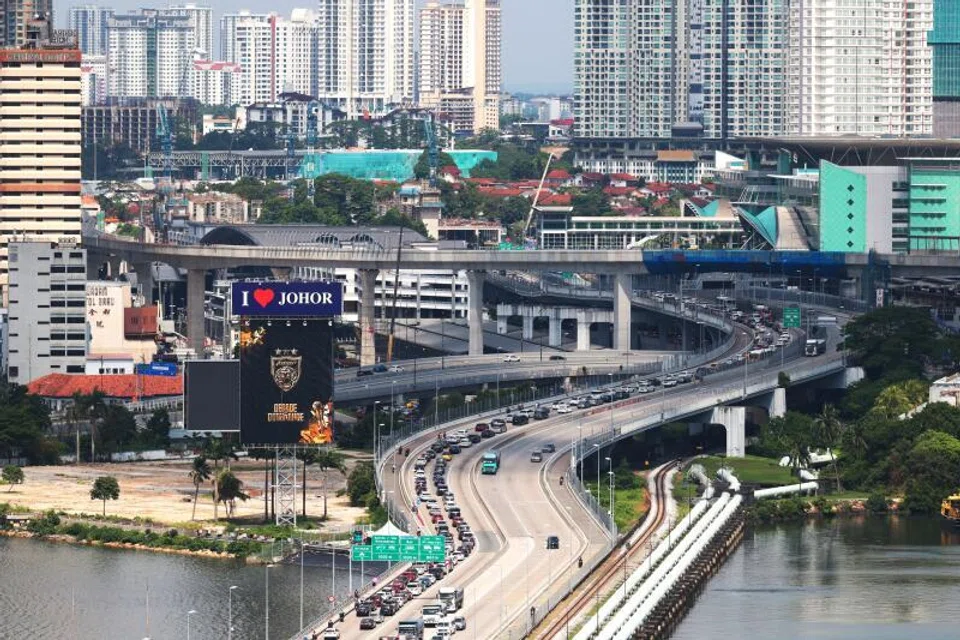
[KUALA LUMPUR] Johor’s transformation into Malaysia’s most dynamic growth corridor – powered by foreign direct investment, data centres and the Johor-Singapore Special Economic Zone (JS-SEZ) – is coming with a steep price tag.
As capital floods the country’s southern gateway, recalibrating the state’s economy, it is pushing rents and living costs higher for local pockets.
“It’s the price we pay for progress,” remarked Invest Johor chief executive Natazha Harris. These challenges include a higher cost of living, congestion, infrastructure strain and rising housing prices, he said.
“The first thing you notice is heavier traffic. More people are coming in. And rentals are going up,” Natazha told The Business Times, adding that the state has introduced targeted assistance to cushion the impact.
Malaysia’s southern gateway Johor Bahru is attracting a surge of workers and businesses as the JS-SEZ gathers momentum. With over 300,000 people crossing the Causeway and Second Link daily, booming activity is driving up rents and living costs.
Johor led investments in Malaysia in the first nine months of 2025 with RM91.1 billion (S$29.3 billion) in approved projects. This was powered by high-value investments in manufacturing, data centres and services.
While Johor’s economic momentum is undeniable, the big question is whether affordability can keep pace.
Last September, Johor Chief Minister Onn Hafiz Ghazi announced RM209 million in aid – including cash assistance for students, gig workers and low-income earners – part of efforts to balance rapid growth with social stability.
Rental hikes
Few sectors illustrate Johor’s transformation more vividly than property.
Daniel Ma, managing director of Nawawi Tie, said when his firm began scouting for office space in Johor Bahru in 2023, prime buildings near Bukit Chagar were renting at around RM4 to RM4.20 per square foot (psf).
Today, asking rents in the same tower are between RM5.50 and RM5.80 psf.
Nearby developments tell a similar story. Newly completed commercial buildings, such as office space at Coronation Square, are commanding above RM5.50 psf – up from about RM4 just two years ago.
He pointed out that the shift is not only limited to offices, as residential property is also seeing an increasing rental trend. For instance, a two-bedroom apartment near the city centre that rented for between RM2,000 and RM2,700 a month in 2023 now fetches RM3,500 or more.
“More Malaysians working for Singapore companies are choosing to live in Johor Bahru and commute,” Ma said, referring to the upcoming Rapid Transit System (RTS) link connecting Bukit Chagar to Woodlands North.
“We expect prices to continue rising as the RTS nears completion,” he added.
A recent CBRE | WTW report echoes this sentiment, noting that slower completion rates and a “flight-to-quality” have driven average gross rents from RM4 psf in 2024 to RM4.50 in 2025.
This demand is particularly strong for Grade A, transit-linked developments, said Jonathan Lo, director of CBRE | WTW Johor Bahru, noting that tenants increasingly prefer buildings with transit connectivity and integrated amenities, reinforcing the city’s role as a vital cross-border service hub.
Rising demand for co-working space
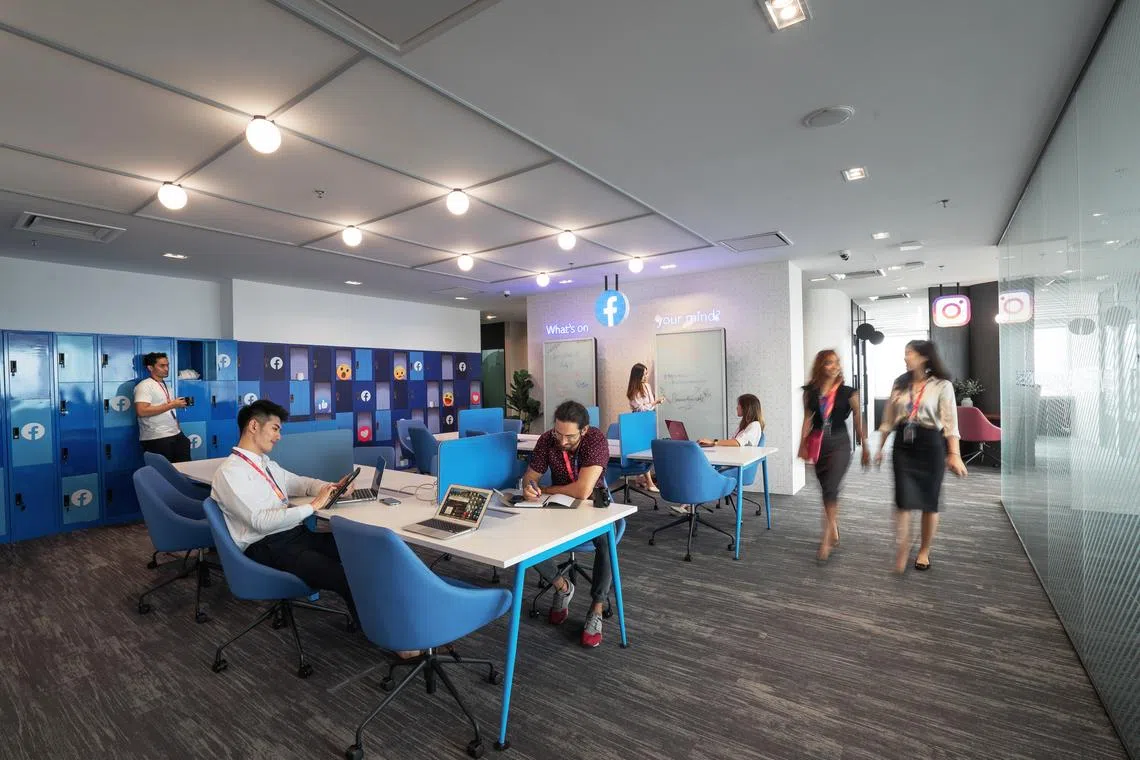
Lee Sheah Liang, founder and chief executive of Johor-based co-working space operator Infinity 8, echoed the sentiment, noting that the rental increases have become the norm.
“Rentals have surged sharply. In 2023, the lease on our facility located in one of the more mature commercial areas in JB rose 35 per cent, above the usual 10 to 15 per cent increase. We agreed to RM15,000 a month for a multi-storey building under a three-year lease ending this year,” he said.
Lee noted even more extreme cases among peers and clients, with some rental renewals in 2025 and 2026 surging by 60 to 100 per cent.
“Even less popular first or second-floor units are now fetching as much as RM6,000 a month due to intense demand,” he added.
Founded in 2017, Infinity 8 operates 14 locations across Johor Bahru, Kuala Lumpur and Penang. With nine branches in Johor Bahru alone, the firm commands a dominant 60 per cent market share in the city.
“Johor is no longer just a cheaper alternative to Kuala Lumpur; it’s evolving into a high-demand market of its own,” said Lee, noting that demand for co-working space continues to increase in recent years.
Occupancy at Infinity 8’s Johor sites exceeds 90 per cent, while a new facility near Medini Iskandar secured 40 per cent occupancy before opening in mid-March.
Lee attributes that resilience partly to the JS-SEZ, which is drawing trade missions and startups from Singapore seeking a foothold across the border.
Co-working desk rates in Johor average RM850 per person monthly, just below Kuala Lumpur’s RM1,100, but well above Penang’s RM700.
He noted that Johor’s rise, unlike Kuala Lumpur’s finance-led growth, is built on cross-border integration with Singapore – a dynamic that drives both investment and cost acceleration.
Triple squeeze on SMEs
For small and medium-sized enterprises (SMEs), rising rents are only part of the equation.
Teh Kee Sin, adviser and founding president of the SME Association of South Johor, described the current climate as a “triple threat”: climbing wages, rents and logistics costs.
Utilities, raw materials and transport costs have jumped 10 to 20 per cent since the pandemic, driven by higher energy prices, global supply chain shifts and subsidy reforms.
In mature commercial areas – such as Mount Austin, Sutera and Bukit Indah – rents are up as much as 30 per cent, with renewal hikes reaching 60 per cent in high-demand pockets.
“With the exchange rate still three-to-one, it’s very difficult for SMEs to retain local workers. Wages have to rise, which adds more pressure (for SMEs),” said Teh.
Payroll costs are becoming a heavier fixed burden, forcing smaller firms to rethink their model.
“SMEs can no longer depend on cheap labour. Many are pivoting away from low-margin operations towards value-added businesses,” he said.
Residents feel the squeeze in housing and food
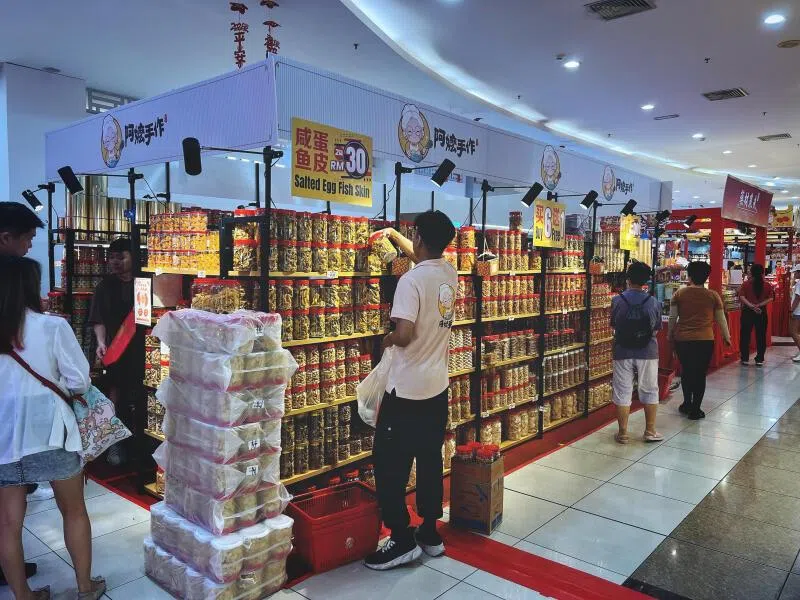
Increasing costs are being felt more in the daily life of citizens, from housing to the food on their plates.
For Johor resident Tyen Chai, the impact is most apparent in food prices. Before the pandemic, she estimated her daily meal expenses at around RM30. Today, she spends at least RM50 on lunch and dinner.
“A simple lunch like wanton mee now costs at least RM10. The price increase may only be RM2 to RM5, but you can clearly feel the difference,” she said.
Tyen, who lives in Kulai and works in Johor Bahru city centre, has adapted by cooking more at home. But she has also noticed a subtle migration pattern.
“City-centre living, particularly near the RTS and Customs complex, is becoming less affordable for young middle-income families. Many are relocating to outer townships such as Bandar Cemerlang, Kangkar Pulai and Seri Alam, trading longer commutes for lower housing costs,” she observed.
According to the Department of Statistics Malaysia, Johor’s annual inflation rate hit 2.3 per cent in December 2025 – the highest among all Malaysian states. A closer look at the Consumer Price Index basket reveals that certain food items in Johor Bahru are now more expensive than in Kuala Lumpur or Penang.
In December 2025, a standard packet of nasi lemak in the southern city averaged RM3.48 – a 2.4 per cent year-on-year increase – bringing it nearly level with Kuala Lumpur’s RM3.50 and significantly outpacing Penang Island’s RM3.
The price of a cup of kopi-o followed a steeper trajectory – surging 7 per cent annually to RM1.82, surpassing both Kuala Lumpur (RM1.75) and Penang (RM1.55).
Competing for talent
The competition for talent has intensified as well. “In Johor Bahru, we don’t just compete with companies next door; we compete with the exchange rate across the Causeway,” said Joe Pua, a local business professional.
With the Singapore dollar trading more than three times the ringgit, Johor employers face constant pressure to raise wages or lose staff to cross-border offers.
While this benefits workers, it squeezes margins for firms already grappling with higher rents and utilities, he added.
Pua describes the result as a “dual economy”, where Singapore’s spending power lifts local costs far above national averages.
“The main driver of price increases isn’t global inflation. It’s rental pressure. When shop rents rise, cafes and restaurants pass those costs on to consumers,” he said.
Pua noted that Johor Bahru has reached a tipping point. Instead of struggling to match Singaporean salary levels, many businesses are pivoting towards automation and artificial intelligence (AI) to maintain their edge.
“The shift towards AI is about addressing the manpower crunch. By automating routine tasks, companies are preparing for a future with less manual reliance. If an employee exits for Singapore, the strategy isn’t necessarily to hire a replacement, but to let technology bridge the gap,” he added.