



‘Northern lights’: Vietnam’s industrial hubs shine up north amid surge in foreign investments
The country’s bustling southern economic zone remains the largest industrial zone
[HO CHI MINH CITY] Northern Vietnam is all abuzz, drawing a majority of foreign direct investment (FDI) in the manufacturing sector this year, thanks to its proximity to the capital Hanoi and the North Asian markets, improving infrastructure and industrial land availability.
The northern area is outshining the traditional hot spot of southern Vietnam; the north drew nearly 60 per cent and 40 per cent more foreign capital inflows and new projects in manufacturing, respectively, over the first nine months of the year, said a recent report.
The November report by Savills pointed out that the northern region registered US$5.3 billion of newly pledged manufacturing FDI in the year-to-September period.
This accounts for nearly 60 per cent of the January-to-September manufacturing FDI in Vietnam, which has more than 400 active or developing industrial parks.
“Over 44 per cent of new manufacturing FDI capital in the first nine months came from value-added products such as electronics and electrical equipment, which perfectly emphasises Vietnam’s move up the value chain,” said John Campbell, head of industrial services at Savills Vietnam.
He said that while the southern economic zone continues to serve as a critical manufacturing hub with access to global shipping routes, industrial land left over and available for lease is scarce.
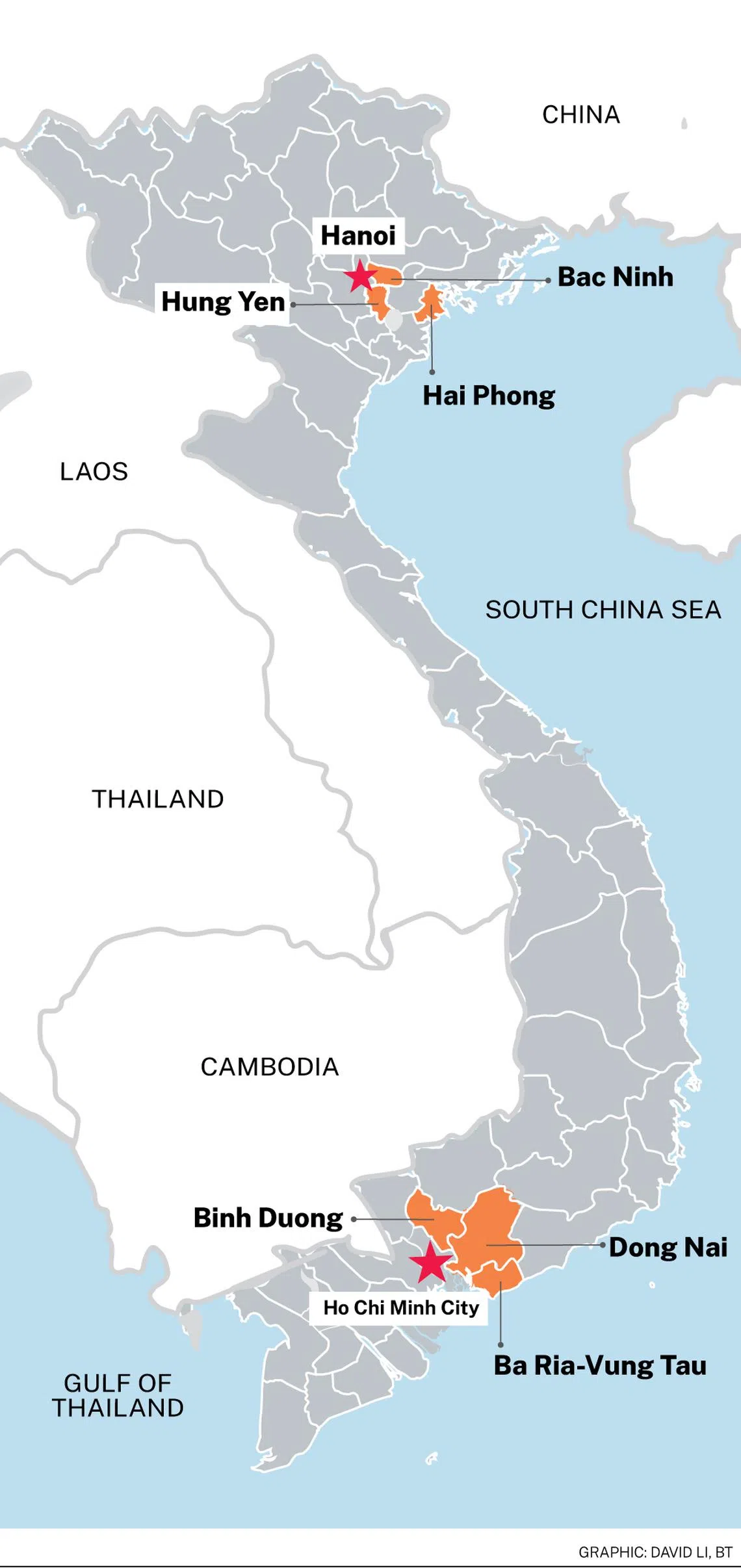
Ho Chi Minh City and neighbouring manufacturing hot spots such as Binh Duong and Dong Nai are already more than 90 per cent occupied.
Better transport infrastructure in the northern zone is fuelling a strong supply of new industrial land there, which in turn has led to softening rent. The region in fact accounts for more than 60 per cent of Vietnam’s highways, efficiently linking the northern industrial parks to Hanoi, the major seaports and the Chinese border.
Le Xuan Dong, strategy director for EY-Parthenon at EY Consulting Vietnam, said: “In the past 10 years or so, the northern region has made significant advancements in its infrastructure, allowing it to reap the fruit of that progress today.”
Besides infrastructure, Dong said that other considerations when picking a manufacturing base include the availability of talent for labour-intensive industries, proper utility services for manufacturing activities that require more energy, and provincial incentive policies.
Another factor is the presence of supply chains that are anchored to the main industries and big firms across the region, he added.
The Business Times zeroes in on Vietnam’s hottest industrial hubs – three up north and three in the south – that are thriving as big manufacturing dollars flock to these areas.
Bac Ninh: top destination
Despite being Vietnam’s smallest province by land area, Bac Ninh currently has the largest available industrial acreage, and the most ready-built factories and warehouses in the northern economic zone.
Sitting 35 km north of the capital, the province boasts easy access to Noi Bai International Airport and forms part of the economic triangle of Hanoi, the port city of Hai Phong and the border province of Quang Ninh.
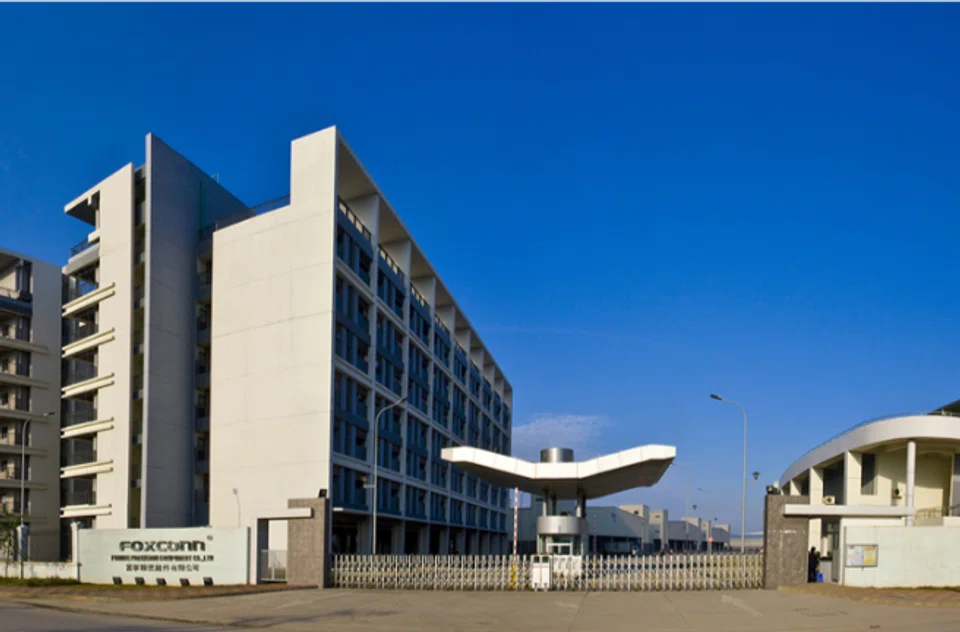
Electronics giants such as Samsung, Canon, Amkor and Foxconn have their facilities among the 10 operational industrial parks here.
Between January and September, the province became the top destination for FDI in Vietnam, amassing more than US$4.2 billion. It also drew 127 new manufacturing projects in the period, the most of any province in the country.
On the back of robust demand, rents in the province for land and pre-constructed facilities are 12 per cent and 8 per cent higher, respectively, than the regional average.
Hai Phong: high economic growth
Hai Phong is home to the second-biggest seaport cluster in the country. It is also one of only two northern localities – the other being Quang Ninh – with all five modes of transportation forming a complete logistics system for industrial activities.
The city has recorded the highest gross domestic product growth rates among the five centrally-run cities in Vietnam, surpassing the country’s two largest metropolises Hanoi and Ho Chi Minh City.
In the northern region, Hai Phong offers the second-largest amount of land and ready-built supply of facilities. LG, Pegatron, Fujifilm, General Electric and VinFast are some global brands operating manufacturing facilities in this port city.
Hung Yen: emerging hub
Located at the eastern gateway of Hanoi, Hung Yen boasts easy access to industrial areas such as Bac Ninh and Hai Phong via links to national expressways and ring roads.
Under the provincial plan, Hung Yen aims to become a modern industrial locality by 2030, with a total of 30 industrial parks – including the 12 existing ones – focusing on high-tech, low-carbon industries.
Ba Ria-Vung Tau: lowest rent
The province offers the most yet-to-be-occupied industrial land in the southern economic zone, but pre-constructed facilities remain scarce. This means rents are lower than in the other top industrial hubs in the south.
The province, which owns Vietnam’s third-busiest container seaport, Cai Mep-Thi Vai, recorded the highest manufacturing FDI in the country in the first nine months of the year, thanks to major foreign-invested projects in the chemical and electronics sectors.
Binh Duong: southern comfort
Adjacent to Ho Chi Minh City – Vietnam’s southern commercial hub – Binh Duong has the largest volume of industrial land and ready-built factories and warehouses in the country, with occupancy rates among the top.
Before the rise of Bac Ninh, Binh Duong was the leading FDI-attracting province for years.
This area has had the highest average income per capita in the country since 2018 – 1.7 times higher than the national average in 2023, highlighting its role as the industrial capital of the southern economic region with its robust supply of high-skilled manufacturing workers.
The province also houses the first developments of the Vietnam-Singapore Industrial Park (VSIP) – Vietnam’s top industrial park developer, formed under the collaboration between the governments of Singapore and Vietnam in 1996.
The VSIP in Binh Duong now hosts big industrial players such as Danish toymaker Lego, Belgian brewer AB InBev and Vietnamese dairy giant Vinamilk.
Dong Nai: garment and footwear haven
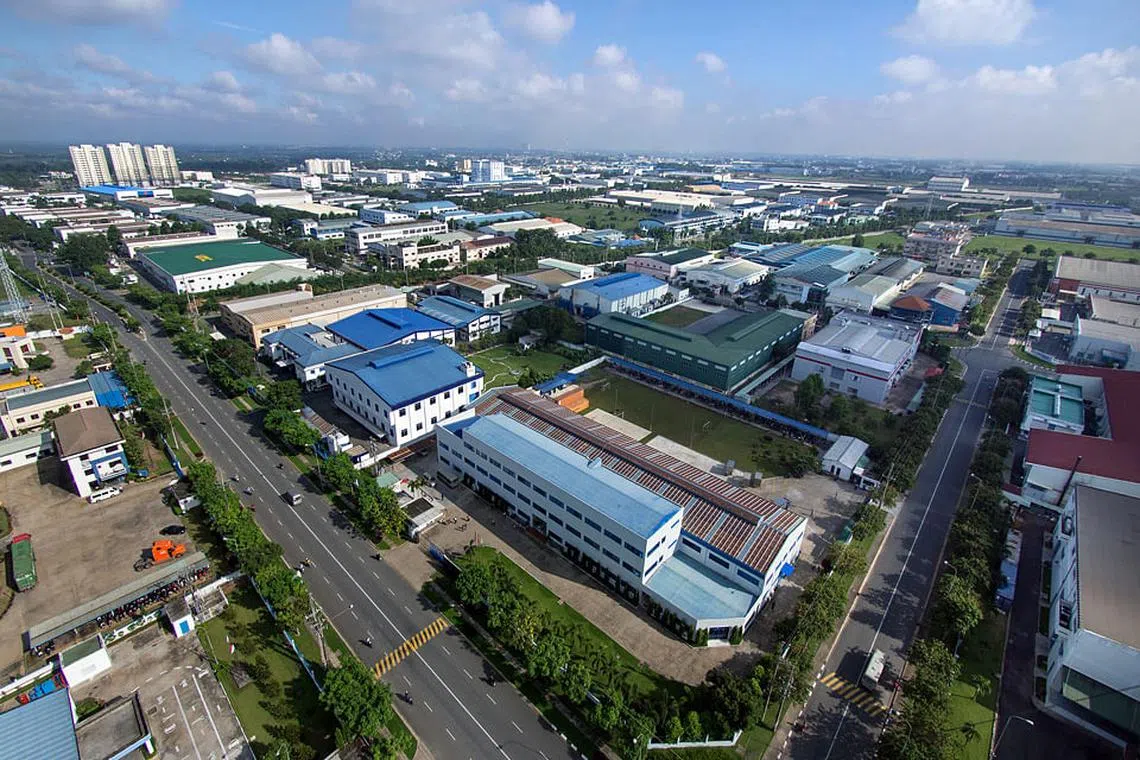
Offering the second-largest stock of industrial land and ready-built facilities in Vietnam, Dong Nai is known as a base for major garment and footwear manufacturers that are contract suppliers for global brands such as Nike, Adidas and Puma.
It is home to Long Thanh International Airport, which is being built and is set to be operational by the end of 2026 as the country’s largest airport.
Besides offering easy access to a large domestic consumer market in neighbouring Ho Chi Minh City, the province is also near the Tan Son Nhat International Airport and seaport clusters in the south of Vietnam, offering conducive conditions for export-oriented industries.
The area is the fifth-most populous in Vietnam among 63 cities and provinces. With more than 3.3 million people, it provides a solid pool of workers for industrial activities in the region.






