



Northern Vietnam has vast investment potential for Singapore companies: SBF
Jamille Tran
[HO CHI MINH CITY] While much of the business and economic activity in Vietnam has been in the south over the years, it is the northern region – which includes the capital Hanoi – where Singapore companies should pay more attention to as they seek to grow their footprint.
In an interview with The Business Times, Amy Wee, the Singapore Business Federation’s (SBF) country head in Vietnam, noted that the north is favourable for its good economic growth, strategic location, infrastructure development, market potential and government support.
These make it an attractive investment destination for Singapore businesses looking to expand their presence and explore new opportunities, she said.
This is especially so for small and medium-sized enterprises with resource constraints, as they will face “less intense competition” in the north compared to southern Vietnam.
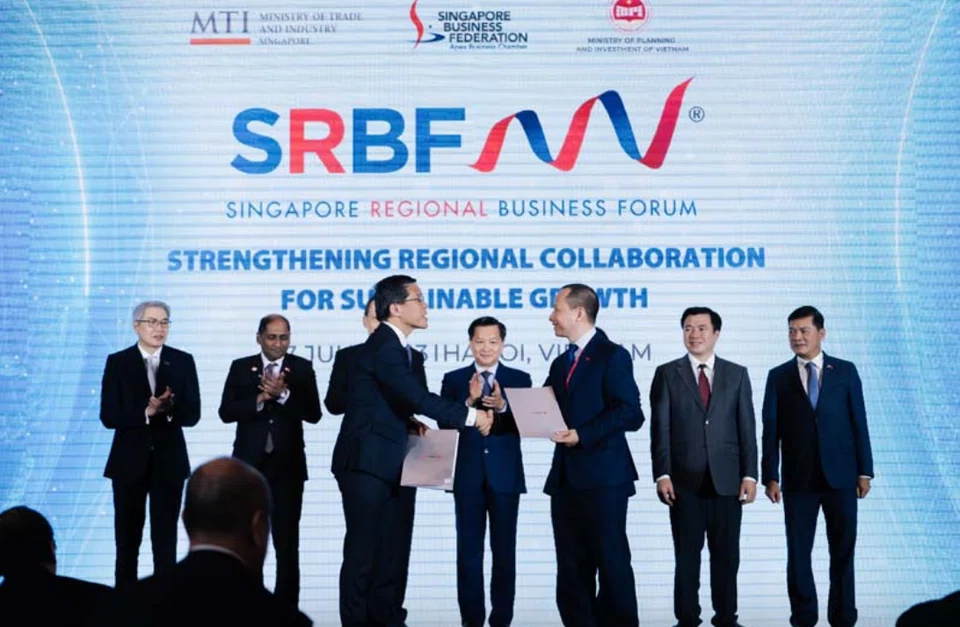
In July, the SBF – Singapore’s apex business chamber with more than 28,000 members – brought its flagship annual event, the Singapore Regional Business Forum, overseas for the first time.
Some 800 business leaders, government officials and diplomats attended the event in Hanoi, including Singapore’s Minister for Manpower Tan See Leng and Vietnam’s Deputy Prime Minister Le Minh Khai.
In conjunction with the forum, SBF organised a four-day business mission to Hanoi, which 25 Singapore organisations participated in. Wee said the next such mission will be to northern Vietnam in end-September or early October this year, with a focus on digitalisation and business development opportunities.
“In recent years, the Vietnamese government has been actively promoting economic development in this region, which has given rise to improved infrastructure, the establishment of new industrial zones, and a more pro-business and conducive environment,” she added.
Yee Chung Seck, vice-president of the Singapore Chamber of Commerce in Vietnam (SCCV), noted that while Vietnam’s growth engine has primarily been in the south, activity in Hanoi has been picking up, driving investments and economic development in the northern region over the past decade.
SCCV has close to 500 members, the majority of whom are registered in its Ho Chi Minh City chapter. Yee expects the membership in Hanoi to grow in the coming years, especially after the chamber’s merger with the Singapore Business Association Vietnam earlier this year.
“We believe there will be more investments in Hanoi and the surrounding provinces – such as industrial parks, highway infrastructure and ports – to take advantage of the proximity to China, which remains a significant business and trading partner,” said Yee, a partner at law firm Baker McKenzie Vietnam.
Since 1986, when the ruling Communist Party mandated a series of free-market reforms known as Doi Moi (or “renovation”), Vietnam has gone on to participate in 18 bilateral and multilateral free-trade agreements. These have opened the doors for investors to enjoy incentives such as tax breaks and streamlined procedures.
Vietnam’s strong domestic consumption, in addition to a young and skilled workforce, have also beefed up the country’s appeal and reputation as a regional export-led manufacturing hub.
Competitive edge
SBF’s Wee said Singapore companies that are eager to expand in Vietnam should find a local partner that can provide market insights, facilitate market entry and navigate the country’s bureaucratic processes.
On the federation’s part, it has a Singapore Enterprise Centre in Ho Chi Minh City that connects Singapore companies with potential Vietnamese partners via organisations such as the Foreign Investment Agency and the Vietnam Trade Office.
“Singapore is a multicultural society and has a strategic location in the region, so businesses have an advantage in understanding and navigating the diverse cultural dynamics in Vietnam. This can facilitate smoother business operations and stakeholder engagement,” she said.
Both Wee and Yee called for more efforts from Singapore companies to learn about Vietnam’s laws and unique business characteristics, as well as find ways to differentiate themselves from their competitors.
“The biggest issue for Singapore companies and any foreign investor when doing business in Vietnam is the mindset,” said Yee. “The way one approaches a situation, business partner, customer or regulator should be carefully considered, as the way one behaves can dictate the experience one gets.”
He noted that while Vietnam’s laws and regulations are applied consistently to all provinces without distinction, the implementation procedures in practice may vary based on policy and interpretation. Firms should engage with local legal counsels and other advisors to ensure compliance and navigate the country’s legal landscape, he added.






