



Not a sinking ship: Jakarta aims for ‘global city’ status even after capital shifts to Nusantara
Indonesia’s parliament has designated a ‘special status’ for Jakarta, which maintains the metropolis as the economic hub

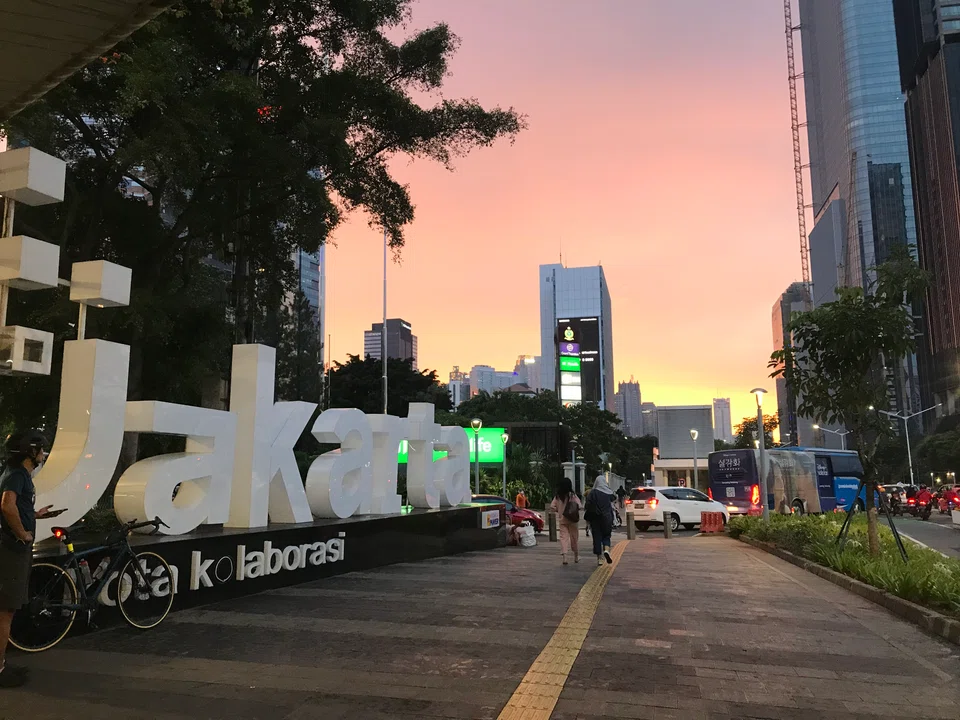
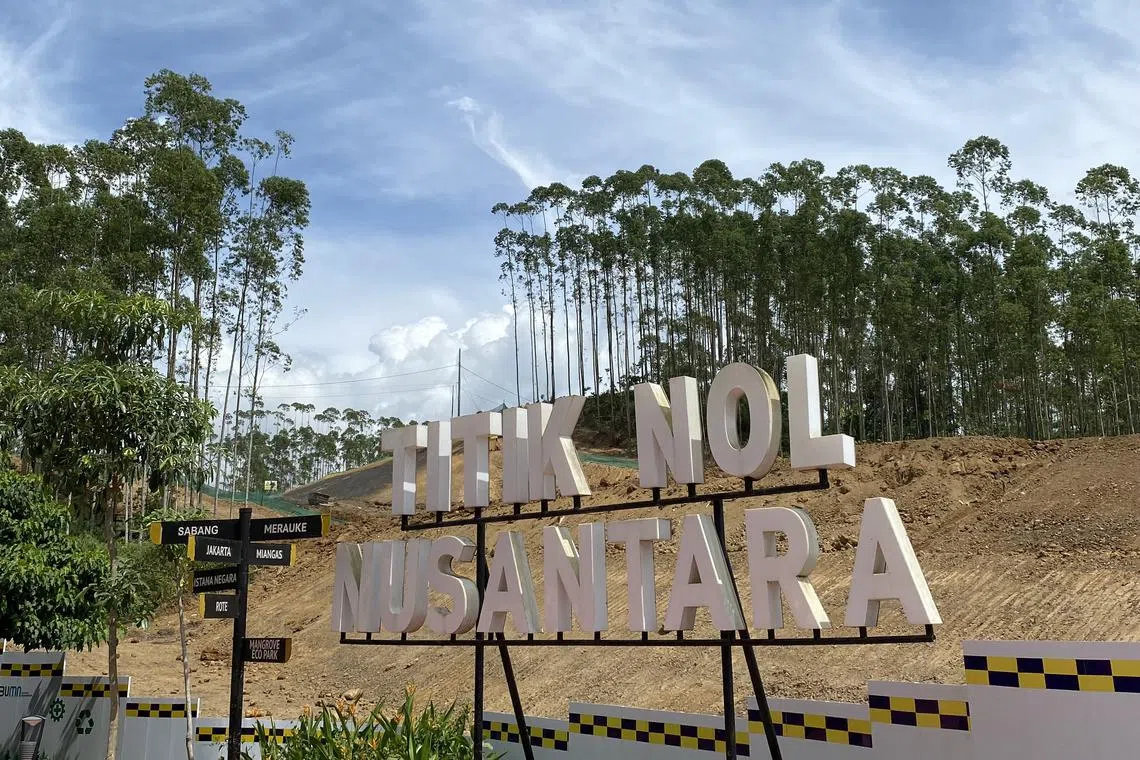
[JAKARTA] Six weeks from now on Aug 17, Indonesia will celebrate its Independence Day. It will also be when Nusantara – a modern city being built on the eastern coast of Borneo – begins operations, officially replacing the congested and polluted Jakarta as the country’s new capital.
While all eyes are on the US$32 billion Nusantara as it takes shape, officials in Jakarta – a city that is sinking at an alarming rate into the Java Sea – have taken measures to preserve its status as an economic and commercial centre that will be attractive to investors and businesses for decades to come.
In March this year, Indonesia’s parliament designated a “special status” for Jakarta, which maintains the sprawling metropolis as the country’s economic hub.
Home Affairs Minister Tito Karnavian was quoted in media reports then as saying that Jakarta should still be improved to compete with other “world-class cities” such as New York once the seat of government has been moved some 1,200 km away to Nusantara.
“After (Jakarta) is no longer a capital, it still has to be sealed with a special status so that it can accelerate economic growth and increase contribution to the country’s GDP (gross domestic product),” he said.
While President Joko Widodo – a former Jakarta governor who will step down this October and hand power to President-elect Prabowo Subianto – has made Nusantara his flagship project, he wants to elevate Jakarta to be a leading “global city”.
Some observers have described this plan as ambitious, given Jakarta’s current ranking of 74th out of 156 cities in the 2023 Global Cities Index by consulting firm Kearney.
The government and lawmakers are busy drafting decrees to integrate the Jakarta metropolitan area with its satellite cities, including Bogor and Tangerang, into an agglomeration area with special tax arrangements and bonded infrastructures.
“The idea of transforming Jakarta into an agglomeration area aims to enhance its livability,” Yusharto Huntoyungo, head of domestic policy strategy at the Ministry of Home Affairs, told The Business Times.
“Jakarta’s burden will increase in the future with population growth. We cannot develop Jakarta on our own,” he added.
Independence Day celebrations
Nusantara has naturally drawn plenty of comparisons with other administrative capitals in South-east Asia, including Putrajaya in Malaysia and Naypyidaw in Myanmar.
Indonesia is preparing to inaugurate Nusantara, locally known as Ibu Kota Nusantara, on the occasion of the country’s 79th Independence Day on Aug 17.
More than 10,000 civil servants are set to relocate to the new capital city in September, although some reports have said that many are reluctant to go as the construction is still ongoing and many amenities are not yet ready.
Widodo intends to start working from Nusantara sometime in July, with the government aiming to have as many as 1.9 million people living there by 2045.
In the coming years, the massive relocation project will involve moving many of the government’s administrative functions. This potentially reduces the demand for office space and government-related facilities in Jakarta, according to property consultant firm JLL Indonesia.
“On the commercial front, we have yet to see the impact from the private sector, as plans are (still) under way to create, reposition, and build a new Jakarta (after the capital is relocated),” noted Vivin Harsanto, senior director and head of advisory, JLL Indonesia.
While Jakarta’s economy and livability are not expected to be significantly affected for now by the capital moving, concerns about its future persist due to rising environmental risks.
“Despite the challenges, I think Jakarta still maintains its prominence within and outside Indonesia,” Professor Lawrence Loh of National University of Singapore Business School told BT.
“But I’m more worried about the future – not in terms of economy, but from a sustainability viewpoint because of the sinking effect.”
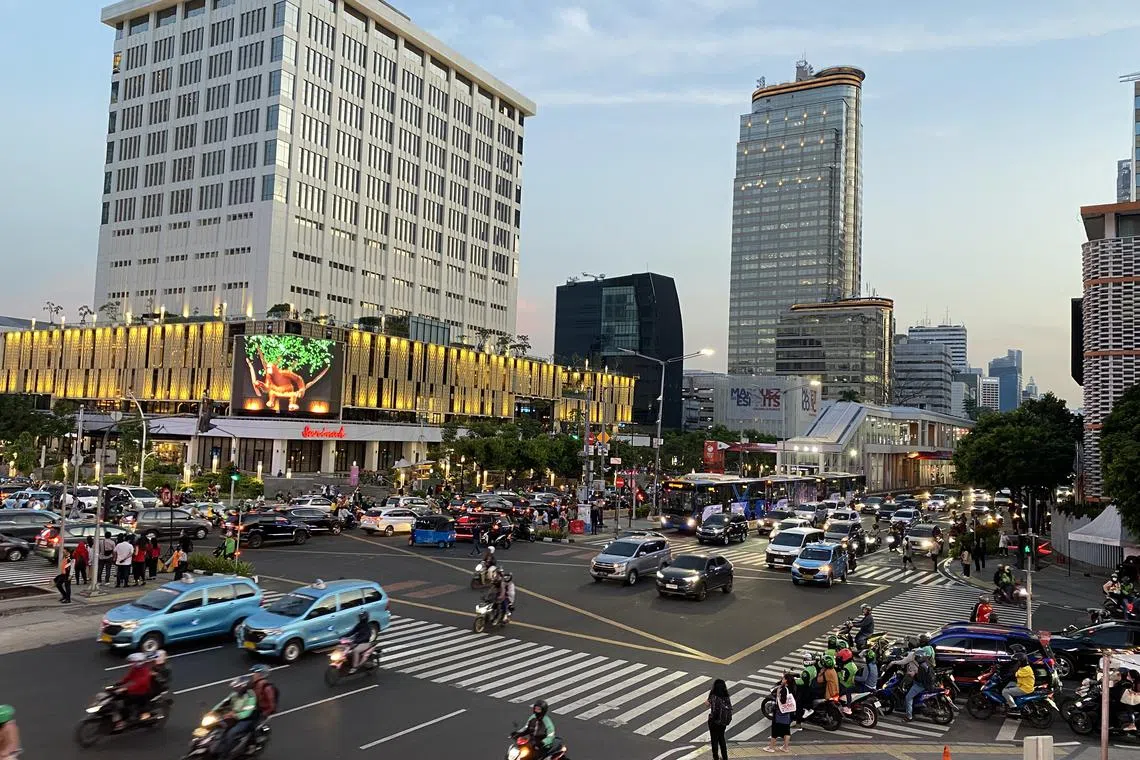
Jakarta has served as the nation’s capital since Indonesia became independent in 1945. The city is the largest metropolitan area in South-east Asia.
Plagued for decades by chronic traffic jams, air pollution, flooding and rising sea levels, the government is racing against time to ease Jakarta’s heavy burden.
With the current population now at about 11 million, the city is facing land subsidence, with parts of northern Jakarta sinking up to 5 cm per year mainly due to excessive groundwater extraction.
The government has allocated US$3 billion to address this problem of sinking. The funding will be used to improve infrastructure, including constructing a giant sea wall along the northern coast of Java to protect the island.
In an effort to alleviate traffic jams, Jakarta is expanding its mass rapid transit system into neighbouring cities, with the backing of investors from Japan. This rail project, estimated to cost 165 trillion rupiah (S$13.7 billion), is expected to be completed by 2030.
Rapid growth
According to latest figures, Jakarta contributes around 17 per cent of the country’s economy, amounting to 3,200 trillion rupiah. The city is also a leading investment destination in the region, attracting US$3.7 billion in foreign investment in 2022.
Joel Shen, a Singaporean corporate lawyer based in Jakarta, said he has observed the city’s development as a hub for multinationals, startups and small and medium-sized enterprises.
“With the capital moving to Nusantara, I believe Jakarta will maintain its vibrancy and continue to be a large metropolis. I don’t think it will change in the near future, but who knows what will happen a hundred years from now.”
Challenges ahead
Analysts said the relocation process is expected to be complex and time-consuming, involving the movement of thousands of government workers and their families, as well as the construction of new infrastructure and facilities.
This November, Jakarta residents will vote for a new governor to lead the city for the next five years.
NUS’ Prof Loh highlighted that strong political will and sustainable policies are crucial to Jakarta’s future, while also ensuring the success of Nusantara over the long term.
“The government is probably caught between allocating resources to further enhance Jakarta or to swing them more towards Nusantara,” he said, underscoring the importance of building partnerships with the private sector to sustain both projects.
TRENDING NOW

Looking beyond looming CEO succession, should UOB potentially pursue a transformative merger?
MAS holds monetary policy settings, pausing after two straight tightenings

Once staunchly pro-China, Malaysian Chinese businesses are now distancing themselves from Beijing
Stocks to watch: Kore US Reit, Parkway Life Reit, Raffles Education, Vin’s Holdings

