



Old, new, borrowed and blue: What are the Philippines’ priorities as it chairs Asean anew?
Twin crises of the South China Sea and the Myanmar conflict aside, Manila’s chairmanship comes with the responsibility of engaging Timor-Leste

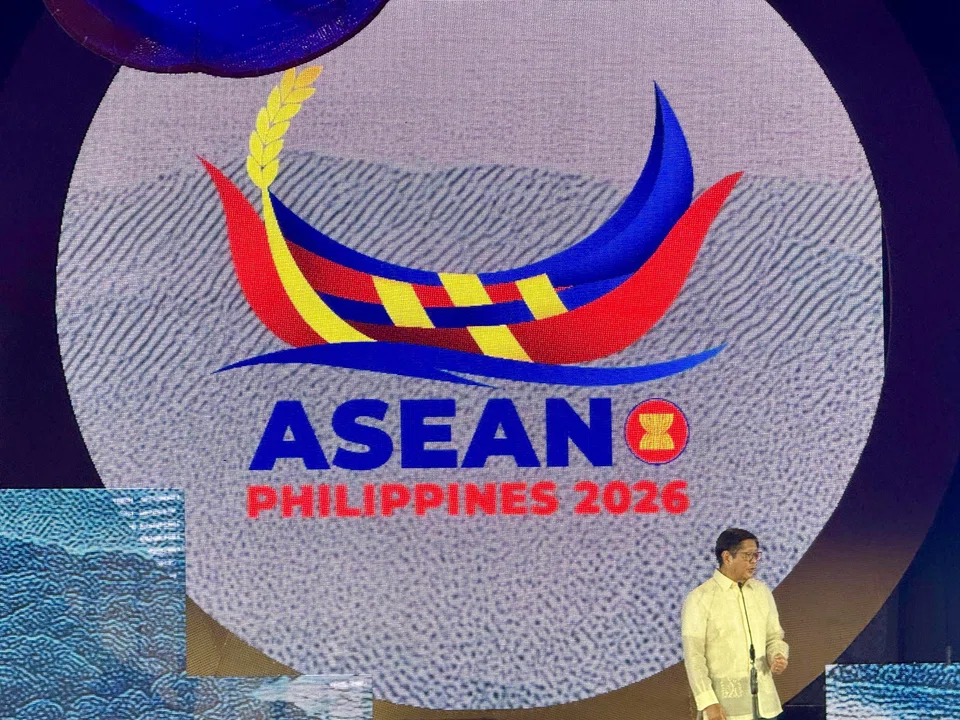
[SINGAPORE] The Philippines’ unveiling of its logo at the launch of its Asean chairmanship seemed to say much about the country’s priorities for the year ahead.
The logo features a wooden balangay – the country’s national boat – riding a wave that symbolises the waters binding the bloc’s 11 member states.
Yet, President Ferdinand Marcos Jr’s address at the launch propelled a different rhetoric – one that omitted any mention of the troubled waters of the South China Sea, and instead centred on championing the use of artificial intelligence (AI).
This contrast underscores the Philippines’ delicate balancing act in the year ahead, analysts told The Business Times.
The new Asean chair inherits the challenge of Myanmar’s civil war, while also grappling with the escalating strife between Cambodia and Thailand. It also confronts a growing storm of climate crises and maritime security concerns.
The world is waiting to see if the Philippines can walk the tightrope between securing regional interests and safeguarding national priorities.
“The fact that the president chose to focus on AI… is very surprising, but shows... that the Philippines is quite sensitive to regional feedback about what it should prioritise,” said Julio Amador, founder and trustee of non-profit Facts Asia, which produces research on foreign and public policies.
This discretion comes amid whispers that the Philippines could use its chairmanship to advance its bilateral interests with China. Namely, to finalise a code of conduct for the South China Sea, a longstanding and escalating issue in the region.
Geopolitical analyst Don Gill of De La Salle University noted that although the Asean chair traditionally sets the agenda for its year-long leadership, Manila is demonstrating that it understands that this agenda cannot be solely about representing its national interests.
That said, both analysts agreed that the maritime issues are a regional priority.
“Whether you are a continental or maritime South-east Asian state, you are still dependent on the maritime zones within the ‘neighbourhood’,” Gill said.
“Therefore, for the Philippines, the only way forward to guarantee peace and stability in the region is to put emphasis on upholding the rules-based order of the maritime domain.”
Rough seas ahead
Besides China and the Philippines, those with overlapping territorial claims over the South China Sea include Vietnam, Malaysia, Brunei and Taiwan. In July 2023, Beijing and Asean set a three-year timeline to finalise a code of conduct for these waters.
With some seven months left until the deadline, Manila has signalled its intention to keep negotiations on track – even if it means convening meetings on a daily basis.
However, analysts are less optimistic about reaching a legally binding pact that all Asean member states and Beijing can agree on.
There is the risk that the framework could end up being significantly watered down, defeating the purpose of having such guidelines in the first place, Gill noted.
“It’s one thing to get it done, which is good as far as confidence-building is concerned,” he said. “But when we’re more focused on the operational value… it would merely be a code of conduct without teeth, (which) would further delegitimise efforts to uphold the established order of the maritime domain in South-east Asia.”
As for any early indicators that the parties are moving towards a deal, Amador said the most positive sign would be a reduction in activity in the South China Sea – such as island-building or the deployment of troops and coast guard vessels as a show of faith – by at least the first quarter of 2026.
Slack tides
Another longstanding flashpoint within the region is the ongoing crisis in Myanmar, with which the last five Asean chairs – Brunei, Cambodia, Indonesia, Laos and Malaysia – grappled, but had little to show for it.
And analysts believe that the needle will remain unlikely to move much with the Philippines at the helm.
The odds are stacked against Manila, said Amador, citing its geographic distance from Naypyidaw. He also noted that the Philippines appointed a sitting foreign affairs secretary as its special envoy to Myanmar instead of a veteran diplomat, as previous Asean chairs had done.
Uncharted waters
These twin crises aside, the Philippines’ chairmanship comes with a unique responsibility: engaging Asean’s newest member and Asia’s youngest country, Timor-Leste.
The nation applied for membership in 2011 and subsequently underwent a lengthy process to prove itself ready to join the bloc, including establishing embassies in all Asean member capitals.
Under Cambodia’s chairmanship in 2022, Timor-Leste was admitted in principle as a member and granted observer status. This year, while Malaysia was Asean chair, it finally gained full membership.
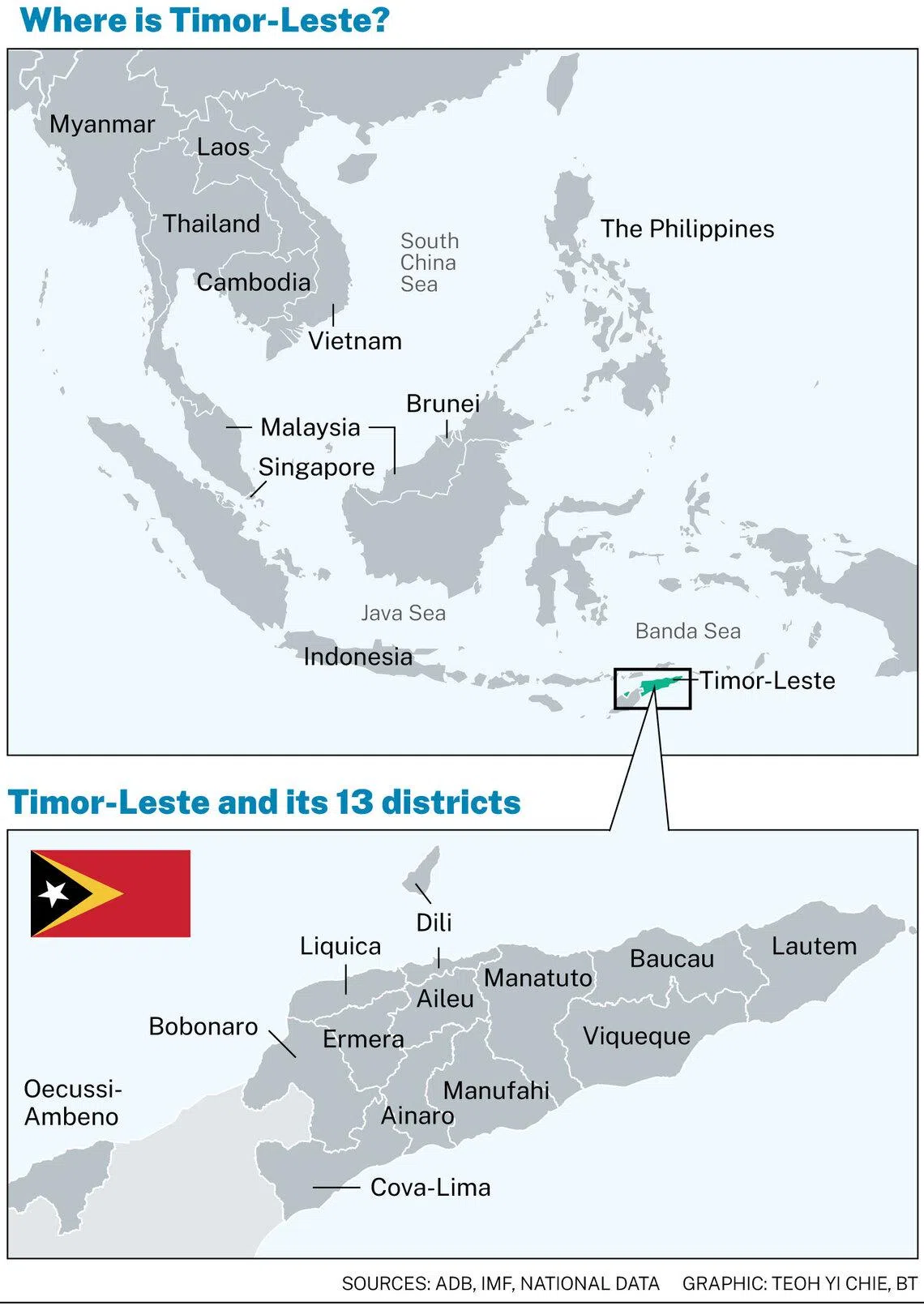
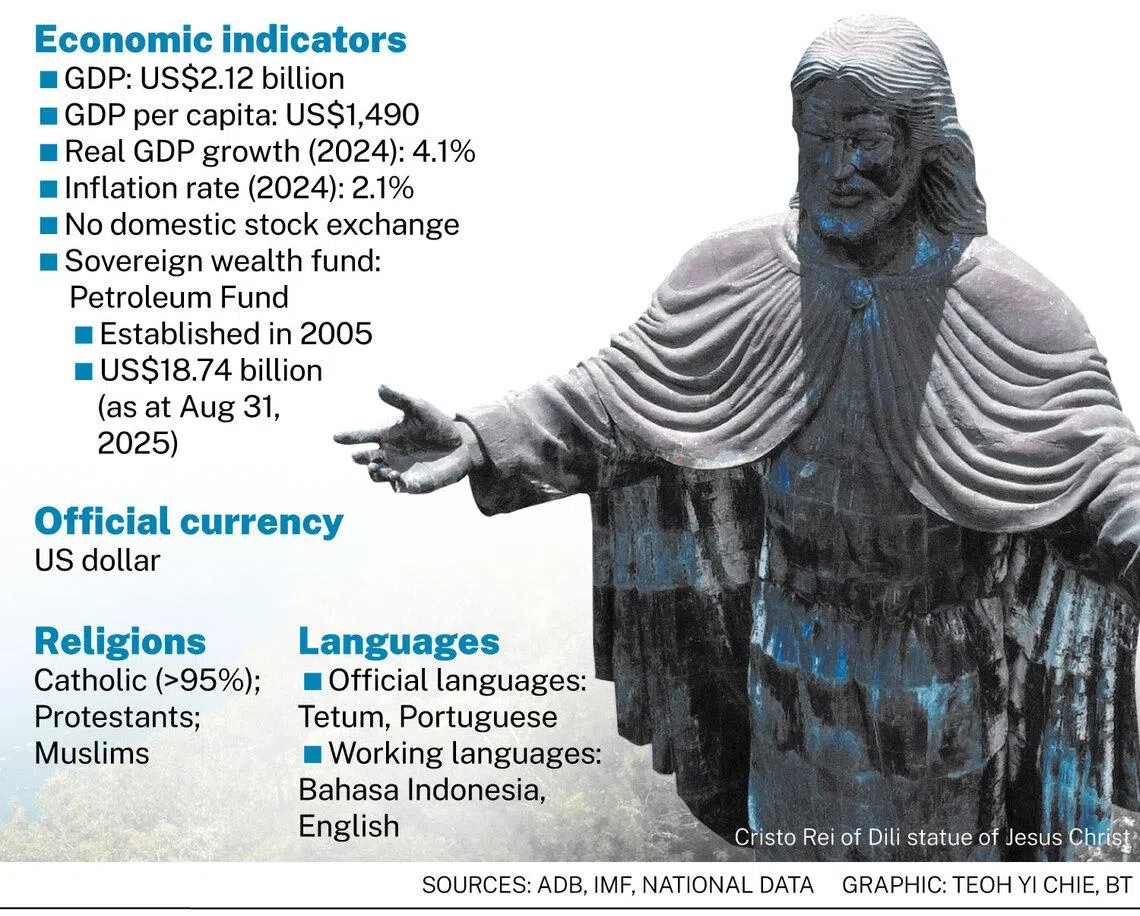
As for how Manila might engage the new kid on the block, Amador remarked that “the Philippines looks to Timor-Leste as a natural partner”, by virtue of their shared history of colonisation by Catholic countries.
Timor-Leste was controlled by the Portuguese until their sudden exit in 1975 left a vacuum that Indonesia swiftly filled. It was annexed as an Indonesian territory before gaining independence in 2002, becoming the second predominantly Catholic nation in Asia after the Philippines.
Like the Philippines, Timor-Leste is a coastal country – one that has wrestled with a long-running maritime dispute with a larger neighbour. In this case, however, Timor-Leste and Australia settled the matter peacefully with a treaty under international law.
“Timor-Leste is a fellow South-east Asian nation that has been able to utilise existing mechanisms of dispute settlement under international law,” said Gill.
“Because of Timor-Leste’s experience, the Philippines would be able to socialise its concerns more effectively with it, (and) this would be an opportunity for the Philippines to socialise its challenges as well with its other South-east Asian neighbours.”
TRENDING NOW

Once staunchly pro-China, Malaysian Chinese businesses are now distancing themselves from Beijing
The middle power moment arrives in South-east Asia – but not for Asean

DBS, OCBC, UOB face rate hike reality check
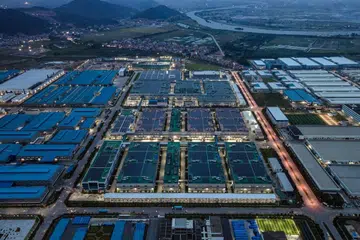
Vietnam’s northern provinces, not Hanoi or Ho Chi Minh City, are powering near 10% GDP growth

