Omicron's a milder bump for Asean, after earlier, harsher waves
Any hit to gross domestic product is expected to be contained in the first quarter

Singapore
COVID-19 cases are on the rise across South-east Asia, weeks after the extra-contagious Omicron variant was first reported in the region.
But the economic damage will be less severe than in previous waves of coronavirus infection, as policymakers eschew crippling lockdowns, analysts believe.
With a pick-up in vaccine rollout fuelling faith in Asean's economic resilience, any hit to the gross domestic product (GDP) is expected to be contained in the first quarter.
"Unless some authorities in the region overreact with lockdowns, we expect the economic impact - and GDP downgrades - due to the new variant to be mild," Asian Development Bank economist Irfan A Qureshi told The Business Times (BT).
"If Omicron continues to disrupt economic activity up to the second quarter of 2022, growth this year may come in much lower than expected. However, this is not a pattern we are seeing globally."
Dan Fineman, co-head of equity strategy for the Asia-Pacific at Credit Suisse, flagged manufacturing and tourism as key sectors at risk of disruption from Omicron.
"We saw with Delta, that factories took a pretty big hit in Malaysia, Vietnam, and to an extent Thailand, from workers being infected," he told BT, calling "factory sickouts" the biggest Omicron risk.
But Morgan Stanley was more upbeat about the impact of Omicron on factory production in Asia, outside mainland China, Hong Kong, and Taiwan, after countries' experience with the Delta variant in 2021.
"Considering that we are now operating with much-higher levels of vaccinations, we see that the risk and the extent of supply disruptions as being lower," economists Chetan Ahya, Derrick Kam and Jonathan Cheung wrote on Jan 10.
Indeed, the IHS Markit Purchasing Managers' Index (PMI) - a gauge of industry sentiment - recorded an uptick in Asean in end-2021.
The PMI reading improved for 5 of the 7 South-east Asian countries under survey, with contractions only in Thailand and Myanmar.
The cheer hinges on confidence in South-east Asian policymakers' willingness to avoid widespread shutdowns despite climbing cases.
Several Asean countries, including Malaysia and Thailand, are reporting thousands of infections daily. The Philippines is the worst-hit, with surging case counts crossing the 37,000 mark on Monday (Jan 17), and Vietnam posted more than 16,300 cases on the same day.
But Morgan Stanley's report argued that any restrictions prompted by the spike "will be much-less stringent compared with the Delta wave" and last for a shorter period.
Similarly, Citi has noted that "initial responses to Omicron within Asean have been calibrated, reflecting reduced severity and shift to a 'living with Covid' strategy".
The switch to focusing on hospital capacity - rather than daily infections - "implies a higher hurdle to impose broad-based mobility restrictions, while sensitivity of economic activity to mobility has already declined due to adoption of e-commerce and business continuity plans", economists Kit Wei Zheng, Helmi Arman and Nalin Chutchotitham wrote on Jan 6.
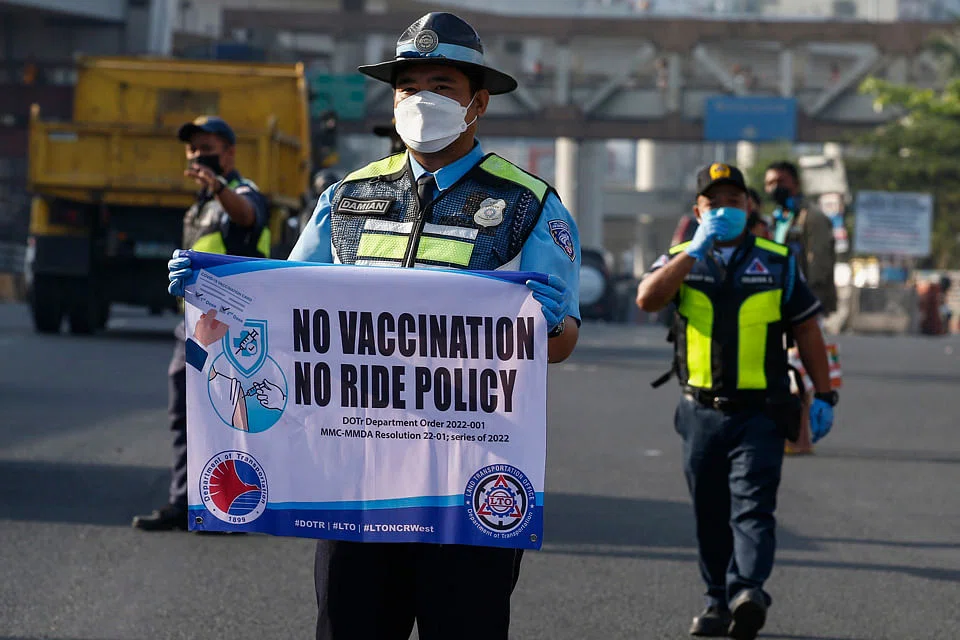
The Philippines expanded restrictions in the Metro Manila capital region as cases picked up after the year-end holidays, while the Indonesian Health Minister said this month that coordination with local authorities would be needed to impose tighter movement controls.
But such curbs may be the exception. Malaysia is relaxing rules to allow bigger Chinese New Year celebrations. And tourism-dependent Thailand, which has taken a larger hit from the pandemic, will resume quarantine-free entry for fully vaccinated travellers in February.
Fineman told BT that "there's much-lower risk of hard lockdowns" regionally, as governments "are more tolerant of a given level of infection than they are in China".
As such, he expects Omicron to be "a first-quarter issue" for Asean markets beyond Thailand, where the economy is heavily exposed to tourism - a sector that he dubbed "the last piece of the puzzle to come into place" in the recovery.
Qureshi also reiterated how Asian exports saw a broad-based recovery in 2021, with external demand remaining robust this year.
With Omicron, "a sharp rise in cases and decline would have only a slight impact on first-quarter domestic activity", he said. "Similarly, so long as Omicron doesn't lead to significantly more stringent containment measures, the additional impact on foreign demand for services should be short-lived."
The main concern may thus be not Omicron but the pandemic as a whole, including earlier waves.
Citi's analysts warned that Asean growth may "remain substantially below pre-Covid GDP trends" even after countries' GDPs return to pre-Covid levels by end-2022.
Labour markets will be disrupted in the long run by the effects of below-capacity economic output, border closures, automation, and foreign worker shortages, they said.
Most of South-east Asia - except for Singapore - is also tipped to suffer higher levels of public indebtedness from hefty fiscal stimulus packages during the pandemic.