Panellists urge Singapore firms to play the long game in Vietnam, build trust with partners

Paige Lim
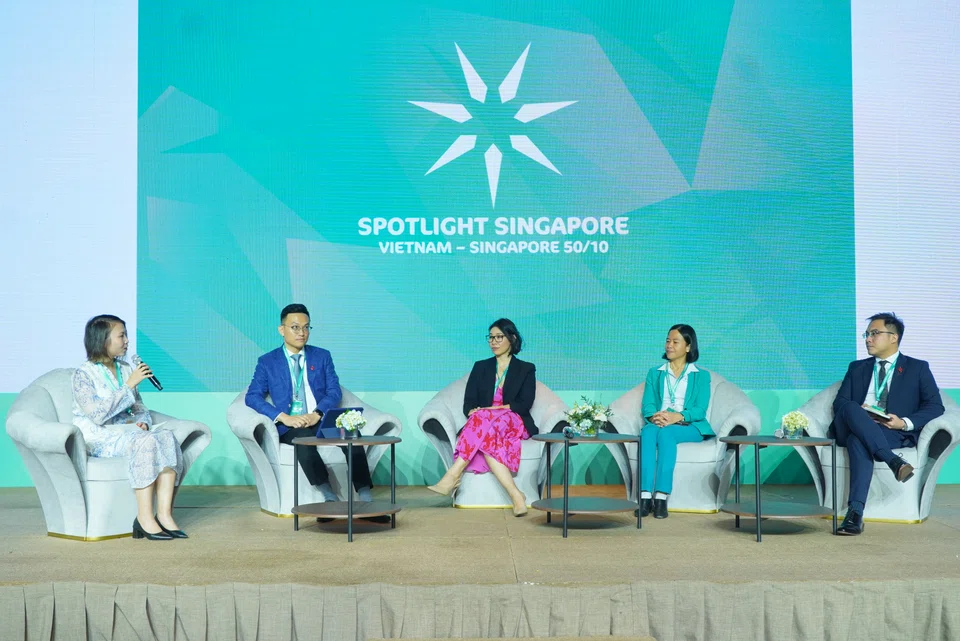
[HO CHI MINH CITY] Singapore companies keen to break into the Vietnam market must be prepared to play the long game and spend time building business relationships, said speakers at a panel on Monday (Oct 23).
Alan Phua, chief executive officer (CEO) of advisory services firm Virtue Partners Management (Vietnam), said: “When we do business in Vietnam, it’s not about how good we are, or what services we offer; it’s about how long we are in this country.”
He added: “As friendships are built over time, the (Vietnamese) think: ‘Yes, you may be a foreigner, but you’ve made sure to understand my culture, understand my history – so now I can start to do business with you’.”
He was speaking at a panel discussion on ways to seize opportunities and manage risks when doing business in both Vietnam and Singapore; the discussion was part of a business conference organised in Ho Chi Minh City by cultural-diplomacy platform Spotlight Singapore.
Zac Chen, founder of Vietnam fintech startup Numberr, who was also on the panel, said that while taking time to build trust “goes against the Singapore mindset of being efficient”, companies that first focus on this with their Vietnam partners see their efforts pay off in the long run. “In my case, I bring in a more international world view and mindset, but my local partner knows how to maximise the resources on the ground. So such a friendship will go far.”
This need for adaptability on the part of businessmen from the two countries cuts both ways. Nga Phuong Tran, CEO of Vietnam’s largest stationery manufacturer Thien Long Group, said that for her, doing business in Singapore has meant taking a more “aggressive” approach. “When we work with Singaporeans, we start with clear-cut procedures and regulations before closing the gap,” she added.
The other panellists agreed that it is crucial to be sensitive to local cultural nuances when doing business in South-east Asia, and bear in mind that each market in the region is distinct.
Entrepreneurs should therefore test the business hypotheses they have early on, to figure out what works for the market and reduce future risks, said Chen.
Phua felt that companies should not expect a one-size-fits-all solution. “There are many differences, even within one country itself,” he said. “People as a risk (for business) can be mitigated, once you open your mind to the fact that they can have different viewpoints on the same issue.”

For Esther Nguyen, founder and CEO of digital entertainment platform Pops Worldwide, it is about trusting in the leadership of the local management team to make the best decisions, and knowing when to take a step back.
“As an American who came to Vietnam, I let the local team lead, because they knew the market best. It was up to me to only give them guidance on the direction to take,” she said.
Phua urged Singapore companies to join a chamber of commerce as the first step to entering a new market. For instance, the Singapore Chamber of Commerce Vietnam has over 450 members from diverse backgrounds, he said.
Such trade and business associations can be a valuable support system, he added, as members can offer practical advice to new entrants on navigating the market.
Decoding Asia newsletter: your guide to navigating Asia in a new global order. Sign up here to get Decoding Asia newsletter. Delivered to your inbox. Free.
Copyright SPH Media. All rights reserved.