



Penang looks past hyperscale data centres, doubles down on chips
The northern state shuns the data centre race to focus on its stronger competitive advantages

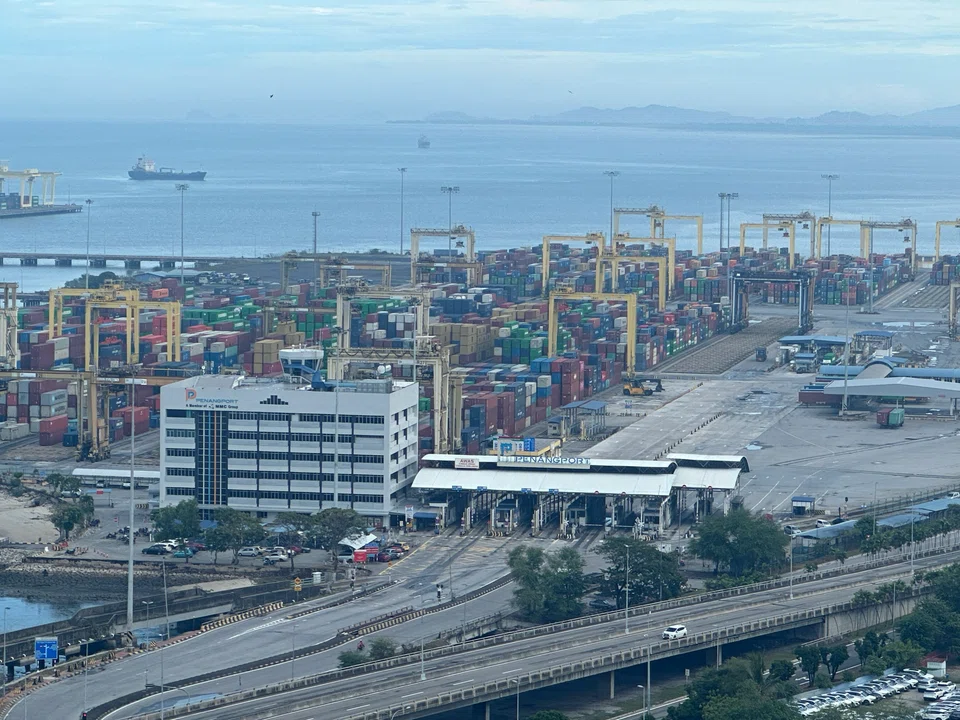
[KUALA LUMPUR] While other Malaysian states are racing to attract billion-ringgit data centre investments, Penang is taking a different approach. It is staying out of the hyperscale data centre race to focus on areas where it believes it holds better competitive advantages – semiconductors.
Loo Lee Lian, CEO of investment promotion agency InvestPenang, said the state is doubling down on semiconductors, advanced packaging, integrated circuit (IC) design and precision engineering.
She said these industries offer stronger economic spillover effects and align more naturally with the state’s existing industrial ecosystem.
“We are not positioning Penang as a hyperscale data centre hub,” Loo told The Business Times at Semicon Southeast Asia 2026 on May 6.
“There may be smaller edge data centres on the mainland, but hyperscale facilities are not an area where Penang has a competitive advantage,” she added.
Edge data centres are smaller data centres located closer to users instead of far away in one huge central facility.
Often dubbed the “Silicon Valley of the East”, Penang contributes around 5 per cent of global semiconductor sales and anchors Malaysia’s role in providing about 13 per cent of the world’s assembly, testing and packaging services, based on data from Malaysia’s Department of Statistics and United Nations Comtrade.
The state also hosts major multinational companies including Intel, AMD and Infineon Technologies, making it a key part of the global electronics supply chain.
Avoiding the hyperscale race
Malaysia emerged as one of South-east Asia’s fastest-growing data centre markets in recent years, driven by demand linked to artificial intelligence, cloud computing and digitalisation.
Johor became one of the biggest beneficiaries because of its proximity to Singapore, access to submarine cable infrastructure, and relatively lower land and energy costs.
It was reported that a total of 143 data centre investment projects were approved between 2021 and Jun 30, 2025. In the first six months of 2025 alone, the Johor state government approved 42 data centre projects.
The southern state is becoming South-east Asia’s fastest-growing data centre hub, which is expected to account for 60 per cent of Malaysia’s capacity by 2030, based on data from the Ministry of Investment, Trade and Industry.
Loo said Johor has a natural advantage for data centres because the submarine cables and connectivity are concentrated there and in Singapore, so they naturally have lower latency advantages.
These are structural advantages that Penang lacks and so is not looking to compete in, she said. The northern state has become increasingly selective about the projects it accepts following the Covid-19 pandemic, when demand for industrial land surged sharply.
Loo noted that most new industrial development had shifted to the mainland, particularly Batu Kawan, while the island is focused on attracting higher-value semiconductor and technology investments.
“All our new industrial projects were on the mainland because the island was already saturated after more than 50 years of industrialisation,” she said.
Rather than chasing projects with large headline investment values, Penang is prioritising industries capable of deepening local supply chains, generating stronger multiplier effects and creating higher-value jobs, Loo added.
Advanced packaging and IC design gain traction
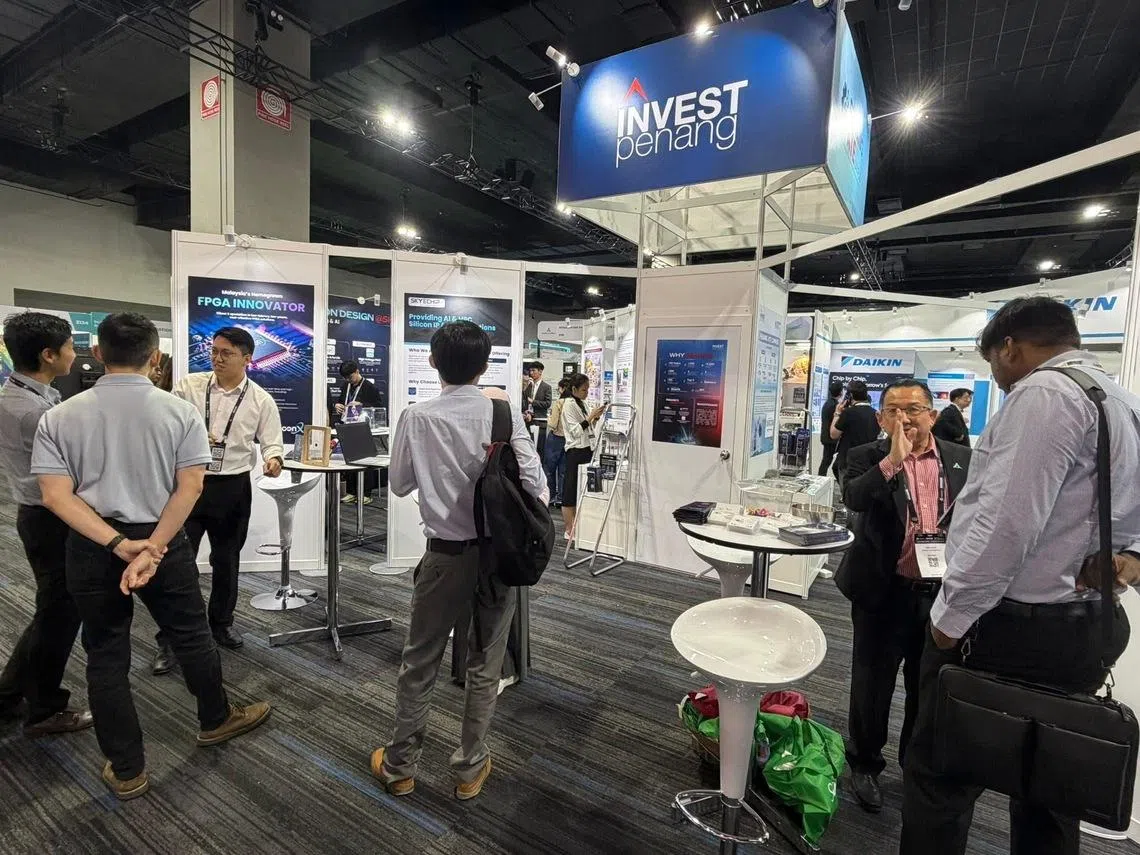
One segment attracting growing attention is advanced packaging, which has become increasingly important as chipmakers search for ways to improve semiconductor performance beyond simply shrinking chip sizes.
“We were seeing strong momentum in advanced packaging,” Loo said, citing expansions by Taiwanese semiconductor firms as well as companies such as Intel.
Penang has been aggressively promoting IC design through its Penang Silicon Design @5km+ initiative, aimed at creating a concentrated ecosystem linking universities, startups, multinational corporations and shared facilities.
At the same time, the state is expanding its semiconductor equipment and precision engineering ecosystem, supported by companies such as Lam Research, Applied Materials and ASML.
“These companies created significant multiplier effects because they helped local precision engineering and automation firms integrate into global semiconductor supply chains,” Loo said, adding that this aligned with the state’s push to nurture local champions.
Semiconductor boom reshapes labour market
The semiconductor boom also fundamentally reshaped Penang’s labour market.
Loo said engineering salaries had risen sharply since the pandemic as multinational corporations competed aggressively for a limited talent pool.
Before Covid-19, engineering graduates in Penang typically started with salaries of around RM2,500 (S$809). Semiconductor firms now offer between RM3,500 and RM4,500 for fresh graduates, while specialised IC design roles command starting salaries of RM6,000 or more.
“That was a positive shift,” Loo said. “Engineering graduates had previously been underpaid relative to the high level of skills required.”
To sustain growth momentum, Penang is advocating more flexible policies to attract foreign technical talent and retain international graduates.
“We should allow more foreign expertise to come in, especially to support the development of new technologies,” she added.
A regional semiconductor ecosystem takes shape
Ang Wee Seng, executive director of the Singapore Semiconductor Industry Association, urged stronger regional cooperation in semiconductors.
South-east Asian countries stand to gain significantly from closer collaboration, with the Johor-Singapore Special Economic Zone (JS-SEZ) serving as a possible model for regional semiconductor integration, he said.
The shift came as geopolitical tensions pushed multinational companies to diversify semiconductor supply chains beyond China and Taiwan.
“Competing individually was tough and costly, but combining these strengths created a much stronger value proposition,” Ang told BT in a separate interview.
Under the JS-SEZ model, chipmakers could place manufacturing operations in Johor while maintaining headquarters, financing and higher-value research functions in Singapore.
According to Ang, Singapore built a diversified ecosystem spanning front-end wafer fabrication, research and regional headquarters, while Malaysia developed strong capabilities in assembly, testing and precision engineering.
However, both countries faced different limitations. “Singapore faces constraints in land, energy and water,” he said.
On the other hand, Malaysia has gaps in talent and technology, although it has clear advantages in manufacturing scale, infrastructure and land availability.
“The world increasingly sees Singapore and Malaysia collectively as an Asean semiconductor ecosystem. That is our strength,” he added.
South-east Asia seeks a bigger role
There is big room to scale up in the region.
Ajit Manocha, CEO of Semi, said that of the 89 new wafer fabrication plants expected to begin operations globally by 2029, only six are in South-east Asia.
“If countries in the region worked together, they could build a stronger collective ecosystem and capture a larger share of future investments,” he told BT.
Ang noted that cross-border cooperation had already begun. Trade associations from Singapore, Malaysia and Vietnam signed a memorandum of understanding to deepen collaboration under an Asean semiconductor platform.
He said technologies such as photonics, silicon carbide and gallium nitride could create opportunities for the region as demand grows for AI infrastructure, electric vehicles and energy-efficient systems.
He pointed to Netherlands-based ASML as an example of a company looking at Malaysia, Singapore, Vietnam and Thailand collectively as part of a regional supply-chain diversification strategy.
“They were replicating parts of their supply chain from the Netherlands into this region,” he said.
For industry leaders, the conversation is no longer centred on whether individual South-east Asian countries could compete with Taiwan or South Korea, but whether the region could function as a more integrated semiconductor ecosystem.
“I think the conversation is no longer about competition,” Ang said. “It is about how to collaborate more.”






