


Asean Business logo
SPONSORED BYUOB logo

Philippine power giant First Gen rebuffs foreign offers, plans up to US$2.6 billion in expansion 

Proposals from KKR and Barito Renewables reveal a valuation gap as the group prioritises renewable growth

Summarise
    • First Gen is expanding its geothermal business, rejecting an offer for its EDC subsidiary from Indonesia’s renewables giant Barito Group .
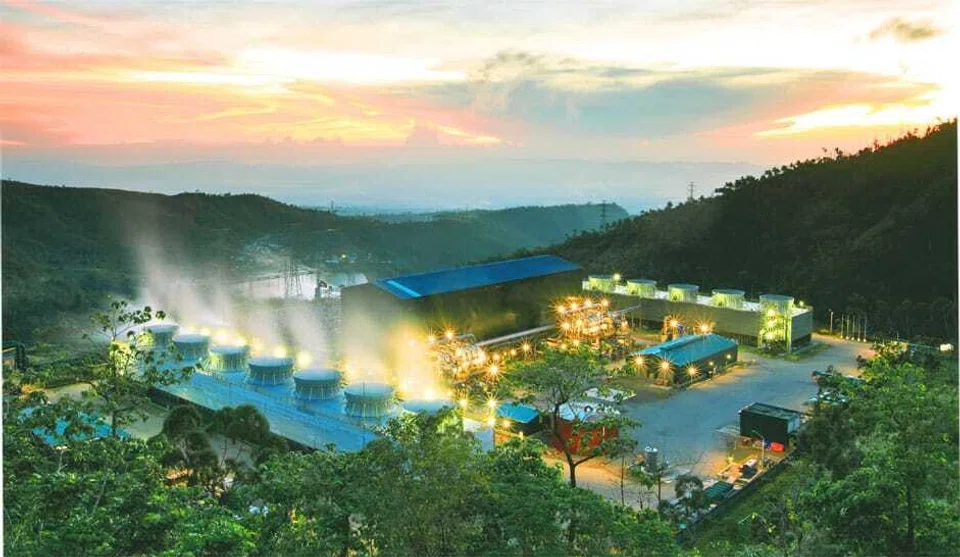
    • First Gen is expanding its geothermal business, rejecting an offer for its EDC subsidiary from Indonesia’s renewables giant Barito Group . PHOTO: FIRST GEN
    Rachel Ranosa-Joshi
    Published Mon, Oct 5, 2026 · 07:00 AM

    [MANILA] Philippines’ largest independent power producer First Gen is pressing ahead with plans to invest up to 160 billion pesos (US$2.6 billion) in renewable energy over the next five years, after its parent rejected US private-equity company KKR’s stake proposal and the group ruled out selling its geothermal arm to Indonesia’s Barito Renewables. 

    First Gen is controlled by the Lopez family, a prominent business dynasty in the Philippines with roots in Iloilo, through its parent company, First Philippine Holdings (FPH), which is listed in the Philippine Stock Exchange (PSE). 

    With a market capitalisation of more than 65 billion pesos and shares trading at 19 pesos on the PSE, First Gen is doubling down on expansion despite foreign offers valuing the group and its renewable assets well above their implied stock market valuations. 

    Analysts said the recent bids highlight a widening valuation gap between First Gen’s public market multiples and the premiums that regional investors are willing to pay for stakes in the platform, particularly for its baseload geothermal assets in one of Asia’s fastest-growing clean-energy markets. 

    Foreign suitors

    In August, KKR offered 35 pesos a share to increase its stake in First Gen and launch a tender for the public float.

    The offer represented a 25 per cent premium over First Gen’s closing price on Aug 13, when news of the takeover was first reported. 

    A stock market disclosure by FPH said any direct or indirect change of control would trigger a mandatory tender offer and “should command a full control premium, which they expect to be no less than 30 per cent above their offer price, or about 46 pesos per share”. 

    FPH rejected KKR’s proposal, stating it did not reflect First Gen’s “true value”. 

    KKR sold its entire economic stake in First Gen to Gateway Partners-backed Angsana Finance in September 2026. PHOTO: REUTERS

    KKR exited First Gen in September, offloading its entire 19.9 per cent economic stake, 715.86 million common shares, for 25.8 billion pesos or 36 pesos a share to Cayman-incorporated Angsana Finance, which is backed by Singapore and Dubai-based alternative investment manager Gateway Partners.

    Angsana Finance, however, will hold no board seats or governance rights, since KKR acquired its stake directly from the secondary market, and no shareholder agreement was established with FPH.

    In September, First Gen confirmed to the PSE that it has no plans to sell its geothermal arm Energy Development Corp (EDC), despite a non-binding offer from Barito Renewables valuing EDC at more than US$5 billion on an equity basis.

    Barito Renewables, part of Barito Pacific Group, was the only company to have expressed interest in acquiring EDC. 

    Purchased from the national government for 58.5 billion pesos in 2007, EDC is now the Philippines’ largest 100 per cent renewable-energy producer, with more than 1,480 megawatts (MW) of installed capacity.

    Rather than trimming its stake in the geothermal powerhouse, First Gen is channelling the bulk of its five-year expansion budget into bolstering its geothermal (70 billion pesos) and hydropower projects (60 billion pesos), while partnering with Indonesia’s Sinar Mas Group to develop up to 440 MW of geothermal capacity abroad.

    Capital for domestic geothermal assets will go towards upgrading ageing plants in the province of Leyte, home to First Gen’s core infrastructure, which aims to add at least 200 MW in capacity. 

    At the Power Economics Forum on Sep 24, First Gen president and chief operating officer Francis Giles Puno said: “If we can combine our geothermal resources and expertise with the right infrastructure, regulation and market design, geothermal can become more than another source of renewable electricity.”

    Meanwhile, the budget for hydropower expansion will cover initial works for the 1,400 MW and 600 MW pumped-storage projects, in partnership with Philippine private-infrastructure and energy conglomerate Prime Infrastructure Capital.

    First Gen is yet to disclose a detailed debt-equity mix for the programme, but Puno said the company expects to tap investor demand to support its funding needs, backed by strong market interest in its portfolio.

    “It’s not that difficult to do that because of all of the investors,” he added.

    Offers highlight valuation gap

    First Gen trades at a steep discount – 0.28 times book value and a forward price-to-earnings ratio of about 4.3 times, roughly one-quarter of the Asian renewable industry average of 15.6 times.

    Juan Paolo Colet, managing director at investment bank China Bank Capital, has argued that First Gen’s persistent valuation discount makes a sale of the geothermal portfolio an attractive way to unlock cash for shareholders and redeploy it into high-return renewable projects.

    But sell-side analysts stressed that EDC is indispensable to First Gen’s earnings profile. 

    Revenue at First Gen rose 73 per cent year on year to 41.1 billion pesos for the first half of 2026, lifted by increased electricity sales at higher realisation rates.

    Geothermal, wind and solar assets under EDC generated 73 per cent of First Gen’s total consolidated revenues for the six-month period.

    EDC posted a 97 per cent year-on-year jump in its attributable recurring earnings for its first half, excluding hydro, reaching 3.8 billion pesos in H1 2026, compared with 1.9 billion pesos in the same period in 2025.

    EDC remains a “principal contributor” of First Gen’s strategic identity, said Toby Allan Arce, head of sales trading at Globalinks Securities and Stocks. 

    For First Gen, holding onto EDC as its premier renewable platform holds greater strategic value for shareholders than cashing out, even in the face of attractive takeover offers, he added.

    He cautioned that divesting it would strip away a stable revenue stream, unless management can show a more compelling long-term reinvestment plan.

    Capital deployment over cash-out

    First Gen’s expansion comes as the Philippines rises as a top Asia-Pacific clean-energy hub.

    Climatescope 2025 – a report from research provider BloombergNEF – ranked the country fourth among emerging markets globally and second in Apac, after clean-energy investment surged 57 per cent to US$3.4 billion in 2024.

    Hanh Phan, BloombergNEF’s lead analyst for the Philippines and Vietnam, attributed this momentum to policy liberalisation. 

    “The Philippines has one of the most liberalised power markets in South-east Asia, and has established strong fundamentals to become an attractive emerging market for clean-energy investment,” she said.

    “Backed by these strong policies, we expect the Philippines’ clean-power market to maintain its strong momentum.”

    The country implements competitive auctions and priority dispatch for renewable projects, policies that BloombergNEF deems vital to market attractiveness.

    First Gen remains upbeat about its prospects.

    Puno said: “If the Philippines wants to grow, I suspect you need companies such as First Gen or EDC to continue to find ways to create value for the expansion of geothermal and other renewable energy sources.”



