Philippine, Thai earnings among South-east Asia’s most affected by Iran war: Bloomberg data
Fuel hikes squeeze margins and consumer spending, risking transportation, tourism, retail and consumer sectors
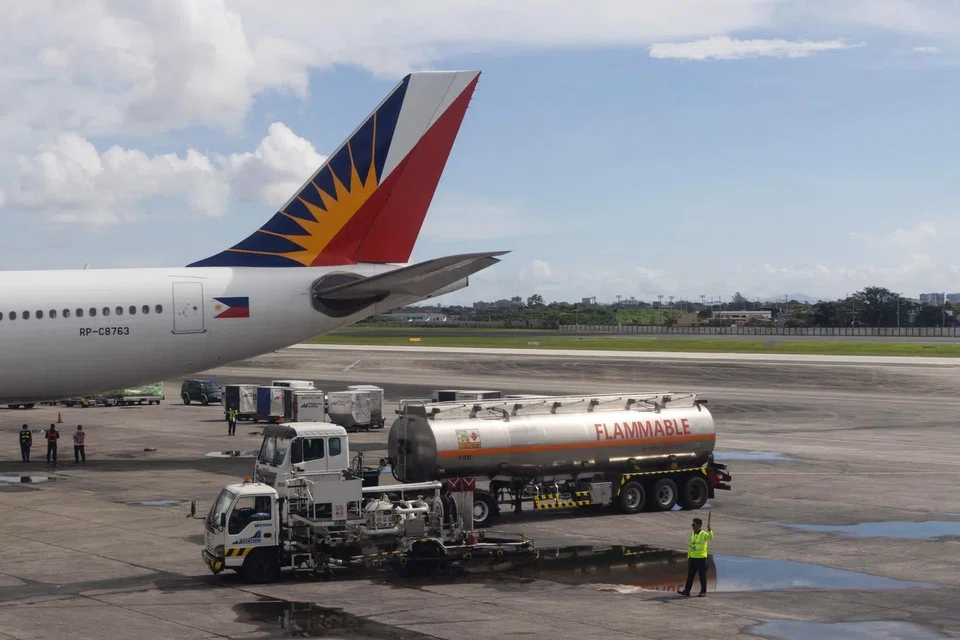
[SINGAPORE] Philippine and Thai companies are bearing the brunt of earnings downgrades across South-east Asia, as their economies rely heavily oil and gas choked off by the closure of the Strait of Hormuz.
More than 90 per cent of the Philippines’ oil imports come from the Middle East, while for Thailand that’s about 60 per cent, according to Maybank research. Unlike commodity exporters such as Indonesia, that leaves limited buffers against higher oil prices.
That vulnerability has only just cropped up and is expected to become clearer in upcoming earnings reports with second-quarter margins shrinking alongside lower guidance and warnings of eroding demand, Bloomberg Intelligence (BI) analyst Sufianti said. That’s particularly true in consumer-related sectors that have seen relatively more estimate downgrades over “softer domestic demand, higher fuel or input costs and margin risk”, she added.
Across the region, fuel costs threaten to squeeze margins while also eroding household purchasing power, raising risks for transportation, tourism, retail and other consumer-facing industries.
Aviation is among the hardest hit, OCBC Group Research shows, as airspace closures and flight cancellations disrupted operations, while limited hedging has made regional carriers vulnerable to fuel price spikes.
That has left carriers including Thai Airways International, and Philippine Airlines-owner PAL Holdings more exposed than other full-service competitors including Singapore Airlines and Cathay Pacific Airways, which are among the most-hedged carriers in Asia.
While analysts have cut earnings forecasts across much of the region, about 80 per cent of companies in the Philippine Stock Exchange Index have seen second-quarter net income estimates lowered since the conflict in the Middle East began, the highest proportion among major South-east Asian markets, according to BI.
Thailand also faces slowing economic growth, less compelling valuations and an earnings recovery that is increasingly dependant on the cyclical energy and petrochemical sectors, according to Maybank analysts. Increased government spending to mitigate blows from the conflict still have to spread across the broader economy.
“We see a weak economic growth outlook weighing on SET earnings per share growth, especially in 2027,” analyst Chak Reungsinpinya, wrote in a note, referring to Thailand’s benchmark index.
SEE ALSO





Philippine earnings are expected to slump 20 per cent in the current quarter, marking the worst contraction since 2022, according to data compiled by Bloomberg. That follows a 4.3 per cent drop in the first quarter, pressured by a slowdown in residential property, weaker consumer-related margins and higher bank provisioning, said Maybank.
The country’s property sector in particular is set to continue facing headwinds, said COL Financial analyst Richard Laneda. “We expect to see a greater impact of the oil crisis on revenues and sales in 2Q26 as higher fuel costs and uncertainty brought about by the crisis will dampen consumer sentiment and push back big-ticket purchases.”
In Thailand, earnings are expected to start losing momentum in the second quarter as concerns over higher operating costs and weaker consumer demand mount, then contract 13 per cent in the third quarter – the worst seen across the region.
Regional underperformance
Indonesia is also facing pressure from currency weakness and higher imported-input costs, though the impact is partly offset by support from commodity exports and resilient domestic demand, according to BI.
Vietnamese earnings grew 28 per cent in the first quarter, while Malaysian earnings should rebound after banks – which make up almost half of Kuala Lumpur’s benchmark – dragged down overall performance in the first three months of the year, according to Maybank.
Malaysia’s petrochemicals are set to benefit from a “surge into profitability” on the back of higher average selling prices, while sectors such as gloves, plantations and materials are poised to benefit from supportive pricing trends.
Still, elevated oil prices remain a risk, particularly if supply disruptions persist into the second half of the year, which remains possible even as a deal to reopen Hormuz looms.
Eurobank research shows that even under a swift agreement, it would take time for shipping volumes, oil flows and production to return to pre-war levels. As a result, “energy prices are therefore likely to remain above pre-war levels through the second half of the year.”
“For the upcoming earnings season, investors should watch margin guidance, cost pass-through, consumer demand, FX sensitivity, loan growth or asset quality,” Sufianti said. Should oil prices remain elevated through the third quarter, the most exposed sectors will probably be consumer-facing industries, transport and logistics, and banks through second-order effects, particularly in net oil-importing markets, such as Thailand and the Philippines. BLOOMBERG
Decoding Asia newsletter: your guide to navigating Asia in a new global order. Sign up here to get Decoding Asia newsletter. Delivered to your inbox. Free.
Share with us your feedback on BT's products and services