



Philippines’ businesses hoped to turn the corner in 2026 – then oil prices spiked overnight
Dire straits beckon as central bank holds unscheduled policy rate meeting amid fuel emergency

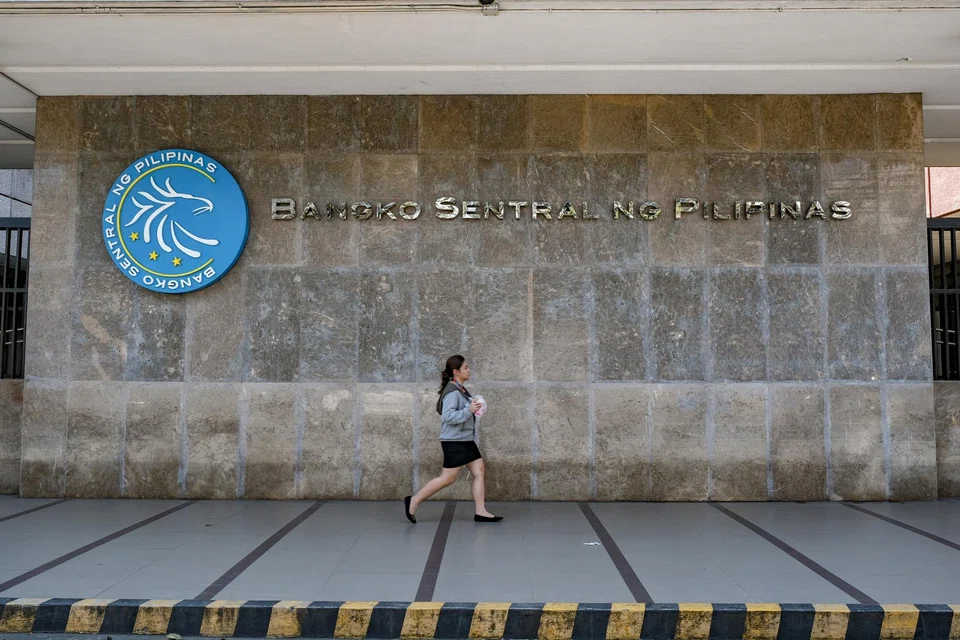
[SINGAPORE] A national energy emergency was likely the last thing on the minds of Filipino corporates just days before strikes on Iran by the US and Israel caused global energy prices to skyrocket overnight.
According to a survey released by the Philippines’ central bank Bangko Sentral ng Pilipinas (BSP) on Friday (Mar 27), businesses in February raised their expectations for the country’s growth outlook substantially from the month before.
The results offer a glimpse into an economy that saw itself on the verge of a turnaround in February, before the US and Israel struck Iran on the final day of the month, crushing hopes.
At the centre of the crisis is surging energy prices, with the country importing almost 90 per cent of its fuel needs from the Middle East. Brent crude oil price briefly exceeded US$82 a barrel on Mar 2, 13 per cent higher than the day before. A week later, it smashed through US$100 a barrel as Iran declared the Strait of Hormuz closed.
The Philippines now faces an immense uphill battle following the conflict, with the country’s national energy emergency threatening to cascade into a “triple whammy” of elevated oil prices, a possible ban on overseas Filipino worker deployment and reduced government spending.
Pre-Iran war, the 12-month confidence index (CI) in BSP’s monthly Business Expectations Survey (BES) had risen from 38.6 per cent in January to 51.1 per cent in February, reflecting that most of the 502 respondent companies were forecasting the economy to recover following its underperformance in 2025.
The current-month CI rose from 0.9 per cent in January to 8.2 per cent in February, while for the three-month outlook until May, the CI rose from 33.3 per cent to 37.4 per cent.
The CI measures the percentage of firms that answered positively towards a given indicator, subtracted from the percentage of firms that were negative.
Respondents cited stronger demand for goods and services, better growth prospects and stable inflation as driving optimism for the rest of the year.
Meanwhile, hiring intentions for the upcoming 12 months also saw an uplift, with the survey’s employment outlook index rising from 23.3 per cent in January to 30 per cent in February.
Before the conflict, BES respondents reported higher confidence towards public infrastructure spending along with sustained governance reforms.
The Philippine economy had taken a major hit in the second half of 2025, following a corruption scandal over flood-control facilities that derailed public spending and investor confidence.
Following moves to shore up sentiment through renewed budget oversight and pro-investment reforms, investor confidence was steadily restored in early 2026 as the country’s equity market rallied and foreign capital inflows gained ground.
Surprise rate decision
In February, the government projected 5 per cent gross domestic product growth for the year, improving on the dismal 4.4 per cent growth in 2025. BSP was largely expected to cut policy rates one more time in 2026 to sustain growth momentum.
But the central bank held a surprise off-cycle meeting on Thursday, announcing that it would hold its policy rate at 4.25 per cent as inflationary pressures worsen, likely spelling a premature end to the country’s easing cycle.
BES respondents in February had expected inflation to hover at about 2.7 per cent for the upcoming 12 months, but BSP said in its Thursday announcement that it forecast inflation to rise beyond its 4 per cent target ceiling during the year.
Nomura economists Euben Paracuelles and Chen Yiru said there is now a rising likelihood that BSP would hike its policy rate during its upcoming meeting on Apr 23. But a hawkish shift to cool prices is by no means an easy decision for the central bank, which is walking a tightrope between dual risks of sluggish growth and surging inflation, noted analysts.
“Real policy rates were already elevated before the oil price shock, meaning an additional hike would further constrain investment,” said Deepali Bhargava, regional head of research for Asia-Pacific at ING.
The bank said on Friday that it had revised its growth forecast for the Philippines to 4.5 per cent, from 5.2 per cent previously.
Even before the onset of the conflict, high interest rates had dragged on the country’s economic rebound, as one of the top three business constraints cited by BES respondents. This also included insufficient domestic demand and heavy competition within the country’s market.
BMI economists said in a Friday report that the risk of further hikes would depend on the length of the conflict.
“A prolonged conflict… would leave strong, broad-based second-round inflationary pressures in its wake, prompting the BSP to hike,” said BMI. “Fuel prices largely dictate the cost of logistics that underpin the modern economy.”
TRENDING NOW

LTA proposes combining car COE categories, adding rebate-surcharge system

StarHub to acquire MyRepublic’s mobile business amid ongoing telco consolidation

DBS, OCBC, UOB rout lops billions off STI as inflation, rate concerns spook investors

Grab CEO’s wife Chloe Tong on life with Anthony Tan and finding her purpose

