Philippines downplays stagflation risk, vows to boost spending
Others in the region, from Indonesia to Australia, have found themselves in similar quandaries
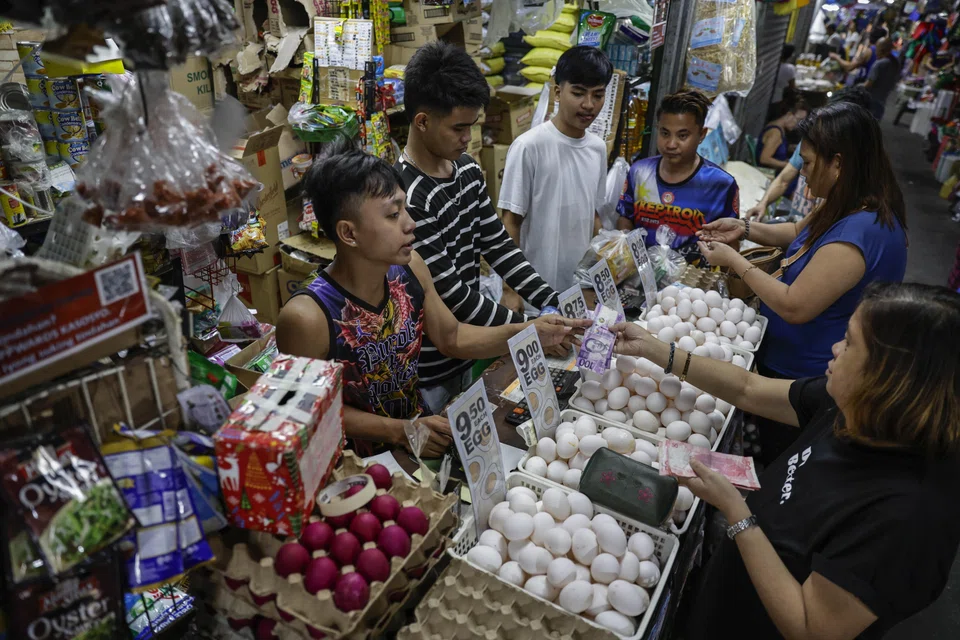
[JAKARTA] The Philippines pledged a rapid ramp-up in government spending starting this month to revive an economy hit by a sharp slowdown in growth and surging consumer prices.
Ahead of a review of economic targets on May 11, Finance Secretary Frederick Go said that the government has sufficient funds to back his spending plans and predicted a quick turnaround once the Middle East conflict is resolved.
“The economic team is totally optimistic that once the war in Iran is over, the growth of our economy will resume its previous path,” he said. “So, that means we are looking at the mid 5 per cent levels as soon as all these uncertainties are over.”
Data this week showed inflation has accelerated more than expected to 7.2 per cent, while economic growth slumped to 2.8 per cent, the weakest outside the pandemic since 2009. That’s raised the spectre of stagflation – low growth, high inflation and high unemployment. Go denies the situation is that dire, given the potential for a quick revival, but analysts are worried.
“The Philippines is going through a period of stagflation, with a combination of slowing and very weak GDP growth and high and rising inflation placing the central bank in an unenviable position,” Gareth Leather, senior Asia economist at Capital Economics, said in a report.
But Go said that “catchup spending” by the government will help revive growth.
“What we are hopeful for is what we underspent in January to April, we can make up for in May to August or in the coming months,” Go said on Thursday (May 7). He cited infrastructure projects, such as the construction of classrooms and farm-to-market roads, as well as social assistance as areas the government can prioritise spending.
The weak first-quarter growth was primarily the result of the impact of the war on Iran, Economic Planning Secretary Arsenio Balisacan said at the release of the government data earlier Thursday.
But he stressed that another key factor was the lingering impact of a multibillion-dollar flood-control scandal, which led to a drastic slowdown in project spending and a collapse in consumer and business confidence. Bad weather kills hundreds of people every year and leaves thousands homeless, a key reason for public fury over the scandal.
While state spending stalled as the government investigated the issue last year, the impact of the scandal is fading, Go said, urging large agencies to accelerate their outlays immediately.
“The Department of Finance did our part,” Go said, pointing to improved tax collection and fundraising. “We are completely ready with the sources of revenues to fund public expenditure.”
The challenge will be ensuring that if disbursement accelerates, there will be no parallel surge in graft. The Philippines ranks 120th on Transparency International’s Corruption Perceptions Index, below Nepal but ahead of Belarus.
But many analysts have predicted that even if the US and Iran reach a peace deal, oil prices may not quickly return to their pre-war levels. And other challenges loom: The onset of the El Nino dry spell could hit farm output and raise food prices.
The Philippines’ travails serve as a warning to many other emerging economies grappling with the fallout from the Iran war, which has choked the flow of vital supplies of crude and fertiliser to many parts of Asia. The Asian Development Bank cautioned that even if the conflict is resolved, the energy shock will continue to persist due to the damage to energy infrastructure and disruption to shipping routes.
Others in the region, from Indonesia to Australia, have found themselves in similar quandaries, with central banks weighing rate hikes to get price pressures under control against the risk of straining their economies further. But the Philippines stands out as having been struggling economically even before the US and Israel attacked Iran.
Go, who also sits on the policymaking board of the Bangko Sentral ng Pilipinas, said that it will be a “difficult discussion” when they decide on the policy rate again in June. Central bank governor Eli Remolona has signalled gradual tightening, while some economists have called for off-cycle, outsized hikes.
“The problem now is you have inflation high, growth low. So where do you go?” Go said.
Go, who took on the finance chief post in November, is optimistic that the economic recovery should only take one or two months once the Iran war is resolved. While the was one of the hardest hit by the closure of the Strait of Hormuz, it should also be one of those with the most to gain when the waterway reopens, he said.
The finance chief also said that foreign companies are still very keen to set up shop in the Philippines due to a young, English-speaking population that could be a strong workforce in the long term. He cited a US plan to build a 4,000-acre industrial hub on the main Philippine island, and a Mitsubishi Motors unit’s plan to manufacture hybrid cars south of Manila.
“The interest to invest in the Philippines is at an all time high,” he said. “I don’t think we will have stagflation.” BLOOMBERG
Decoding Asia newsletter: your guide to navigating Asia in a new global order. Sign up here to get Decoding Asia newsletter. Delivered to your inbox. Free.
Share with us your feedback on BT's products and services