



Philippines-Vietnam US$10 billion trade push risks running into rice politics
Manila’s rice import curbs, tariff uncertainty and a standing trade imbalance are testing commercial ties
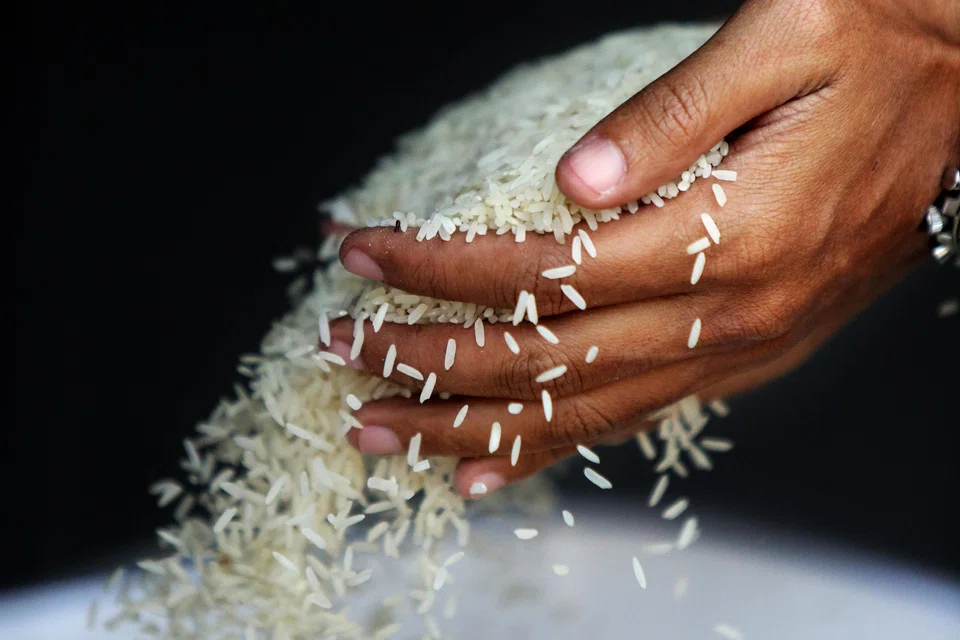
[MANILA] The Philippines’ push to lift bilateral trade with Vietnam to an ambitious US$10 billion for 2026 is running straight into an operational roadblock: Manila desperately needs Vietnamese rice to shore up its domestic supplies, but its habit of abruptly rewriting procurement rules is fracturing the trading corridor.
This policy volatility is testing the commercial boundaries of the relationship, just when political momentum is gaining steam. During the recent state visit of Vietnamese President To Lam to Manila, the two nations elevated their ties to an “enhanced strategic partnership”.
Yet, behind the diplomatic warmth, actual commerce is being stifled by a persistent trade imbalance, contract disputes, import policy swings on rice, and technical barriers that complicate planning for Vietnamese exporters.
Rice as the core commercial risk
Rice remains the centrepiece and a volatile variable of the bilateral relationship: Manila relies heavily on Hanoi to ensure its national food security; Vietnam supplies 85.3 per cent of the Philippines’ total rice imports, which amounted to 1.7 million tonnes in mid-May this year.
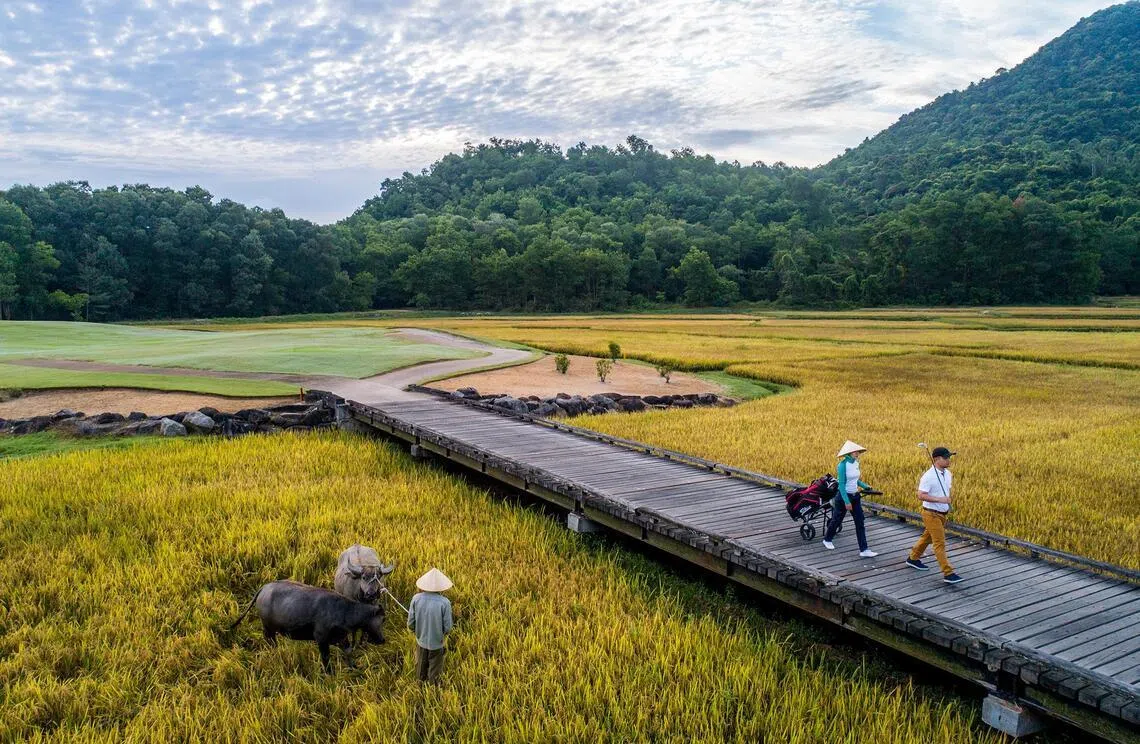
This trade corridor is equally critical for Vietnam, since the Philippine market consumes 40 per cent of Vietnam’s total global rice exports.
However, this mutual dependency is plagued by sudden regulatory shifts.
The Philippines has repeatedly resorted to abrupt policy interventions to protect its domestic farmers. Manila imposed a 60-day import ban at the beginning of September 2025 to shield its local producers during the domestic harvest. The embargo was later extended to the end of December.
The suspension, granted under the amended Rice Tariffication Law, stemmed from a decline in local farm-gate prices following a bumper harvest and a flood of cheaper imports.
Manila’s sudden pivot broke the momentum of Vietnam’s export engine. The restriction caused Vietnamese rice exports to plunge in late 2025, contributing heavily to an 11.5 per cent annual drop in Vietnam’s total rice exports for the year.
A new regulatory regime further complicated long-term planning for Vietnamese exporters: In January, Manila introduced a flexible tariff mechanism that allows duties to fluctuate by between 15 and 35 per cent based on international market prices.
The volatility strips grain traders of pricing predictability, forcing them to price in heavy risk premiums or delay bulk shipments entirely.
The Philippines also tightened non-tariff rules around food safety, traceability and “green” compliance. While framed as consumer protection, these measures operate as technical barriers that raise compliance costs for organisations such as the Vietnam Rice Sector Association.
The policy changes represent a first-order economic risk for Vietnamese agribusinesses attempting to budget for the multimillion-tonne shipments demanded by Manila.
Trade imbalance and contract friction
Bilateral trade between Vietnam and the Philippines has experienced a strong upward trajectory, rising from US$2.9 billion in 2015 to US$7.2 billion in 2025, with an average annual growth rate exceeding 10 per cent.
This rapid expansion has solidified Vietnam’s role as the Philippines’ 11th-largest trading partner, despite a lopsided commercial dynamic.
Vietnam runs a massive trade surplus with the Philippines. It reached US$3.7 billion in 2024, driven by exports exceeding US$6 billion.
While this year’s trade target aims for a more balanced framework, the trade deficit is compounded by mounting friction over contract enforcement – a pain point that has frustrated officials on both sides.
Philippine Agriculture Secretary Francisco Tiu Laurel Jr said that a major issue facing industry stakeholders is contract reliability. When international grain prices spike, Vietnamese traders frequently rescind their contracts with Philippine buyers.
“The contract enforcement problem has prompted Philippine industry stakeholders and government agencies to negotiate with Vietnam through a more coordinated approach,” he said.
Industrial integration
Beyond agriculture, Vietnam and the Philippines’ trade relations rely on industrial synergy.
Philippine President Ferdinand Marcos Jr said that, while Vietnam secures the Philippines’ food supply, the Philippines exported US$424 million in integrated circuits and US$200 million in electric motors to Vietnam in 2025.
Both countries are leveraging regional trade architecture such as the Regional Comprehensive Economic Partnership, and the Asean Trade in Goods Agreement, which serves as the institutional backbone for integration.
By streamlining rules of origin and eliminating intra-bloc tariffs, these frameworks let manufacturers treat Manila and Hanoi as connected nodes within a singular regional supply chain.
A Japanese manufacturer, for instance, can assemble components in the Philippines using Vietnamese sub-assemblies without triggering overlapping tariff systems – instead optimising logistics across the Asia-Pacific.
Japan’s Nidec, a precision motor manufacturer, also uses this cross-border architecture to build its spindle and mid-size motors in Philippine hubs. These components are then shipped directly to the group’s Vietnamese plants, where they are integrated into larger sub-assemblies.
FDI pipeline and regulatory realities
While trade in goods remains robust, cross-border investment between the two economies remains underdeveloped. Vietnamese foreign direct investment (FDI) in the Philippines stood at a modest US$92 million in 2025.
Though small, these capital inflows are highly targeted at modern sectors, specifically green transformation and electric-vehicle infrastructure such as electric taxis.
A position paper by the Philippine Institute for Development Studies calls on Vietnam and the Philippines to look beyond traditional security arrangements to achieve true economic productivity. Analysts recommended expanding cross-border retail systems and pursuing deeper industrial integration.
Both governments are actively pushing for corporate breakthroughs to scale up these investments. The Philippines is pitching its recent legislative reforms, including the Create More Act, the amended Foreign Investments Act and the implementation of expedited “green lanes” to market itself as an investment-ready hub.
Vietnamese firms looking to invest in Philippine renewable energy, modern agriculture, food processing or logistics can apply for green lane certification, which speeds up processing of permits and cuts bureaucratic delays.
Business traction and structural reforms
The enhanced trade partnership announced on Jun 1 has already delivered immediate business momentum, industry leaders said.
At the Vietnam-Philippines Business Forum held on the sidelines of President To Lam’s state visit, Philippine Chamber of Commerce and Industry president Ferdinand Ferrer said that 15 memorandums of understanding in key growth sectors were inked.
These include trade and technology development, energy, agriculture, tourism and transportation, which are expected to create more jobs for Filipinos.
But deep-seated execution gaps – ranging from bureaucratic red tape to lagging infrastructure roll-out – remain a primary deterrent for foreign capital, prompting market observers to call for more consistent structural reforms.
“The ease of doing business in the Philippines will have to be improved,” said the chief economist at Credit Rating and Investors Services Philippines, Emmanuel Leyco, in a reference to the glaring difference in economic governance between the two countries.
Vietnam’s fiscal discipline has consistently outpaced the Philippines’ execution of development programmes, he noted.
“When (Vietnam) says: ‘This is what is going to be done’, that is what is being done,” he added. “Unfortunately, here in the Philippines, when we have a great development plan on paper, not much is being followed.”
Macroeconomic headwinds have heightened the urgency for Manila to stabilise its bilateral ties with Hanoi.
In 2025, the Philippines was widely projected to be Asean’s second-fastest growing economy, trailing only Vietnam’s projected growth. But a volatile global environment has altered this trajectory.
The Asean+3 Macroeconomic Research Office (Amro) issued a downgrade for the Philippines in its June 2026 interim forecast, slashing its growth outlook from 4.4 to 4.1 per cent, which is closer to other Asean economies’ growth rates.
Amro attributed the downgrade to Middle East geopolitical tensions driving up energy and commodity costs, spiking domestic inflation risks and weakening the Philippines’ overall growth.
TRENDING NOW

Malaysian king buys stake in Singapore-listed mining firm expanding into rare earths

Family offices ‘kept captive’ by relationship managers turn to independent advisers, direct deals

Once staunchly pro-China, Malaysian Chinese businesses are now distancing themselves from Beijing

Could stablecoins be the future of money?

