As Pita seeks green light, Thailand’s economic outlook hinges on its achieving political stability
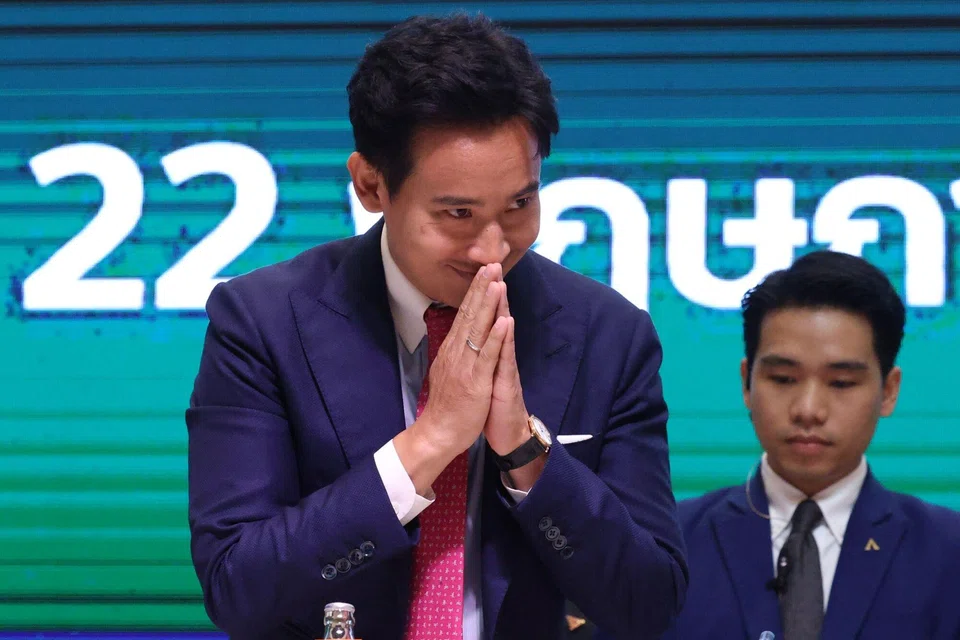
NEARLY three weeks have passed since Thailand’s general election was held, yet the country is still nowhere close to finding out who its next prime minister will be.
The May 14 polls were historic for many reasons. What was not unexpected was the record number of voters who turned up at the ballot boxes to deliver a firm rejection of the military-backed establishment that had been in power since a controversial coup in 2014.
Those votes gave the progressive Move Forward party a mightily impressive haul of 152 seats in the 500-seat Lower House, with Pheu Thai – the main opposition party – a close second with 141 seats. Put together, these two parties were streets ahead of what the party led by the incumbent prime minister Prayut Chan-o-cha managed, which was a less-than-stellar 36 seats.
As things stand, Move Forward – led by the charismatic Harvard graduate and businessman Pita Limjaroenrat – and Pheu Thai have joined forces with a number of smaller parties to form an alliance that has around 60 per cent of the Lower House.
In a simple world, that should be enough to hand the 42-year-old Pita the authority to become Thailand’s new leader. But such is the complexity of the rules put in place by the former military-backed government that it will take a Herculean effort for Pita to clear the hurdles in his path.
Anyone who wants to be the prime minister must command an overall majority of both the 500-seat Lower House and the 250 members of the Senate, a tough proposition, given that all 250 senators are not elected but rather appointed by Thailand’s military leaders.
The Election Commission has up to 60 days to verify the election’s official results, and only after that can a vote for Thailand’s 30th prime minister take place. What is clear, however, is that the ongoing uncertainty does not bode well for the outlook for South-east Asia’s second-largest economy, and the voters’ desire to have stronger democratic institutions.
The results of a new poll released this week found that two-thirds of Thais are concerned that Pita from Move Forward may not get the top job, and that the party could face hurdles in forming a new government. As far as the markets are concerned, political instability continues to hurt the stock market and the baht. The currency weakened for a third straight week against the US dollar, and is fast approaching a new low. This has led to foreign funds selling both the nation’s equities and bonds.
The Stock Exchange of Thailand (SET) index fell 3 per cent in the first week after the polls, with an outflow of funds not boding well for Asia’s worst-performing bourse in 2023. In the two weeks or so since the election, the SET’s market capitalisation has shrunk 1.7 per cent, or by about 132 billion baht (S$5.1 billion).
The general election results produced a major breakthrough for those who have long pushed for Thai democracy. The big question mark is whether the all-powerful Senate respects the wishes of the voters and ensures the selection process for the prime minister goes ahead smoothly.
TRENDING NOW
Grab CEO’s wife Chloe Tong on life with Anthony Tan and finding her purpose
US trade chief to consider trade deal tariff caps in excess capacity probe
Bee Cheng Hiang customers’ e-mail addresses exposed in Singapore’s first case of AI-related data breach
DFI Retail to take over Starbucks business in Asia from Maxim’s Caterers