



From plastics to property, Malaysia’s Mah Sing builds its business empire on ‘trust capital’
As Mah Sing grows beyond its founder-led roots, Lionel Leong and his sisters are focused on raising standards

Inside Asia’s family empires: How they are transforming to seize the next stage of growth
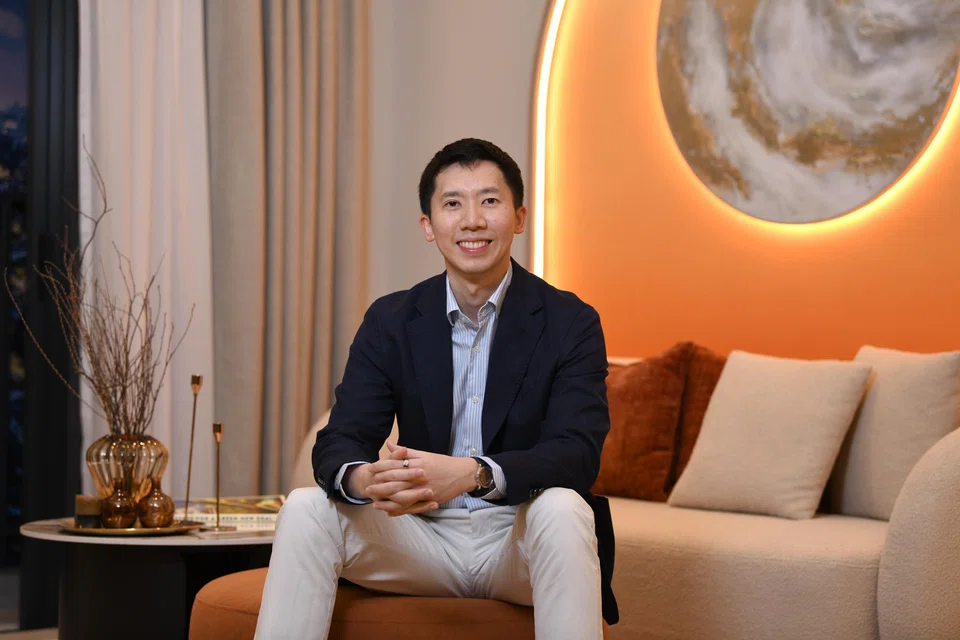
[KUALA LUMPUR] Long before Mah Sing Group became a RM2.8 billion (S$907.4 million) listed developer and one of Malaysia’s best-known property brands, Lionel Leong knew it simply as the family business – the plastics factory he visited as a 10-year-old and the property project sites he occasionally toured with his father.
“It never crossed my mind to work with my father. He never pressured us to join the company when we were young,” said the 36-year-old deputy group chief executive officer and executive director of Mah Sing Group.
Mah Sing began as a plastics trading business that his father, Leong Hoy Kum, took over at 22, expanding it into plastics manufacturing in 1979 before diversifying into property development in 1994.
Today, the Bursa Malaysia-listed group has delivered more than 60,000 homes, alongside townships, commercial centres and industrial parks. For the financial year ended 2025, Mah Sing posted profit before tax of RM382.9 million on revenue of RM2.5 billion. The group also sits on RM1.2 billion in cash, with low net gearing of 0.26 times and RM3.2 billion in unbilled sales.
Lionel Leong joined Mah Sing in 2013 as general manager of group strategic development and projects, after spending a year in investment banking. A graduate in economics and finance from the University of New South Wales, he entered during a buoyant property cycle.
“It was a vibrant period. Mah Sing is run quite entrepreneurially, and I wanted to be part of that energy,” he told The Business Times.
One of his early assignments was Southville City, a 173-hectare township in Bangi, Selangor, where he was involved in master planning – from design discussions to strategic positioning. The project gave him exposure to land acquisition dynamics and execution discipline.
By 2016, he was director of group strategy and operations, deeply involved in decision-making as the company rode a strong property cycle.
He is not the only second-generation family member in the business. His elder sister, Jane Leong, and younger sister, Rachel Leong, are both directors of group strategy and operations, with the three siblings working alongside their father to help shape Mah Sing’s strategic direction.
Mentoring and mindset
Working in a listed family-controlled company brings a different kind of scrutiny. Expectations run high, internally and externally, especially when the founder remains at the helm.
“There is pressure. You are not just working under a boss, you are working under your father,” he said.
Beyond family dynamics, there is also perception to manage as people may assume things come easy. “You have to let your work speak,” he added, noting the challenge is not about outworking everyone but earning credibility.
Despite the pressure, what impressed Lionel Leong most about his father was not just decisiveness, but composure.
“He is very decisive, but the decisiveness comes after he has processed the situation carefully. Watching that shaped how I think about leadership,” he said.
He also noticed that his father rarely brought workplace stress home. “Watching how he works, you can’t help but be influenced. When your parents are striving, it’s hard not to want to strive too,” he added.
That influence shaped his ambition – not to merely inherit a business, but to elevate it.
Culture over inheritance
In a company built over six decades, the hardest inheritance is not the shares, but the culture.
When Lionel Leong assumed a more visible leadership role, he stepped into a room of long-serving executives who had earned the founder’s trust over many years.
His task was not to impose authority, but to build buy-in for change, from refreshing the brand to tightening quality standards.
“When we suggest new ideas, we don’t mind being challenged. But we have to separate genuine concerns from resistance driven by convenience,” he said.
Quality became one of the earliest flashpoints. Some warned that raising standards would slow projects or inflate costs. “When we push for higher quality, people say you must compromise speed. We ask: Why can’t we optimise both?” he added.
He noted that the obstacle was people’s mindset. “If it isn’t broken, why fix it? That’s a common mindset. Comfort can hold you back.”
Mah Sing has been trying to show that cost, speed and quality do not have to come at the expense of one another.
In January, the group completed its M Astra project in Kuala Lumpur 15 months ahead of schedule, with a Quality Assessment System in Construction (QLASSIC) score of 89 per cent – a measure of workmanship quality in construction assessed by Malaysia’s Construction Industry Development Board. Over the past three years, it has delivered more than 14,000 units, with average QLASSIC scores above 82 per cent.
Changing mindsets, he said, required more than memos. “If you treat a mistake like a disaster, how will people have the courage to make decisions next time?”
“When people are confident, they can run the show. That’s how you scale a company,” he emphasised.
Rebranding and moving upmarket
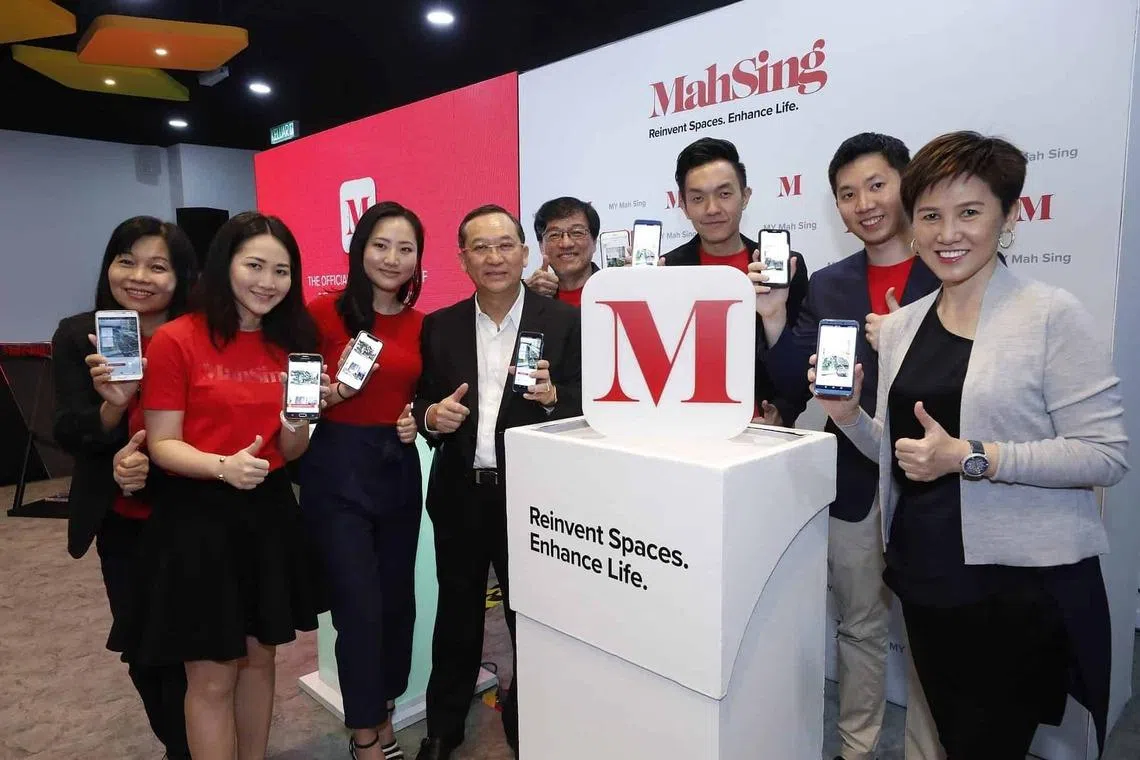
In 2017, Lionel Leong and his sisters spearheaded a rebranding of Mah Sing, unveiling a new logo and the tagline “Reinvent Spaces. Enhance Life”.
The shift was delicate, as the previous logo was closely tied to the founder’s story. But the siblings believed the brand needed to evolve to reflect the company’s expanding ambitions.
“Refreshing the logo wasn’t just about aesthetics. We wanted to build a stronger household brand that transcends our legacy,” he said.
Capitalising on its strong brand equity, Mah Sing enters 2026 with a 2,707 acre (1,095 hectare) land bank carrying an estimated gross development value (GDV) of RM30.5 billion.
Among its notable recent moves is the RM260 million acquisition of the former Corus Hotel site near Kuala Lumpur’s city centre. The site will be redeveloped into a premium residential project with an estimated GDV of RM1.28 billion.
“The land itself was the most attractive part of the deal,” Lionel Leong said, noting strong competition for the prime plot.
Plans for the prime site are still at the conceptual stage, but he said the project will be a luxury residential development aimed at both local and international buyers.
The move also marks Mah Sing’s return to the luxury segment, more than a decade after it launched Icon Residence in Mont Kiara, an upscale neighbourhood in Kuala Lumpur, in 2011.
Lionel Leong stressed that the move does not mean the company is giving up its bread-and-butter mid-range development.
“Moving into luxury forces everyone to think differently, for instance, how we design, sell, market and who we work with,” he added.
Mah Sing’s property business remains firmly focused on Malaysia, and he said the group has no immediate plans to expand into new overseas markets, resisting the push seen among some of its peers to venture abroad.
Its manufacturing arm, however, already has a regional footprint. The group operates four facilities across Malaysia and Indonesia, producing plastic products such as pallets as well as medical gloves. The glove division has a production capacity of about 45,000 pieces an hour.
Beyond homes
Beyond residential development, Mah Sing is expanding its industrial platform. A joint venture with KLK Land will develop a 202-hectare industrial park in Kulai, Johor, within the Johor-Singapore Special Economic Zone, with an estimated GDV of about RM2.3 billion.
The group continues to scout for new land after securing RM6.4 billion in GDV in 2025.
It expects improved performance in 2026, supported by a steady launch pipeline and expanding industrial portfolio.
Beyond land lbank and earnings, Lionel Leong speaks often about what he calls “trust capital” – an intangible asset he believes will define Mah Sing’s next phase growth.
“We want people to lend us money not just because of our balance sheet, but because of how they perceive the company. That’s trust capital,” he said.
In a capital-intensive business, funding hinges on more than numbers; track record, governance and brand shape how stakeholders assess risk.
Trust capital, he argued, is built gradually through consistent delivery, careful decisions and transparent communication and by institutionalising processes in a business long guided by founder instinct.
“Execution is what differentiates you. Capital alone is not enough,” he said, adding that: “Brand perception matters. Execution builds credibility, and credibility compounds”.
TRENDING NOW

Once staunchly pro-China, Malaysian Chinese businesses are now distancing themselves from Beijing

Looking beyond looming CEO succession, should UOB potentially pursue a transformative merger?

Could stablecoins be the future of money?

Grab CEO’s wife Chloe Tong on life with Anthony Tan and finding her purpose

