Policy flip-flops, overcapacity dull Indonesia’s ambitious solar energy goals
To avoid setbacks, the country must incentivise renewable energy and reduce its reliance on coal

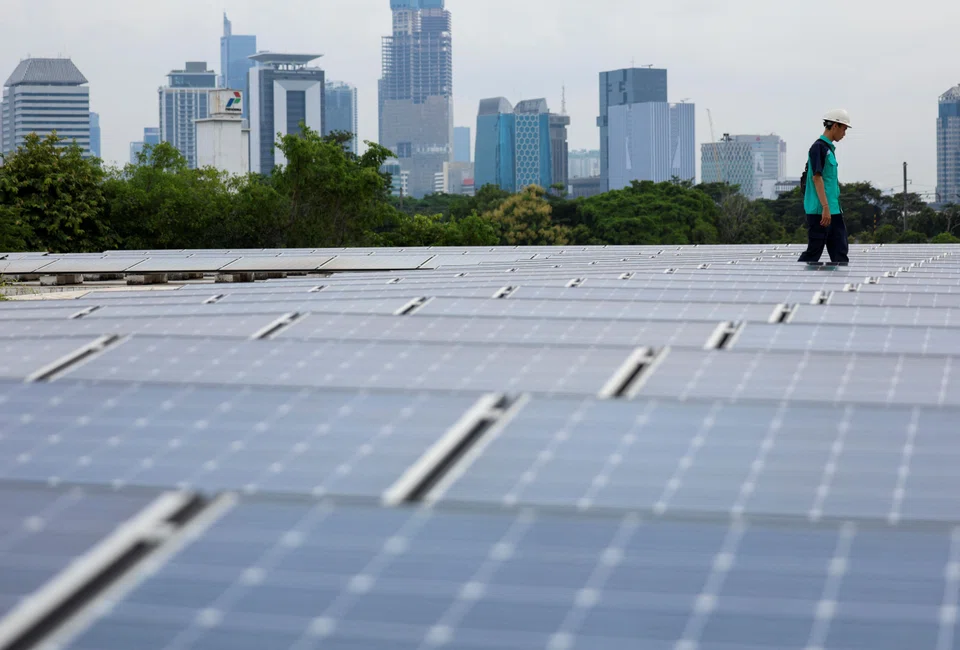
[JAKARTA] Regulatory flip-flops and overcapacity woes are straining Indonesia’s ambitious plans to scale up its abundant solar resources to decarbonise the energy sector.
Industry experts lament that inconsistent regulations on the back of policy U-turns are a major obstacle, further dampening investor confidence and hindering the country’s goal of reaching its net-zero target.
Fabby Tumiwa, executive director of Jakarta-based think tank Institute for Essential Services Reform (IESR) told The Business Times: “The government often flip-flops on its policies, and the implementation of regulations is uncertain. The rules often change and have confused people.”
In March, the government officially revoked the regulation allowing net-metering schemes for rooftop solar installations due to financial constraints faced by state-owned utility company PLN. This recent change could challenge the country’s renewable-energy targets.
Net metering, a scheme first introduced six years ago, allowed rooftop solar owners – be they households or small businesses – to export surplus solar-generated electricity to the grid operated by PLN in exchange for bill offsets.
The introduction of net metering significantly boosted the economic viability of solar; it led to 70 megawatts (MW) of rooftop photovoltaic (PV) systems being connected to PLN’s grid by the end of last year, primarily from industrial installations.
Despite strong public interest and enthusiasm for adopting solar panels, the regulation has undergone several amendments since inception, causing headaches among users and investors.
With the latest regulation, the installed capacity of new rooftop solar systems depends on the availability of clustered quotas, determined by the government and based on PLN’s proposals every five years.
This has raised concerns among investors, as the elimination of net metering will increase costs, and reduce the economic viability of solar PV installations, said Tumiwa, who is also an adviser to the Indonesian Solar Energy Association.
“This quota system originated from PLN’s objections (to net metering). If consumers generate their own electricity, it would lead to energy savings and a decrease in demand for PLN’s electricity,” he said.
The new system is thus a setback to the previous policy, which had effectively promoted rooftop solar installations.
Stealing the sunshine
Indonesia relies heavily on domestic fossil fuels, chiefly coal, to power its electricity, despite holding the largest potential for renewable energy in the region, with solar energy as a key contributor.
Blessed with year-round sunny weather, the country boasts an estimated 3,294 gigawatt-peak of solar energy resources. South-east Asia’s largest economy plans to add almost 2 gigawatts (GW) of new rooftop solar capacity by end-2025.
However, data from the Ministry of Energy and Mineral Resources reveals that the current installed capacity is 314.8 megawatt-peak, a mere fraction of its massive potential.
Critics have warned that unless the government and PLN cut the dominance of coal power plants in the electricity mix, it will be difficult to expand the renewable energy potential.
Excess capacity struggles
The recent policy change on net metering underscores the oversupply challenges facing Indonesia’s energy sector.
Bill Sullivan, senior foreign counsel with Jakarta-based law firm Christian Teo & Partners, said the removal of net metering was driven by PLN’s inability to sell the electricity it already had, making additional credits for rooftop solar-generated electricity financially untenable.
“Indonesia has too many power plants today. PLN cannot sell all the electricity that it produces,” he said.
Sullivan said PLN’s dominance in the energy sector means that regulatory policies and incentives are often skewed to support its interests rather than to promote the development of renewable energy.
PLN has been grappling with excess capacity in recent years because future demand was overestimated, and too many large fossil-fuel-fired generators had been built.
The overcapacity is noticeable in the Java-Bali grid, where it amounted to a 4GW surplus at the end of 2023, said the Energy and Mineral Resources Ministry.
This surplus has hindered the integration of additional capacity from renewable energy sources.
In May this year, PLN said it would need US$25 billion to build a transmission grid connecting renewable energy sources across Indonesia – a challenging task, given the country’s geographical landscape.
Solar lining: growing adoption
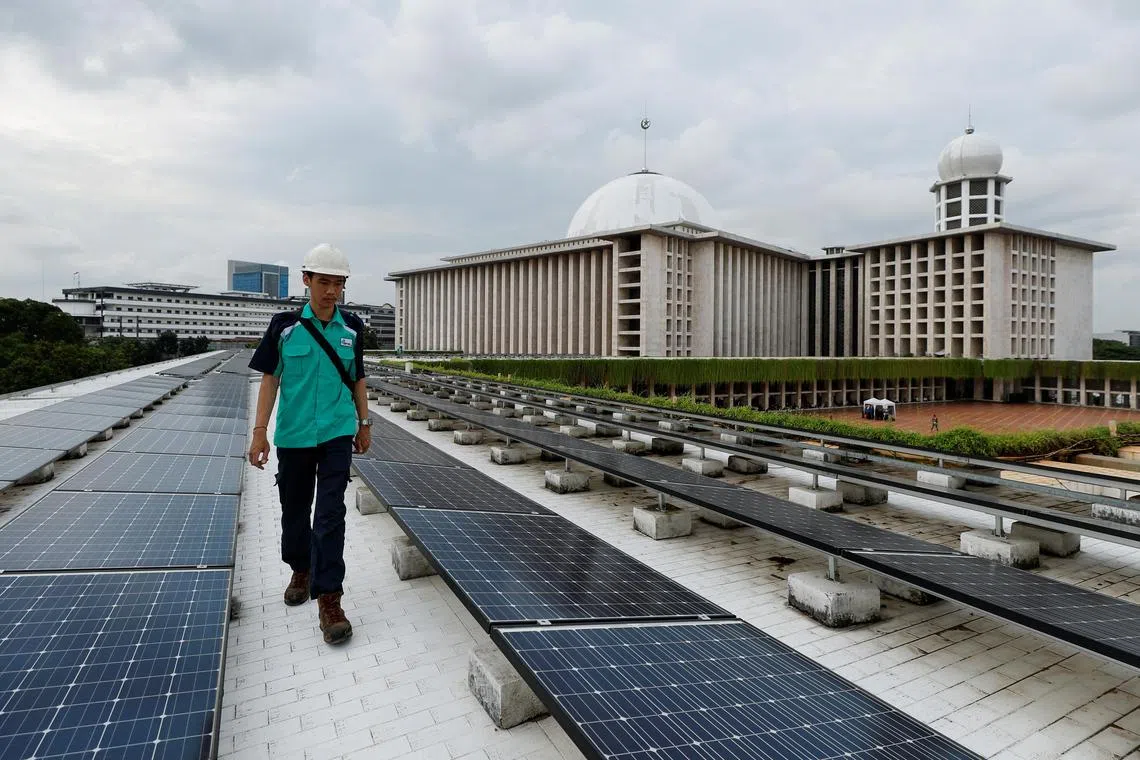
Despite the challenges of connecting to PLN’s grid, rooftop and ground-mounted PV systems are experiencing significant growth outside PLN’s electricity business licence areas.
Additionally, there is a surge in the adoption of ground-mounted PV systems with battery storage, which are replacing diesel generators in industrial areas, particularly in mining sectors.
Edwin Widjonarko, chief technology officer of Xurya Daya Indonesia, a renewable-energy company specialising in commercial and industrial solar rooftops, noted that more industries are turning to rooftop PV installation to reduce cost and to lower their carbon footprint – despite the lack of incentives.
The company has 179 projects in Sumatra, Java and Bali, with an average installed capacity of 500 kilowatts. It hopes to expand to Sulawesi and Kalimantan, where there is abundant potential for solar energy, and mining activities are growing.
“What we seek is regulatory certainty, as investing in solar rooftop requires a long-term commitment,” he said.
IESR’s Tumiwa expects floating solar projects with a power-purchase agreement scheme to continue leading utility-scale solar development within PLN’s capacity addition plan. This is largely due to favourable regulatory support from the government for PLN.
“Projects that partner PLN’s subsidiaries seem to be the preferred project development model going forward,” he said.
Last year, PLN launched a 192 megawatt-peak floating solar project in Cirata in West Java, projected to be the largest floating solar power plant in South-east Asia.
Undertaken in partnership with the Abu Dhabi company Masdar, it has an investment value of 1.7 trillion rupiah (S$147.1 million).
Setback for clean-energy agenda
Indonesia, having set clean-energy goals, has in recent years continually missed its renewable investment targets. Renewable-energy sources accounted for only 13 per cent of the country’s energy mix last year, with the rest powered by coal, oil and gas.
Sullivan emphasised the necessity of heightened government incentives for the renewable-energy sector, coupled with disincentives for the coal industry.
“The green-energy transition must be our priority. But the inconsistent regulatory approach by the government makes investors nervous about investing in Indonesia,” he said.
In the next two years, Indonesia plans to lower the targeted share of renewables in its national energy mix, a move seen as a setback to its clean-energy ambitions.
The National Energy Council has proposed a new target of 17 to 19 per cent by 2025, down from the previous goal of 23 per cent.
The target of adding 33.2 GW of renewable-energy capacity seems overly ambitious, Tumiwa said, considering that past investments have consistently fallen short of official targets.