Politically-linked Malaysian stocks rise and fall with new leadership at the helm
Tan Ai Leng
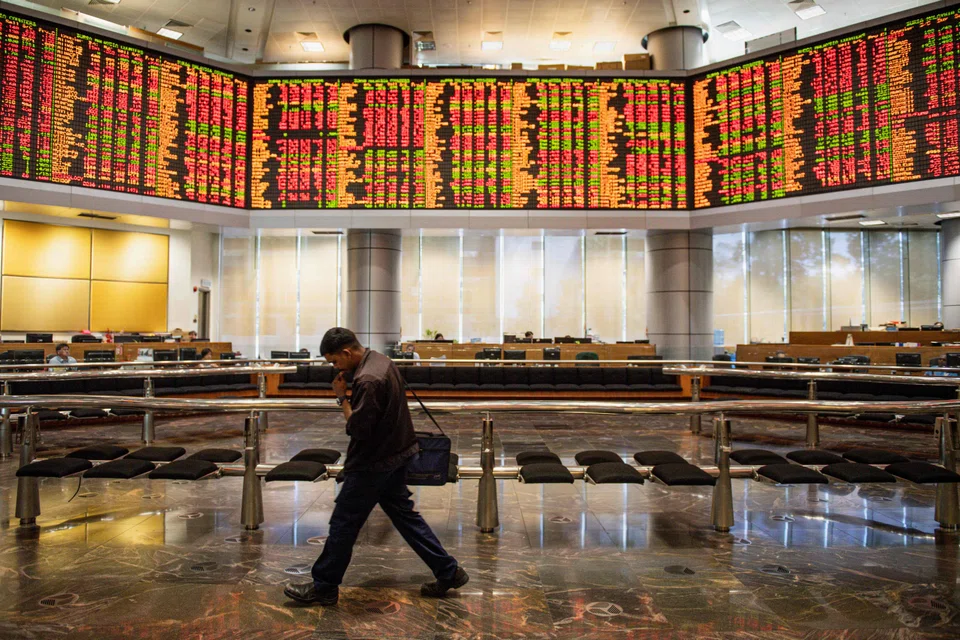
[KUALA LUMPUR] The conclusion of Malaysia’s 15th general election has provided a fillip to the country’s stock market. There have also been some pockets of increased interest in stocks with perceived political connections.
The benchmark Kuala Lumpur Composite Index (KLCI) closed at 1,477.19 points on Friday (Dec 9), up close to 2 per cent from 1,449.32 points on Nov 17 – the last trading day before the country’s snap polls.
Loo Boon How, a dealer representative at Affin Hwang Investment Bank, observed that market sentiment improved following the end of the country’s political impasse.
Although many local and foreign investors are still taking a “wait-and-see” approach, he said, Malaysia has finally come back on their radar again.
Retail investors, meanwhile, have shown some interest in political themes.
“Even though there are still uncertainties on the political landscape and economy, any slightly positive news is seen as a catalyst that will draw the interest of short-term investment,” he added.
Among the big gainers is Advance Synergy (ASB) – a company perceived to have connections with the newly appointed prime minister, Anwar Ibrahim. On Nov 24 – the day he was sworn in as prime minister – ASB’s shares surged 108 per cent to RM0.26 (S$0.08) per share, with 1.9 billion shares changing hands.
Momentum did not continue, and ASB’s share price has gradually come down and closed at RM0.165 per share on Dec 9. Even so, the stock is 32 per cent above its price before the election (RM0.125 per share).
ASB’s chairman is Ahmad Sebi Bakar, a former newspaper editor said to be close to former finance minister Daim Zainuddin and Anwar. Anwar has denied linkages with the stock in the past. ASB had also soared after the Pakatan Harapan (PH) coalition, of which Anwar is part, defeated the incumbent Barisan Nasional (BN) coalition in the 2018 elections.
Two other Anwar-related stocks are Malayan United Industries and Pan Malaysia Holdings, both companies in which Anwar’s sister Farizon Ibrahim is a director. Both saw similar trends, although the quantum was much weaker.
Industry observers said such speculative activity is typical following an election in Malaysia, as many investors hope these companies may get some government projects in the near future.
Ng Zhu Hann, chief executive officer of boutique fund manager Tradeview Capital, said such investments are risky but still attract many retail investors looking for “quick bucks”.
“There will be a few (uptrend) waves for these stocks. The first will be after the appointment of the ministers. If there is any news of project awarded to these companies, there will be second and third waves of increase,” he told The Business Times.
Trident Analytics chief research officer Peter Lim said there is no certainty these companies would get a government project thanks to their political connections. Even if they do, there are other questions to consider. Among them: What kind of projects will be awarded, and how big is the project size?
Still, he noted that some traders buy such shares as part of a strategy of balancing a portfolio out with some high-risk, short-term investments.
Companies perceived to be related to the Perikatan Nasional (PN) coalition leader Muhyiddin Yassin, meanwhile, saw their share prices decline after the former prime minister failed to secure the necessary majority support to form a government.
PN had secured the second-highest number of seats after PH, but neither coalition had the required 112 seats for a simple majority. Both coalitions were forced to negotiate with other coalitions and parties to secure the needed support.
Property development company Thriven – linked to Muhyiddin’s son Fakhri Yassin Mahiaddin – saw its share price fall over 25 per cent, after it emerged that Muhyiddin did not have the support from BN and Gabungan Parti Sarawak (GPS) that he had initially claimed.
After rounds of negotiations, Anwar managed to get BN’s support to form a new government. The East Malaysia coalitions – GPS and Gabungan Rakyat Sabah – joined PH and BN to form a unity government. BN leader Ahmad Zahid Hamidi and GPS leader Fadillah Yusof were appointed deputy prime ministers on Dec 2.
Following the announcements of the new cabinet, companies related to the two deputy prime ministers saw significant changes in their share prices and trading volumes.
Zahid’s daughter Nurulhidayah Ahmad Zahid was redesignated chairman of MQ Technology on Dec 5. That day, the stock surged 57 per cent, with 199 million shares changing hands.
Separately, Zahid’s son-in-law Saiful Nizam Mohd Yusoff was also redesignated as Jiankun International’s president on Dec 5. Jiankun’s share price rose 33 per cent to RM0.28 per share, from RM0.21 on Nov 17. The stock continued to trade higher on Dec 12, surged over 10 per cent and closed at RM0.32 per share – its highest level this year.
Share prices of Petra Energy and Reservoir Link Energy, which are perceived to be linked to GPS’ Fadillah, have also recorded a big jump in share prices. Against their prices on Nov 17, Petra Energy is now 40.8 per cent higher while Reservoir Link Energy is up 33 per cent.