
Potential US tariffs to put pressure on currencies of export-oriented economies: analysts
In contrast, domestic-driven economies’ currencies could be this year’s top performers, market observers say

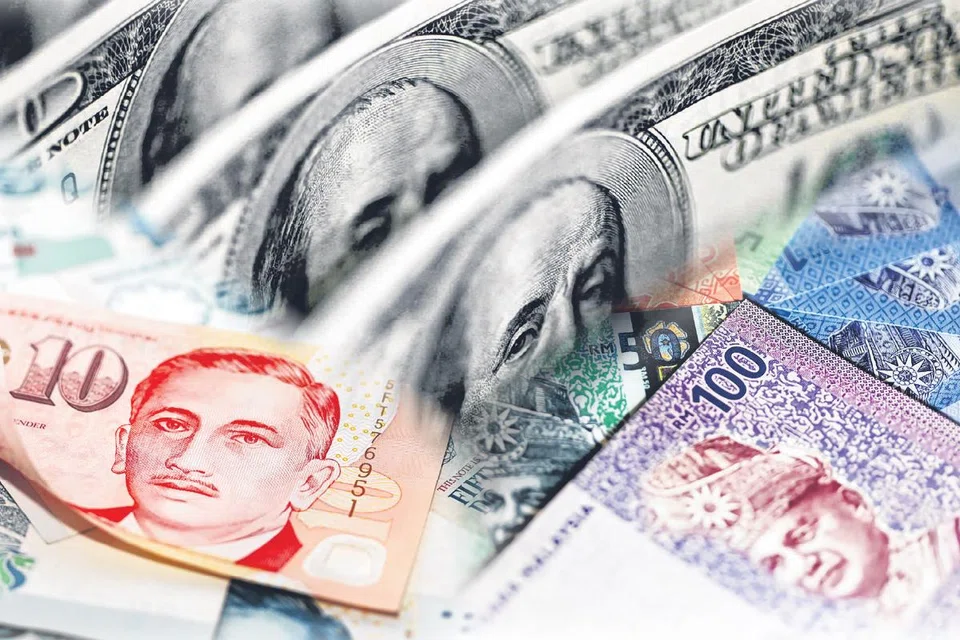
THE currencies of export-oriented economies will likely see the most pressure in 2025, amid a strong US dollar and possible US trade tariffs, market observers said.
These include the South Korean won, Malaysian ringgit, Singapore dollar, Taiwanese dollar and the Thai baht.
“We foresee (that) the biggest risks will be posed by US tariffs and potential induced retaliations and trade barriers,” said Li Lin, head of global markets research for Asia at MUFG.
Dr Li expects the tariffs to be implemented swiftly, which should result in weaker Asian currencies against the US dollar, especially in the first half of 2025.
Jerome Tay, investment manager of Asia fixed income at abrdn, expects the US tariffs to hit currencies of tech-exporting economies, such as Taiwan and South Korea, especially after these exports started to peak in 2024.
Chandresh Jain, rates and foreign exchange strategist for Asia, global markets, at BNP Paribas adds that the tariffs will likely fuel US inflation, as they limit the US Federal Reserve’s ability to cut interest rates aggressively, which in turn, supports the greenback.
The Fed cut rates by another 25 basis points in December, but indicated that there would be fewer reductions ahead.
Consistent strength in the US dollar may also be driven by a widening growth differential between the US and the rest of the world, especially under Donald Trump’s administration.
Against this backdrop, low-yielding Asian currencies – the Japanese yen, the Chinese yuan, the won and the baht, in particular – should come under significant pressure as well, he added.
In 2024, the yen was one of Asia’s biggest underperformers, due to significant interest rate differentials between Japan and the US, Jain said.
The Bank of Japan’s slow and gradual rate hiking cycle in 2025 will do little to narrow the interest rate differential with the US, leaving the yen vulnerable, he noted.
Additionally, he expects that the won will continue to grapple with outflows from corporates and the National Pension Service of Korea, while the baht will struggle due to sluggish gross domestic product growth and a lack of capital market inflows.
Meanwhile, the yuan will likely face downward pressure as it needs to depreciate further to offset the impact of US tariffs, he added.
In contrast, market observers foresee the currencies of domestic-driven economies being the top performers of 2025. This includes the Indian rupee, Indonesian rupiah and Philippine peso.
The high-yielding nature of these currencies will continue to attract bond market inflows, providing a supportive backdrop, said Jain.
MUFG’s Dr Li also noted that India and the Philippines are unlikely to be explicitly singled out by Trump, unlike Vietnam, which has been benefitting so far from the “China+1” supply chain shifts.
Ringgit and Singdollar depreciation
In 2024, the Malaysian ringgit was one of the region’s top-performing currencies, driven by substantial foreign direct investment and its robust GDP growth, said abrdn’s Tay.
Jain noted that the currency was also supported by the sale of US dollars by Malaysian government-linked companies, as well as the market’s low expectations of a rate cut.
For 2025, he expects a depreciation of the ringgit against the US dollar, driven by the adverse impact of tariffs and a stronger dollar environment.
Nevertheless, a potential mitigating factor could be the diversion of Chinese exports through Malaysia or supply chains structurally moving there, which may partially offset the expected weakness of the ringgit.
“This rerouting could lead to increased trade activity and foreign exchange inflows, thereby providing some support to the ringgit,” Jain said.
Tay added that the ringgit could also gain from “idiosyncratic drivers”, such as favourable interest rate differentials with the US and potential inflationary pressures, following the removal of fuel subsidies.
As for Singapore, Jain expects the Singdollar to be less affected by tariffs due to the city-state’s free trade agreement with the US. However, it will still be vulnerable to broader US dollar strength and regional economic trends.
MUFG’s Dr Li noted that the Singdollar was one of the more resilient Asian currencies in 2024, mainly driven by the tight exchange rate policy setting of the Monetary Authority of Singapore (MAS), which aims to keep imported inflation in check.
She expects the Singdollar to weaken further in 2025, driven by potential higher US tariffs and a likely looser MAS policy.
“We see no compelling reason for MAS to keep a tight exchange rate policy with inflation moderating to its soft inflation target, export momentum showing signs of slowing and some form of higher tariffs likely in the pipeline,” Dr Li said.