Power struggles within Umno expected to drive Malaysian GE voter turnout
Tan Ai Leng
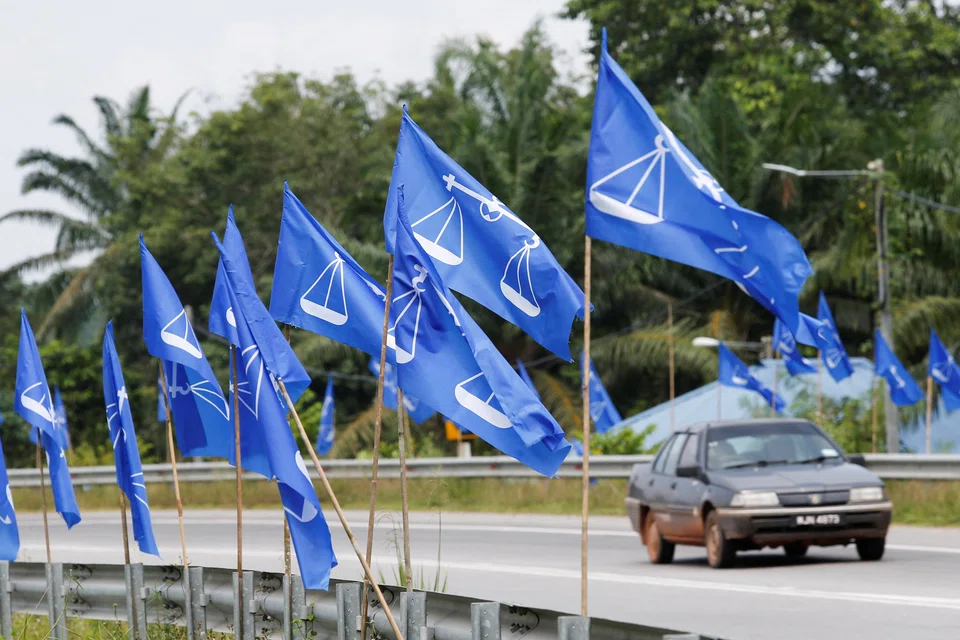
AS SIGNS point towards an internal power struggle within the United Malays National Organisation (Umno), Malaysians who have been fatigued by the ongoing political uncertainty in the country are reinvigorated to turn up for the Nov 19 general election in droves.
When Umno’s final list of candidates was released recently, party president Ahmad Zahid Hamidi sprang a surprise when he left out eight ministers and deputy ministers – all of whom are seen as key allies of caretaker Prime Minister Ismail Sabri Yaakob.
Before the announcement, it was reported that potential Umno candidates were given appointment letters to contest – but only on the condition that they sign letters of support to back the party president to become the next prime minister. Zahid and other Umno leaders, including Ismail, have denied the reports, but it’s clear that some damage has already been done.
Veteran politician Shahidan Kassim, a four-term member of parliament for the Arau constituency in Perlis, took down Barisan Nasional’s (BN) flags and closed down BN’s operation centre in the area after finding out he had been dropped. Umno is the largest component party of the ruling BN coalition.
The 71-year-old Shahidan later revealed that he would contest the seat – on a Perikatan Nasional (PN) ticket – in a three-way battle with BN and Pakatan Harapan (PH).
Former deputy communications and multimedia minister Zahidi Zainul Abidin, who was also dropped from Umno’s list, claimed that even if Zahid himself was eyeing the premiership, the latter’s multiple charges for money laundering and corruption would put him and the party at a disadvantage.
Chosen as the “poster boy” for Umno, Ismail is still widely seen as the most suitable person to be prime minister after the elections, given that he has not been formally charged for any wrongdoings during his time in charge.
At the last general election in 2018, the BN coalition led by former prime minister Najib Razak was defeated, mainly due to mounting public anger over Najib’s multi-billion dollar corruption scandal at Malaysia’s state-owned investment fund 1Malaysia Development Berhad. He is currently in jail serving a 12-year sentence.
That historic result five years ago did not happen by chance. Voters’ growing dissatisfaction of the integrity of the country’s leaders had been brewing since the 2013 polls, as BN only managed to secure 133 out of 222 parliament seats that year (down from 140 in 2008).
In the 2018 election, the PH coalition led by former prime minister Mahathir Mohamad swept a record 113 parliament seats – earning a simple majority and enough to topple the BN government which obtained only 79 seats.
However, many Malaysians were saddened to see the PH government collapse after just 22 months in charge, by a group that defected from the coalition in February 2020. This led to its fall and ushered in the PN coalition led by former prime minister Muhyiddin Yassin.
Ask Malaysians these days, and many will say they are getting tired of the seemingly incessant political changes in recent years, having witnessed the collapse of two governing coalitions and three different prime ministers in just four years. It’s not something that Malaysians are particularly proud of, given that political stability has typically been touted as one of the country’s main strengths when it comes to pursuing foreign investment.
In 2020, Malaysia saw its foreign direct investment (FDI) decline by 55 per cent year-on-year to US$3 billion. This was worse than Singapore’s decline of 21 per cent, Indonesia (22 per cent) and Vietnam (2 per cent), according to a report by the United Nations. For the whole of South-east Asia, the overall decline was 25 per cent.
There is no doubt that political stability is what Malaysia needs most at this point, and BN is touting this among its key messages in order to secure as much support from the county’s 21 million eligible voters as possible. What’s still unclear at this point is if voters that have been jaded by the endless power jostling within BN and Umno will be convinced to give them their vote.
A voter named Daniel, who works in Singapore and initially did not want to return home to vote due to costly plane tickets, changed his mind and will take a bus to head to Perak to cast his ballot.
“Looking at the recent developments and news of political infighting within Umno leaders, this is not the political stability that BN promised. I don’t know whether my vote will change the results but I hope to send one message: enough political fights, and please focus on managing the country,” he said.
Another voter, a property developer who asked not to be named, said that while the economic figures may look rosy, many businesses are reluctant to make big investments for fear that a change in government might affect their bottom line.
For instance, the cancellation of the Kuala Lumpur-Singapore high-speed rail project not only saw the government fork out millions of ringgit in compensation, but developers and businesses who invested heavily in real estate along the 350km line were left stranded.
All things said, BN is still widely seen as the favourite to win the election, given that its rivals do not appear to be as united as before. Many political analysts whom The Business Times spoke to share the same view, although it could just be by a simple majority. What’s more important, said one analyst, is that the winning party’s leader must also have the majority support from the party itself, or else it would be extremely difficult for the next prime minister to make sound and effective policy decisions.
TRENDING NOW
Grab CEO’s wife Chloe Tong on life with Anthony Tan and finding her purpose
What role can Japan play in Asean’s future?
Canada is upping oil flows to Asia, but South-east Asia’s refineries aren’t ready to handle them yet
As Malaysia’s chip goals morph into a multi-state model, are they outgrowing Penang?