



Prabowo and Indonesia’s central bank independence: What markets are watching
Analysts say the perception of political influence over monetary authorities in emerging markets can unsettle investors

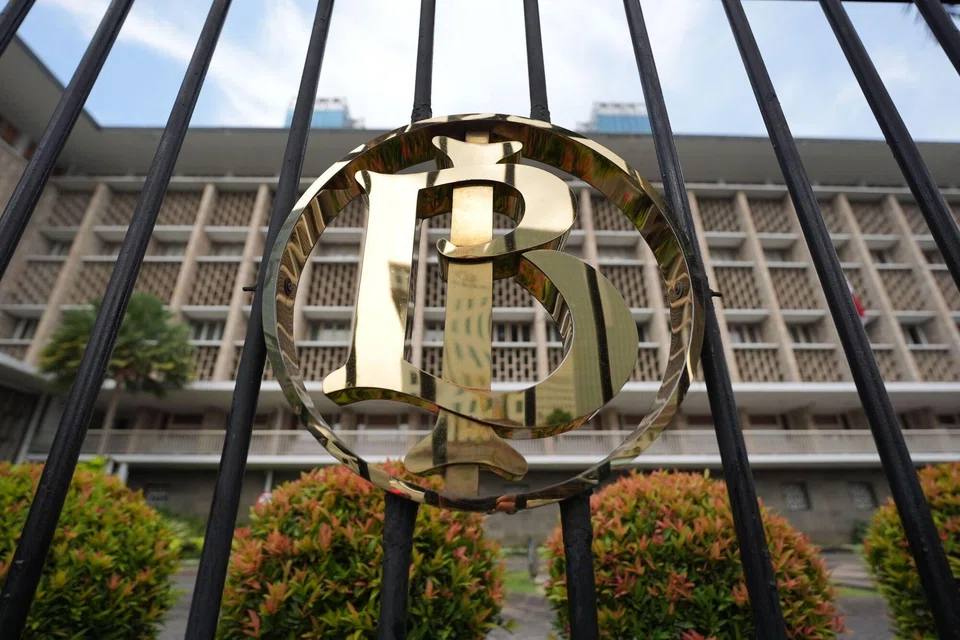
[JAKARTA] The vacant deputy governor post at Indonesia’s central bank, Bank Indonesia (BI), has come into sharper focus at a time when markets are already sensitive to fiscal pressures and policy direction.
Among the candidates put forward for the board-level role, one nomination has drawn particular attention.
That is because the nominee is President Prabowo Subianto’s nephew, Thomas Djiwandono, prompting debate among economists and market participants over perceptions of the central bank’s independence.
Analysts note that in emerging markets, even perceived political influence over monetary authorities can weigh on investor confidence.
Josua Pardede, chief economist at Permata Bank, said that family ties between a president and a central bank policymaker inevitably bring governance considerations into focus, regardless of professional qualifications.
BI’s board of governors, which includes a governor and several deputies, play a central role in shaping monetary policy, including decisions on benchmark interest rates and foreign exchange intervention.
The vacancy comes at a sensitive moment for markets, with the rupiah under pressure, fiscal space narrowing and BI signalling a more pro-growth stance after last year’s rate cuts, amid debate over its role in supporting government growth initiatives.
Teuku Riefky, an economist at the University of Indonesia, remarked: “The key question is whether BI will continue to take decisions strictly in line with its mandate of safeguarding rupiah stability and controlling inflation, before prioritising growth.”
Permata Bank’s Pardede said that in financial markets, perception matters as much as legal mandates.

“If investors begin to believe the central bank could be nudged to keep interest rates lower than warranted, lean more heavily on foreign exchange intervention, or expand quasi-fiscal support for government programmes, they will demand a higher risk premium,” he elaborated.
South-east Asia’s largest economy faces pressure to boost consumption as government spending tightens, with the 2025 budget deficit at 2.92 per cent of gross domestic product – just below the legal limit of 3 per cent.
BI cut rates by 125 basis points last year and signalled a pro-growth stance, in line with Prabowo’s aim to lift growth from around 5 to 8 per cent.
Fit and proper test
State Secretariat Minister Prasetyo Hadi said on Monday (Jan 19) that Prabowo had submitted three names to parliament for consideration as deputy governors of BI, following the resignation of Juda Agung, one of the incumbent deputies.
Among the nominees is Thomas or “Tommy”, currently deputy finance minister. Parliament is expected to conduct a fit-and-proper test on the candidates next week before deciding whether to approve the appointments, Prasetyo said.
The nomination comes at a time when global attention is focused on political pressure on central banks, particularly in the US, where President Donald Trump has repeatedly criticised the Federal Reserve and called for faster interest rate cuts.
Finance Minister Purbaya Yudhi Sadewa sought to downplay such concerns, describing the replacement as a routine process and insisting there was no government interference in monetary policy.
“There is nothing strange about it,” Purbaya told reporters on Monday. “BI is independent. We handle fiscal policy, they handle monetary policy.”
He added that talk of government encroachment was “mainly speculation”.
Thomas was appointed deputy finance minister in July 2024 under former president Joko Widodo. He is a businessman and serves as the treasurer of Gerindra, Prabowo’s political party.
The 53-year-old is the son of Soedradjad Djiwandono, a former central bank governor widely credited with helping restore BI’s credibility during Indonesia’s post-Asian financial crisis reform period.
Members are typically career central bankers, economists or former commercial bank executives, appointed by the president and approved by parliament.
The central bank is scheduled to announce its latest policy decision on Wednesday. Reuters’ market consensus expects BI to keep its key rate unchanged at 4.75 per cent, as the central bank continues intervening in foreign exchange markets to curb further currency weakness.
Market scrutiny
Harry Baskoro, a Jakarta-based independent economist and former central banker, said the key issue is whether institutional guardrails are effective in monetary policy decisions.
He added that markets would be watching the transparency of the nomination process, the rigour of parliament’s fit-and-proper test, and whether BI continues to take decisions based on clear, rule-based frameworks rather than short-term fiscal pressures.
“This appointment should be seen as a test of institutional process, not a verdict on any individual,” Harry added, warning that Indonesia’s credibility with investors and rating agencies depends on maintaining a visible distance between fiscal authority and monetary policy.
Rupiah hits record low
The rupiah extended its losses on Tuesday, weakening to around 16,955 per US dollar – its lowest level on record.
This was partly attributed by analysts to renewed concerns over central bank independence alongside persistent fiscal worries.
The currency has fallen steadily this year, making it the second-worst performer in Asia after the Indian rupee.
Michael Wan, senior currency analyst at MUFG, said the markets perceive the nomination, rightly or wrongly, as a potential impact on BI’s independence.
Local factors have weighed on the rupiah, Citi Research noted in a recent report. The bank pointed to Indonesia’s 2025 fiscal deficit, as softer revenues from lower commodity prices coincide with rising demand for countercyclical spending.
“Overall, a challenging external environment as well as adverse local macro outcomes are likely to manifest in an increase in Indonesian risk premium one way or the other, depending on the intent of policymakers,” said the bank.
The currency may depreciate to 17,000 per US dollar in the first three months of the year, according to MUFG Bank. “We continue to see IDR underperforming on these continued dynamics,” said Wan.
Decoding Asia newsletter: your guide to navigating Asia in a new global order. Sign up here to get Decoding Asia newsletter. Delivered to your inbox. Free.
Copyright SPH Media. All rights reserved.
TRENDING NOW

Two Singapore-listed palm oil firms named in Greenpeace report on Indonesian plantation fires

Singapore Airlines flight returns to San Francisco after ‘unruly’ passenger incident

Singapore looking into which companies responsible for haze-causing fires: PM Wong

Deluge IPO 3.86 times subscribed ahead of SGX debut

