



Prabowo hopes 15,000-rupiah lunch programme can unlock 8% growth
 Add BT as a preferred source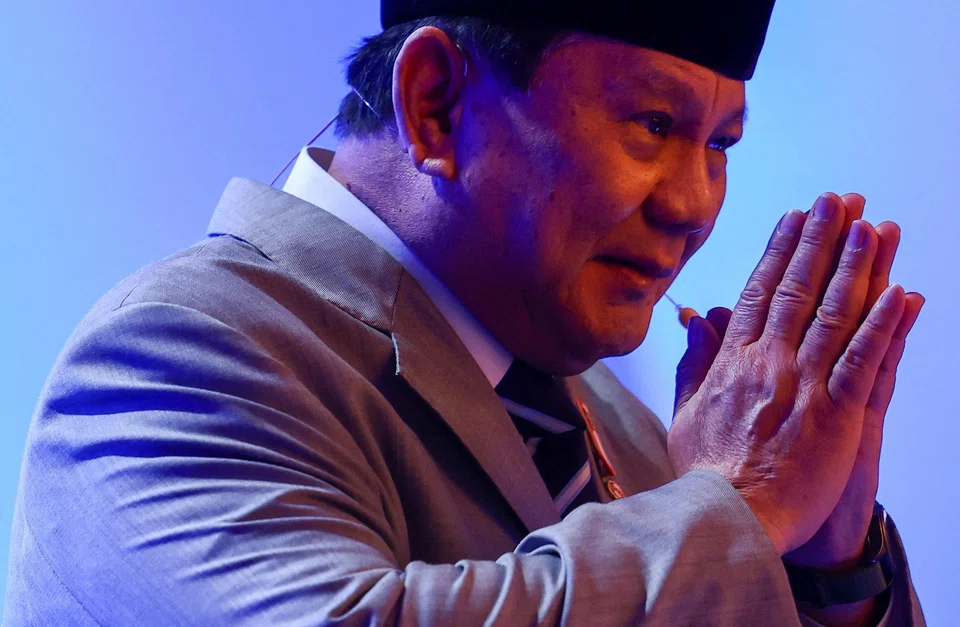
DeeperDive is a beta AI feature. Refer to full articles for the facts.
PRESIDENT-ELECT Prabowo Subianto is hoping his free school meals can unlock Indonesia’s growth potential. Two large Asian countries who have tread the same path offer lessons for the project’s success – and also serve as cautionary tales.
The former general has made offering 15,000 rupiah-worth (S$1.24) lunches to school children for free a hallmark of his campaign to lower stunting rates and improve academic performance. He visited a school in Beijing to observe their food programme, while his incoming vice-president is in talks with India’s ambassador about the South Asian nation’s free lunch rollout.
China and India, developing countries with large populations, offer examples for how Indonesia can feed 80 million children to boost productivity – key for South-east Asia’s largest economy to attain high-income status before its population gets old.
Children who were part of the world’s largest school feeding programme in India for five years showed an 18 per cent improvement in reading test scores and a 9 per cent increase in math scores compared with those with less than one year of participation, according to a study. China’s four yuan (S$0.74) of lunch subsidy per child in its poorer remote areas has helped boys and girls’ average heights and weights to rise faster than the rest of the country.
While free lunches could be key to Prabowo reaching his goal of 8 per cent economic growth during his five-year term beginning in October, such programmes are not free of pitfalls.
Supervising the safety of the programme, for one, will be a key challenge. A few school officials served expired milk in China, while in one northern Indian province, at least 23 primary school children died after eating pesticide-contaminated meals. New Delhi also investigated allegations that a few districts scrimped on meals or failed to provide them at all.
Navigate Asia in
a new global order
Get the insights delivered to your inbox.
Hidden benefits
In Tangerang, just outside the Indonesian capital of Jakarta, Niken Dyah Permata Sari, 14, would usually forgo lunch or eat food packed by her parents on schooldays. But she’s grateful for the ‘siomay,’ steamed fish dumplings with peanut sauce, served as part of Prabowo’s pilot programme at her school. And it saved her 7,000 rupiah.
“I really like this programme,” she said. “Not just me, but other kids are also enjoying it, because it allows us to save.”
While students such as Niken getting to save pocket money may seem to be the most obvious benefit of free lunches, the real gains are not always visible.
A free lunch attracts more children, particularly girls, to school, and enables them to learn better and maintain good health, according to the World Food Programme (WFP). It estimates that every US$1 invested in school meals yields up to US$9 worth of economic return, owing to improved health, education and productivity.
Still, some question the free lunch programme’s ability to truly unlock the economic potential of Indonesia’s large youth population, citing data that show health outcomes are mostly determined by the nutrition a child receives in the first 1,000 days of life – long before entering school.
About 22 per cent of Indonesian children under five years were stunted in 2022, and the country seeks to bring that number down to 14 per cent this year.
“To break the intergenerational cycle of malnutrition, it is important that children reach school well-nourished so their brains can absorb the education imparted in school,” said Nutrition International’s Asia regional director Manoj Kumar.
Political commitment
Then there’s the problem of continuity, as highlighted by the WFP’s school feeding project launched in 2023 in collaboration with the Indonesian government.
“At the point that it started, there was political commitment. But by the time it ended, there wasn’t sufficient political commitment for it to continue,” said Jennifer Rosenzweig, the Indonesia Country Director.
Already, Prabowo has had to temper his ambitions. Initially billed at as much as US$28 billion, the government is now allocating only about US$4.4 billion equivalent of funding for the free lunch programme to keep the state budget from ballooning.
“I give you free lunch, then what would happen? Oh, I am full. That’s it. If I give you a scholarship so you can go to school for free later on, you can feel more benefits in the long term,” said Esther Sri Astuti, executive director of think tank Institute for Development of Economics and Finance. “We need to focus on education improvement, not free lunch.” BLOOMBERG
Decoding Asia newsletter: your guide to navigating Asia in a new global order. Sign up here to get Decoding Asia newsletter. Delivered to your inbox. Free.
Share with us your feedback on BT's products and services
TRENDING NOW
Vietnam formalises new state leadership, redefining ‘four pillars’ power balance
‘Largest Singapore commercial S-Reit proxy’: analysts say buy CICT shares after Paragon acquisition

From 1MDB to ‘corporate mafia’: Is Malaysia facing a new governance test?
Why where you park your joint venture matters: Lessons from a US$689 million shareholder dispute

