Prabowo’s first 100 days: Populist wins but slowdown risks loom
Trump’s tightening of tariff policies can stymie the Indonesian leader’s ambitious 8 per cent growth target for the country while domestic challenges persist

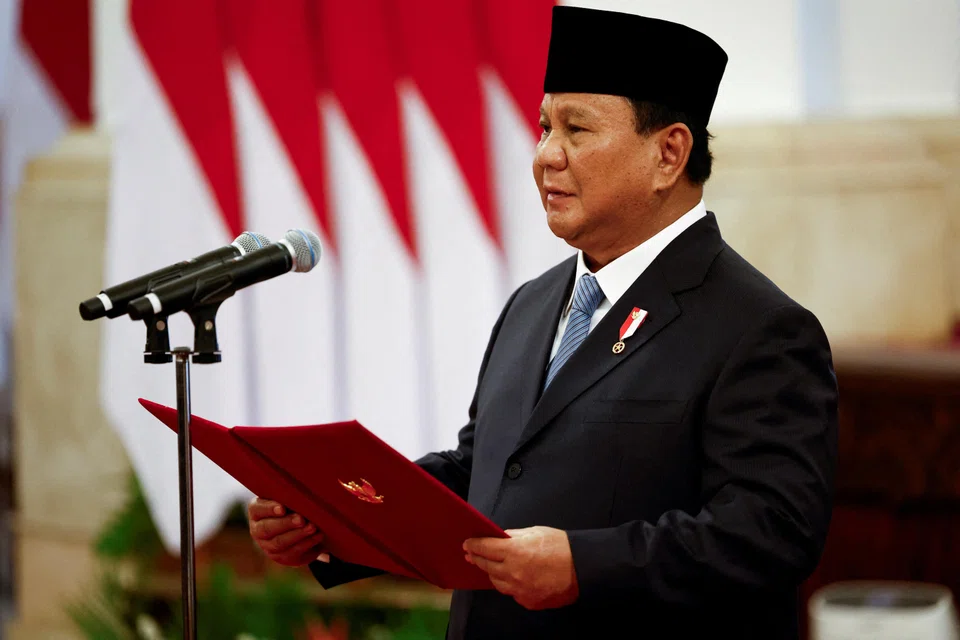
[JAKARTA] With an approval rating of more than 80 per cent and a focus on populist programmes during his first 100 days in office (as at Jan 28), Indonesia’s President Prabowo Subianto has won his country’s heart – but critics warned he will need more than charm to shield it from a looming economic slowdown.
The last three months have been a “warm-up lap” with Prabowo still operating in “business as usual” mode and yet to fully accelerate his ambitious goals, said Yose Rizal Damuri, executive director of the Centre for Strategic and International Studies.
“There is much to be done and improved, especially now that the world is in a fragile state with Trump’s re-election,” he added.
In a recent report, Lloyd Chan, senior currency analyst at MUFG, warned that new US President Donald Trump’s tariffs could slow Indonesia’s growth to 4.9 per cent this year from an estimated 5.1 per cent in 2024.
Since his October inauguration, Prabowo’s approval rating has soared to 81 per cent, driven by his people-focused governance and swift action on campaign promises, such as the free meal programme, indicated a Kompas survey of 1,000 respondents nationwide.
However, observers argued that the country’s economic outlook remains a mixed bag at best.
Trump’s return to power in the US and tightening of tariff policies could render Prabowo’s ambitious 8 per cent growth target for Indonesia wishful thinking while domestic challenges persist.
Yose said the business and investing community is still awaiting Prabowo’s economic policies to address persistent issues such as high economic costs, regulatory uncertainty and a decade-long growth stagnation.
Analysts at Schroders Indonesia recently highlighted ongoing challenges for Prabowo’s government, including sluggish consumer demand, stabilising shaky state finances and restoring confidence in the equities and currency markets.
“Clarity on both domestic and foreign policies will be key,” Schroders Indonesia noted.
Quick-win programmes
The 73-year-old politician has wasted no time implementing quick-win reforms, starting with a free nutritional meals programme launched in early January. It aims to provide complimentary meals to 82.9 million schoolchildren and pregnant women, with an initial budget of 71 trillion rupiah (S$5.9 billion) this year.
He also won support with debt relief measures for farmers, fishermen and micro, small and medium-sized enterprises. To sweeten the deal, he implemented salary increases for teachers and a 6.5 per cent hike in the minimum wage.
The free meal programme won favour with the public but earned investors’ criticism that the trillions of rupiah required could potentially strain public finances, denting Indonesia’s hard-earned reputation for fiscal discipline.
Furthermore, the meal programme has not been hurdle free with beneficiaries slamming the plan’s uneven logistical distribution and food quality management. Underscoring the challenges, the programme reached only three million students in the initial phase due to funding constraints.
Prabowo, who recently apologised for these shortcomings, has doubled down on the plan with additional funding to fast-track the scheme’s progress and hit the ambitious goal to feed all the country’s children by end-year.
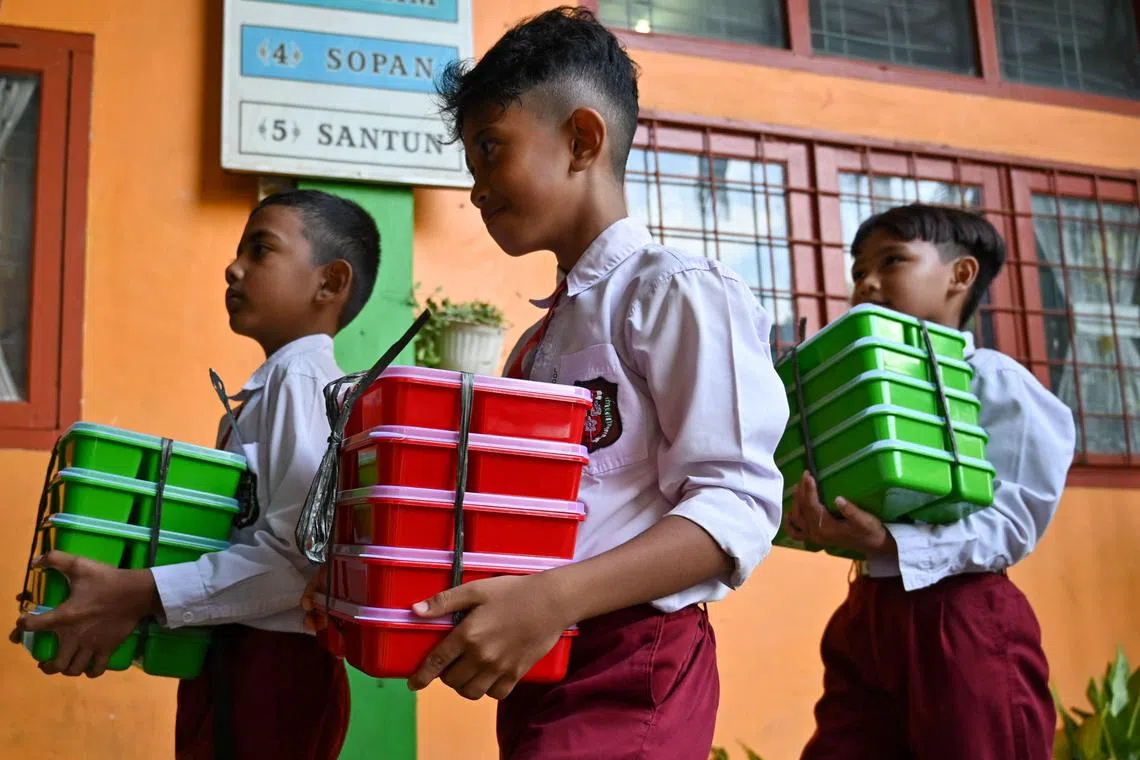
The National Nutrition Agency, responsible for implementing the free meal programme, estimated that an additional 100 trillion rupiah will be needed to meet this ambitious goal.
Economists said this will pile on fiscal pressure, and warned that the additional debt to fund the programme could hurt the country’s hard-won reputation for fiscal prudence.
Radhika Rao, senior economist at DBS, said higher spending will need to be balanced with efforts to increase tax revenue, especially since the planned 1 per cent value added tax (VAT) increase has been postponed.
“This also includes long-term goals to expand the tax base and improve tax collection efforts,” she added.
Of Brics and new order
On the international stage, Prabowo made bold moves by steering Indonesia into Brics – a so-called “alternative” trade bloc that counts China, India and Russia among its ranks, signalling his intent to shake up the global playing field.
The move has raised concerns among observers, who viewed it as jumping the gun, wary of a broader shift away from the West, particularly with the ongoing tensions between the US and China in the era of Trump 2.0.
Trump’s trade policies have cast a shadow over Indonesia’s financial market, with the country’s benchmark equity index taking a hit; the barometer has lost over 5 per cent since Trump’s victory.
The uncertainty has spooked investors, leading to a surge in Indonesia’s sovereign bond yields past 7 per cent, and causing the USD/IDR exchange rate to hover around the 16,300 level. The rupiah’s showing reflects pressure from fears of reduced global trade and capital outflows.
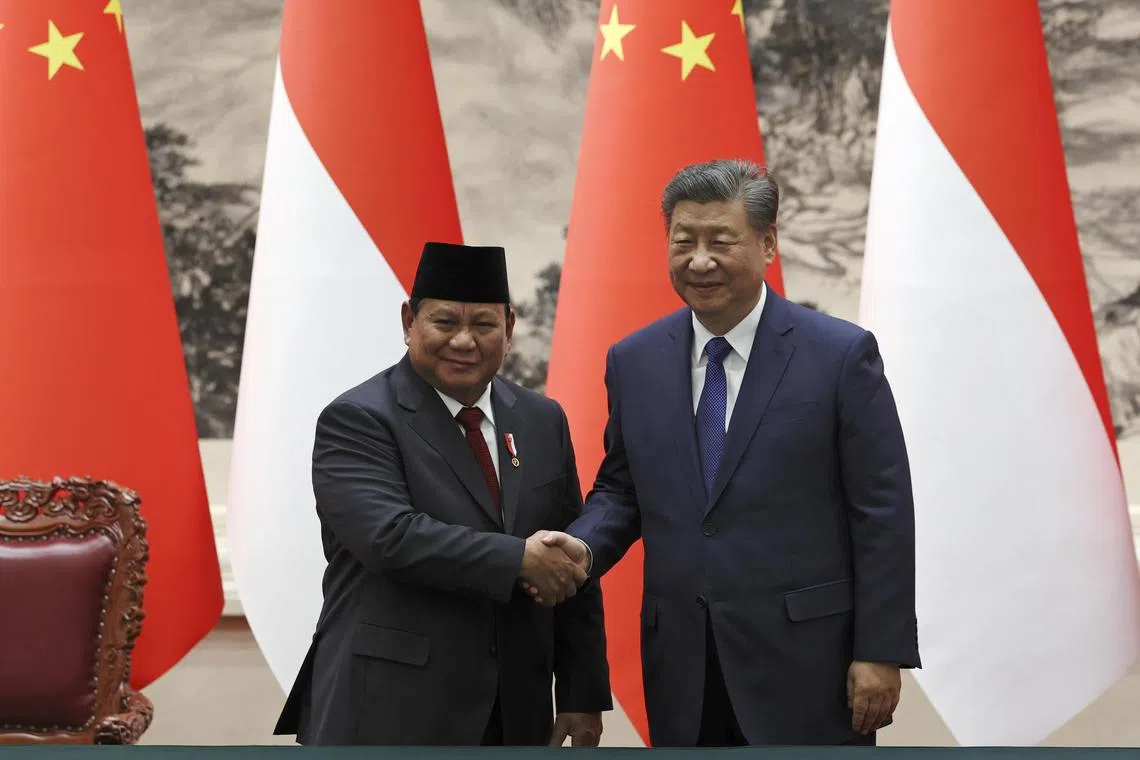
As Indonesian exports increasingly pivot towards China, the country is more vulnerable to the negative spillovers from US tariff hikes on Chinese goods. Chan highlighted that industries such as iron and steel, nickel, palm oil, coal, rubber and electrical machinery are particularly at risk due to their significant reliance on the Chinese market.
More of the same
Meanwhile, Prabowo appears to be continuing Indonesia’s long-standing tradition – and an investors’ bugbear – of abrupt policy changes, sparking uncertainty in the business landscape.
Bhima Yudhistira, executive director of the Center for Economics and Law Studies, viewed the lack of coordination on the VAT increase at the end of last year as one of the biggest missteps in Prabowo’s first 100 days in office, highlighting internal dysfunction within his Cabinet.
Late last year, Indonesia’s Finance Minister Sri Mulyani Indrawati came under heavy criticism for proposing a VAT increase from 11 per cent to 12 per cent starting in 2025, at a time when many citizens were already struggling with declining purchasing power.
In an attempt to ease the backlash, Prabowo clarified on Dec 31 – just nine hours before the regulation was set to take effect – that the VAT hike would apply to luxury goods only, aiming to lessen the impact on essential items.
This sudden decision left business owners in a bind, as many had already charged their customers the 12 per cent tax.
Low-hanging fruit
Prabowo’s efforts to spur economic growth could gain momentum following Bank Indonesia’s surprise move to cut its benchmark interest rate to 5.75 per cent, signalling the central bank focus on economic growth.
Ari Jahja, head of Indonesia Research at Macquarie Capital, suggested that attracting foreign direct investment and implementing structural reforms to enhance productivity are the low-hanging fruit for Prabowo to boost domestic growth amid slowing domestic consumption.
“Indonesia needs to significantly bolster total factor productivity growth by improving human capital through education, healthcare and ease of doing business,” he said.
A key fiscal milestone to watch is the 2026 budget proposal set for August this year, marking the first full budget under Prabowo’s administration.
MUFG’s Chan pointed out that plans for a major fiscal expansion, or anything approaching the 3 per cent legal limit on the debt-to-GDP ratio, could put pressure on the rupiah, weakening it against the US dollar.
On top of that, there are growing concerns about liquidity stress in the sovereign bond market, especially with Bank Indonesia now holding about a quarter of the country’s outstanding bonds – up from just 5 per cent before the pandemic.
“This shift could create some rough waters ahead,” said Chan.