



Private equity, tycoons fuel Philippines’ US$30 billion healthcare boom
State funding gaps have turned the sector into a prime market for foreign capital
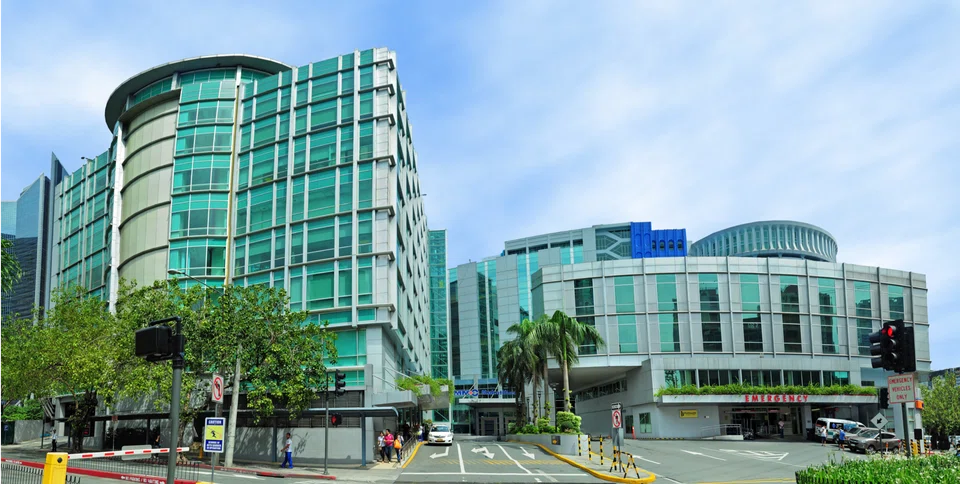
[MANILA] When Singapore-backed private equity firm ABC Impact finalised its subscription last September for a 16 per cent minority stake in Ayala Healthcare (AC Health), a major Philippine integrated healthcare group owned by conglomerate Ayala Corp, the deal was more than a routine injection of expansion capital.
Across the Philippines, global investors and domestic conglomerates are racing to scale healthcare platforms in a historically fragmented market. They are betting on rising incomes and gaps in public provision to drive demand for private healthcare.
But private capital alone cannot resolve the country’s healthcare gap. Public-private alignment will be vital for the healthcare industry to achieve true scale and efficiency, said Francis Del Val, a former managing director at Fortman Cline Capital Markets.
He has tracked surging investment interest in the Philippine health sector since 2023.
The sector is worth 1.87 trillion pesos (US$30.3 billion) but public and compulsory financing covered only 58.8 per cent of national health spending. Households paid the remaining 41.2 per cent out of pocket, data from the Philippine Statistics Authority showed.
Meanwhile, the investment boom is also driving up asset valuations and exposing tensions between private equity investors seeking profitable exits, conglomerates aiming for long-term growth expansion and the need to keep healthcare affordable.
Such tension is evident in the case of Metro Pacific Health – the nation’s largest private hospital operator (by network size), backed by US private equity firm KKR & Co, Singapore’s sovereign fund GIC and Filipino tycoon Manuel V Pangilinan’s Metro Pacific Investments Corp (MPIC).
KKR and GIC were reportedly looking to exit positions at elevated valuations but the trade sale has stalled due to pricing mismatches, Bloomberg reported, while Pangilinan’s group is pushing for Metro Pacific Health’s rapid network expansion from 31 hospitals to 50 in the next five years.
To do this, MPIC is seeking to raise its stake in Metro Pacific Health from 20 per cent currently to 30 per cent but is facing pricing hurdles.
Riding the boom
The healthcare units of Philippine conglomerates Ayala Corp and MPIC represent strategic growth opportunities in one of South-east Asia’s largest consumer markets.
While their valuation trajectories are steep, the healthcare units’ bottom-line contributions remain small relative to the two giant corporations’ core businesses in the power, real estate and banking sectors.
AC Health hit a turning point when it posted a net income of 34 million pesos in 2025, reversing a 607-million-peso net loss from the year prior.
The surplus constitutes less than 0.1 per cent of Ayala Group’s record core net earnings of 48.3 billion pesos. Still, the management has outlined a roadmap aimed at quadrupling AC Health’s implied valuation to US$2 billion.
The investment by ABC Impact, which is backed by Temasek Trust, will support AC Health’s roadmap to scale its footprint to 10 hospitals, 300 clinics and 1,150 pharmacies by 2027.
Meanwhile, Metro Pacific Health delivered a profit contribution of about 560 million pesos or 2 per cent of its parent MPIC’s core earnings of 27 billion pesos. The milestone marked a 70 per cent year-on-year surge driven by elevated inpatient and outpatient census.
Exit pricing mismatches
Pangilinan, who is MPIC chairman and CEO, and one of the Philippines’ most prominent tycoons, has detailed the gridlock stemming from seller target expectations.
“For now, what we’re hearing is that they’re not going to sell unless their target price is met,” he said back in November. “The market is open, but they’re not listening … If the market says it’s only X, you cannot tell the market, ‘I want Y.’”
Pangilinan said that while Metro Pacific Health slowed its dealmaking pace during the pandemic, the operator is back on track to expand its current 31-hospital, 4,800-bed network.
KKR and GIC originally invested between US$680 million and US$685 million in 2019 for a majority stake in Metro Pacific Health, when it operated only 14 hospitals.
The asset has drawn interest from global private equity players including Warburg Pincus, CVC Capital Partners and TPG at valuations of about US$3 billion.
Acquisition pipeline
Beyond Metro Manila, the country’s capital region, Philippines-focused private equity firm Navegar and impact investor LeapFrog Investments have teamed up to inject growth capital into Global Care Medical Center, a network of private level-two healthcare facilities across the country.
They are targeting regional hospital capacity expansion over the next three to five years, betting that tier-two cities will become the next growth frontier.
However, with greenfield hospital construction requiring lengthy gestation periods, as in the case of AC Health’s three-billion-peso Healthway Cancer Care Hospital in the city of Taguig, conglomerates heavily favour acquiring established facilities.
AC Health, which operates seven hospitals, 250 clinics and 900 drugstores, needs to secure at least three more hospitals to hit its 10-hospital target.
The group is looking beyond Manila into fast-growing regional hubs where public capacity is thin and private beds can be filled quickly.
Rafael Jaime Recio, chief strategy and investments officer at AC Health, said that the firm remains disciplined despite the pressure to grow. “The target is to expand by three to five clinics per year in major areas where we feel that it’s important for us to be in,” he added.
Recio drew a clear line on AC Health’s dealmaking playbook: targets must be level-two institutional centres boasting at least 100 beds, prime urban footprints and an established doctor base. “We’re being very selective ... For us, it’s important that there are good doctors there since, honestly, doctors are the heartbeat of a hospital,” he added.
Cross-border and digital integration
To complement physical infrastructure and lower cost structures, healthcare platforms are expanding cross-border supply chains and digital health capabilities.
AC Health has partnered Indonesia’s Dexa Group to distribute pharmaceuticals across the Philippines through Dexa subsidiary, Glorious Dexa Mandaya Philippines.
Regional operators are also scaling in the area of diagnostics, with Mitsubishi acquiring a minority stake in Singapore-headquartered corporate healthcare platform Fullerton Health to accelerate integrated clinical models across Singapore, Indonesia and the Philippines.
Meanwhile, Metro Pacific’s digital health platform, mWell, has completed the full acquisition of KonsultaMD from Globe Telecom’s 917Ventures, integrating the Philippines’ two largest telehealth services into a single ecosystem.
Other players in the telemedicine sector are Doctor Anywhere PH (a joint venture between the Singapore company Doctor Anywhere and the Philippine conglomerate Equicom Group), NowServing, MedGrocer and startup SeeYouDoc.
The sector is projected to expand from US$2.1 billion in 2025 to US$8.2 billion by 2034, with a compound annual growth rate of 15.5 per cent, said Ashina Gupta, market research analyst at Industry Research Reports.
She noted: “Over 78 million smartphone users, affordable prepaid mobile data packages, and the proliferation of mobile wallets for digital health payments are creating a mobile-first telemedicine ecosystem uniquely suited to the Philippine consumer market.”
TRENDING NOW

Britain’s mansion tax shows the difficulty of targeting wealth

Once staunchly pro-China, Malaysian Chinese businesses are now distancing themselves from Beijing

The only common thing in S-E Asia is that we all eat rice: Cisco’s Asean president
Singapore data centre operator DayOne opts for US IPO at likely US$20 billion valuation

