Property market in Vietnam faces headwinds, but market watchers see positives in the longer term

Raphael Lim
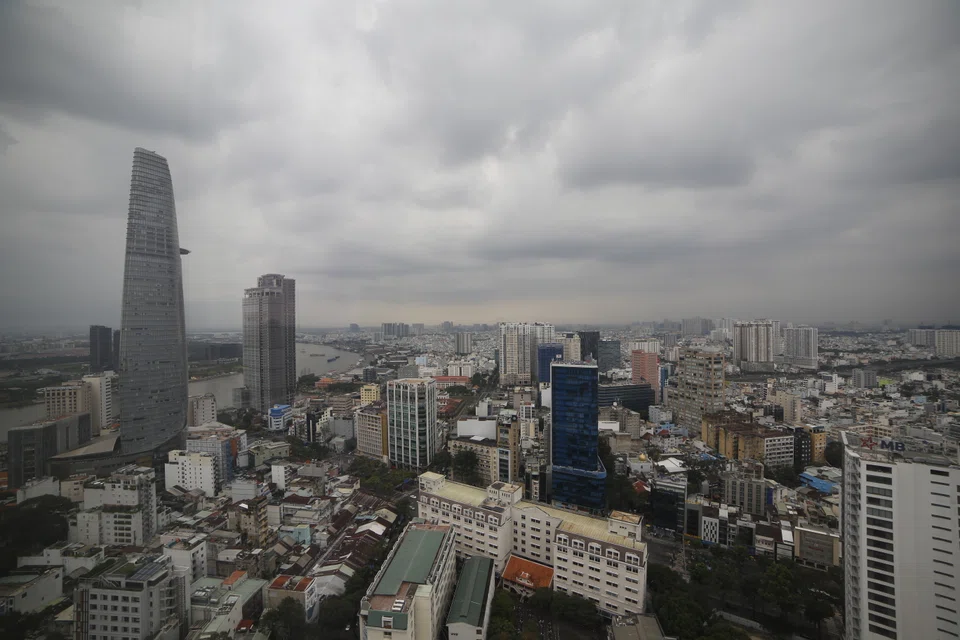
THE real estate market in Vietnam is facing headwinds currently amid a crackdown on irregularities in the corporate bond market. But experts see a low likelihood of a major real estate downturn, and do not expect systemic risks to arise.
They also believe that there would be longer-term positives in the market.
“The current property crisis is not likely to be systemic because of the real estate sector’s moderate size and limited linkages to the banking sector,” analysts from Maybank Research said in a recent note.
Meanwhile, analysts from Fitch also said that, in the event of a property downturn, developer-related exposures would pose the greatest risk for banks. However, residential mortgage quality could also be affected in more significant market downturn scenarios. “Nonetheless, we view the likelihood of a major real estate downturn as low,” they added.
Property prices in Vietnam have been growing for the past decade following the Global Financial Crisis and have stayed resilient despite global economic headwinds.
Apac Realty , which earlier this month increased its stake in real estate brokerage ERA Vietnam, said that average pricing for new condominiums across Ho Chi Minh City increased 8.6 per cent on year to US$2,455 per square metre in the first half of 2022.
But high prices in the country have also sparked concerns over affordability.
The Maybank analysts noted: “Property prices have skyrocketed in recent years and become increasingly unaffordable, particularly since the pandemic.”
Meanwhile, local property developers are also facing liquidity issues.
Bloomberg last month reported that the property crisis started after officials issued a crackdown on corporate bond issuances following allegations of illegal activities. This set off a series of actions to rectify the property market, such as high-level arrests, freeze of new issuances and an overhaul of the bond industry.
The Maybank analysts said that souring sentiment, high mortgage rates and developers’ possible forced selling of property assets at a discount to raise cash may put significant pressure on the property market.
But they also pointed out that the State Bank of Vietnam has a range of tools to alleviate the liquidity crunch, and will “likely intervene to prevent the crisis from becoming systemic”.
The moderate size of the real estate sector also reduces the likelihood of systemic issues.
Real estate and its closely-related industries – construction and finance – account for around 15.6 per cent of real GDP in 2021, the analysts said.
They noted that this is considerably lower than China, where it is estimated to account for as much as 30 per cent of GDP.
The Fitch analysts observed that banks have buffers for a moderate stress scenario. But under a severe stress scenario, there is a risk that several banks could fall below minimum capital requirements. Even so, they said a distressed property market is not their base case..
“Apartment prices in key cities have continued to rise in recent months and we expect prices to remain supported by demand and slower completions, assuming no unanticipated macroeconomic shocks,” they added.
Meanwhile, there could also be positives for the sector in the longer term.
The Fitch analysts said in November that regulators’ pre-emptive moves to contain potential risks in developer funding is a “modestly positive sign for the long-term sustainability of the sector’s financing”.
The Maybank analysts also said that tightening oversight of bank loans to developers and homebuyers will help cool speculation and prevent property market overheating.
They added that recent tightening of corporate bond issuance rules would reduce information asymmetry between issuers and investors and enhance the quality of the private bond market.
“Developing the corporate bond market will diversify firms’ sources of capital, and reduce reliance on bank credit,” they explained.
Lawrence Peh, who advises real estate projects in Vietnam, said that the confidence level for local developer launches may have dropped, but appetite for properties from foreign developers remains strong.
“Any foreign developer now – especially Keppel Land (and) CapitaLand – which has been there for the last 20 years, they command the confidence of the people,” he noted, adding that this also shows that the underlying demand for good properties remains.
Population dynamics in the country of nearly 100 million and local aspirations for property ownership may be a reason why real estate prices have sustained over the years.
“We do not know how big the middle class is. The middle class is very hardworking, they hold multiple jobs, they are very entrepreneurial, they are very used to taking risks,” Peh said.
Such individuals may have been responsible for the sustained property market performance in Vietnam in recent years.
The growing middle-class and low unemployment rates in Vietnam are also among reasons why Apac Realty believes that the outlook for Vietnam’s real estate market “remains positive”
ERA Vietnam chief executive Pham Thanh Tuan said earlier this month: “While there is an abundant supply of unsold units in Ho Chi Minh City, demand for well-located quality new homes by reputable local and international developers continues to be strong with home buyers and investors.”
He pointed out that the Chinese government has provided support for the real estate market in China, and believes a similar situation would take place in Vietnam. “For us, we see that the real estate market will be back to normal some time in the second quarter,” he said, noting that developers would also be trying to market their projects.