



Public opinion divided on Malaysia’s anti-graft efforts after 1MDB-related charges dropped against Najib
The ruling raises doubts about the government’s anti-corruption efforts, echoing concerns from DPM Ahmad Zahid Hamidi’s similar discharge just over a year ago

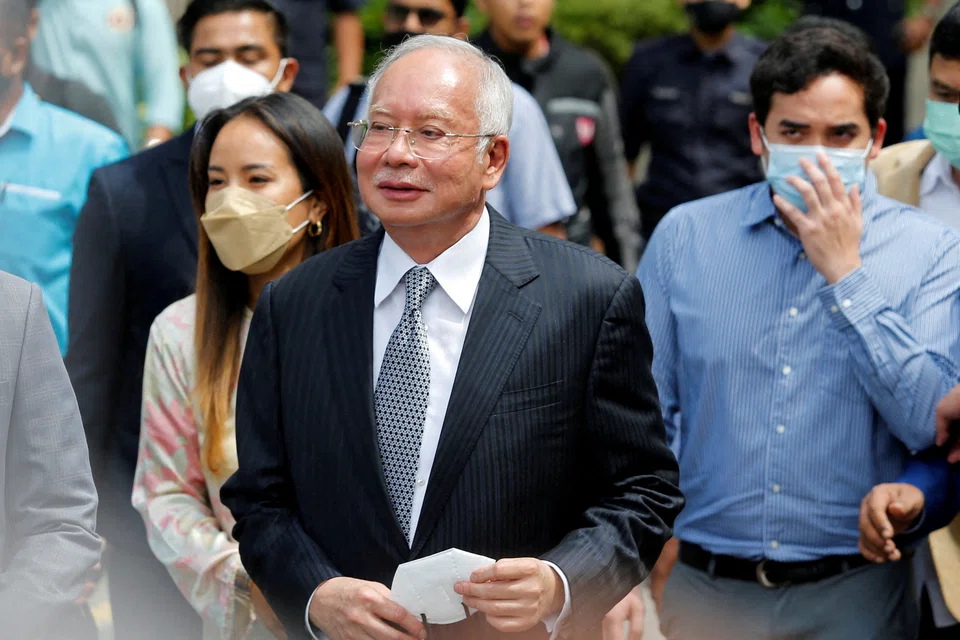
[KUALA LUMPUR] The Malaysian High Court’s decision on Wednesday (Nov 27) to grant a discharge not amounting to acquittal (DNAA) to former prime minister Najib Razak and a former top treasury official in the high-profile 1MDB-related trial has reignited public debate over the country’s resolve to combat corruption.
While some Malaysians view the decision as justified, others question the attorney general’s competence and the government’s commitment in pursuing high-profile corruption cases.
According to reports, Judge Muhammad Jamil Hussin attributed the ruling to significant trial delays and the prosecution’s failure to provide complete documents.
He also emphasised that the ruling does not absolve Najib and former treasury secretary-general Irwan Serigar of legal consequences, noting that charges in the International Petroleum Investment Company (IPIC) case can be reinstated at a later date.
The case involves allegations of criminal breach of trust, with more than RM6.6 billion (S$2 billion) in government funds reportedly misappropriated. These funds, intended for development projects, were allegedly diverted to IPIC to settle debts related to 1MDB.
The ruling has heightened concerns about the government’s commitment to fighting corruption, particularly after Deputy Prime Minister Ahmad Zahid Hamidi was granted a similar discharge last September in a case involving 47 charges of criminal breach of trust, graft and money laundering linked to Yayasan Akalbudi.
Divided voices
Frustration ran high as many Malaysians took to social media, expressing their disappointment.
They questioned how the prosecution could fail to advance the case after six years, casting doubt on whether the charges would ever be reinstated.
While some respected the court’s decision, others argued that the inability to produce evidence over such a long period might point to a lack of solid proof against Najib and Irwan.
Amid the uproar, a netizen lamented that “the people’s money is gone, who took it? Who will return it?”
Some disenchantment seems to have emerged after Prime Minister Anwar Ibrahim proposed a new law permitting house arrest, which many associate with Najib. Observers also pointed to perceived inconsistencies in the government’s approach to justice.
Double standards
Tharma Pillai, co-founder and advocacy director of Malaysia’s youth movement Undi18, highlighted the need for the Attorney General’s office to address inefficiencies, particularly its challenges in producing proper documentation in key cases involving high-profile politicians.
While this controversy is unlikely to destabilise the government, it has contributed to a decline in public trust. Pillai noted: “This is an issue they will need to address.”
Dr Liew Wui Chern, a policy analyst and lecturer at Universiti Tunku Abdul Rahman, pointed to the divided public opinion on the issue. He pointed to a widespread perception of unequal treatment, with high-profile politicians seemingly receiving leniency – evident in cases such as the recent DNAA rulings and the proposed house arrest law – compared with the outcomes faced by ordinary citizens.
He also noted that some believe individuals who have made significant contributions to the country deserve certain privileges.
Not over yet
Dr Liew also clarified that the DNAA granted to Najib and Irwan only applies to IPIC cases, stressing that Najib is far from free of legal troubles.
The 71-year-old former prime minister still has other legal battles ahead, including a separate trial related to 1MDB where he faces multiple charges of power abuse and money laundering. This trial is set to resume next Monday.
Additionally, he is set to face another trial in April next year for an alleged money laundering trial involving RM27 million linked to SRC International.
TRENDING NOW

Two Singapore-listed palm oil firms named in Greenpeace report on Indonesian plantation fires

Singapore Airlines flight returns to San Francisco after ‘unruly’ passenger incident

Singapore looking into which companies responsible for haze-causing fires: PM Wong

Deluge IPO 3.86 times subscribed ahead of SGX debut

