



Over 20 power giants including SP Group, Mitsubishi press Vietnam over US$13 billion clean energy row
Singapore’s other major energy player, Sembcorp, also has solar assets caught in the dispute

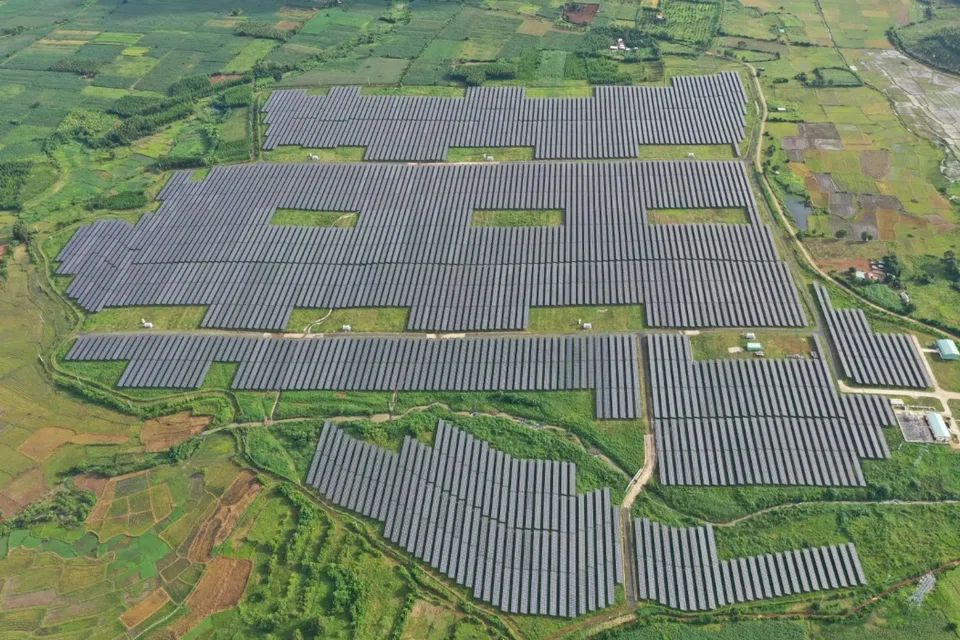
[HO CHI MINH CITY] Singapore’s SP Group and over 20 foreign power majors from the Philippines, Thailand, Japan and beyond are pushing Hanoi for urgent talks this month, as prolonged payment delays from Vietnam Electricity’s (EVN) following a sudden rule shift have pushed some investors to the brink of collapse.
In a joint letter dated Nov 3 to Vietnam’s ministers of industry and trade, justice and finance and reviewed by The Business Times, nearly two dozen investors of mostly solar farms claimed that EVN has halted or only partially paid them since January this year. Some cases date back to August 2022.
“This prolonged delay is deeply concerning to the business community. The financial strains continue to heavily impact all affected projects and burden investors,” the letter read.
It noted that more than 80 letters of concerns have been sent by investors, embassies and business associations to Hanoi for a “fair and transparent resolution to the current challenge”.
Other signatories include the Philippines’ ACEN, Thailand’s B Grimm Power and Gulf Energy, Japan’s Mitsubishi HC Capital and Chubu Electric Power.
This latest plea follows two formal petitions previously sent to Hanoi by certain groups of foreign investors that outlined their concerns and recommendations.
There has been no resolution to this years-long compliance dispute sparked by Hanoi’s midstream review in 2023 of feed-in tariff (FIT) eligibility – a policy reversal that upended earlier guarantees of lucrative rates for clean energy investors supplying to EVN.
The energy U-turn
More than 170 projects collectively worth US$13 billion with a combined capacity of 12.4 gigawatts-peak (GWp) of solar and wind power hang in limbo as a result of the stand-off.
The dispute boils down to a rule clarified by Vietnam’s government only in mid-2023, requiring all renewable projects to get construction completion acceptance approvals before selling power – a step many skipped years earlier when the rule wasn’t enforced.
Back in 2019 and 2020, power companies poured money into solar and wind farms under a policy guaranteeing fixed FIT rates for 20 years. Now those same projects are being flagged for missing approvals, putting payments on hold and raising fears they could lose the FIT – a blow that investors say would wipe out their entire equity value.
Many foreign investors are now caught in the dispute, having bought stakes in renewable power plants from local owners shortly before the controversy broke out.
The move has created significant uncertainty and risks, the investors lamented in the November letter.
Among these, SP Group is the majority owner of four solar plants, including Europlast Phu Yen Solar, with a total capacity of 165 megawatt-peak (MWp) in Vietnam.
Singapore’s energy giant Sembcorp also has several solar farms caught in the dispute. It holds stakes in a 100 MWp Gaia solar farm and a 40.5 MWp BCG Bang Duong solar farm in Long An province, a key industrial hub in southern Vietnam, BT reported earlier.
While SP’s legal representative for the affected plants signed the latest request letter and an earlier joint petition in May, Sembcorp has not joined any of the collective petitions on the issue over the past year.
BT understands that Sembcorp and SP have each sent letters to various government bodies in hopes of resolving the matter.
In a response to BT in March, Sembcorp said that the issue has no material impact on the company’s earnings.
As at press time, SP has not responded to BT’s queries on the matter.
Billions at stake
The situation is dire for some more than others.
EVN’s refusal to make full payments has caused cash flow constraints among many power producers, who are also facing pressure to repay project debts to local and regional banks, according to the investors’ letter.
Officials from two companies that signed the latest letter to Hanoi told BT that for a typical 50 MWp plant that has received only partial payments this year, the amount owed by EVN could work out to some 60 billion dong (S$3 million). In total, unpaid revenue across all affected projects may reach at least US$500 million over this period.
An official from one of the power companies hardest hit by the non-payment claimed EVN owes the firm about three trillion dong for power supplied from its affected power plants.
EVN weighs in
Vietnam’s state utility came up with a more forgiving proposal in August, BT learnt.
According to a letter sent to the Ministry of Industry and Trade and reviewed by BT, EVN proposed that plant owners who obtained construction completion acceptance approvals only after starting operations face administrative penalties.
The utility also suggested that these producers be allowed to keep the favourable FIT rates already set out in their existing power purchase agreements.
This proposal – if it sees the light of day – could provide a big relief to power players. It marks a shift from EVN’s earlier stance to retroactively cut FIT rates for affected projects to the lower levels in effect when they eventually obtained their construction completion acceptance approvals.
The new approach could suggest that EVN may be willing to settle the outstanding payments.
“If this is approved, foreign investors like us will have time from now until the end of the year to recover, and then we can start a new investment cycle next year,” said the source from one of the firms that are most affected.
It is not clear if the solution has been discussed or approved by the authorities.
The issue has dragged on for too long. In previous petitions submitted to the government in March and May, foreign investors warned that failing to resolve this compliance issue fairly and lawfully would severely erode investor trust and undermine Vietnam’s ability to draw foreign direct investment in clean energy.
Vietnam’s total energy capacity is projected to surge to 236 GW by 2030 – up from more than 80 GW at the end of 2023 – to meet growing energy demands to support double-digit economic growth targets between 2026 and 2030.
According to the revised power generation plan approved in April, solar power is projected to account for 25.3 to 31.3 per cent, while onshore and nearshore wind energy will make up 14.2 to 16.1 per cent of total installed capacity.
“The current situation poses serious and immediate risks to investor confidence, financial stability, and Vietnam’s long-term energy and climate objectives,” the May letter noted.
TRENDING NOW

Once staunchly pro-China, Malaysian Chinese businesses are now distancing themselves from Beijing

Looking beyond looming CEO succession, should UOB potentially pursue a transformative merger?

Could stablecoins be the future of money?

Grab CEO’s wife Chloe Tong on life with Anthony Tan and finding her purpose

