



Rental model seen as the go-to-market strategy to boost Vietnam’s EV take-up

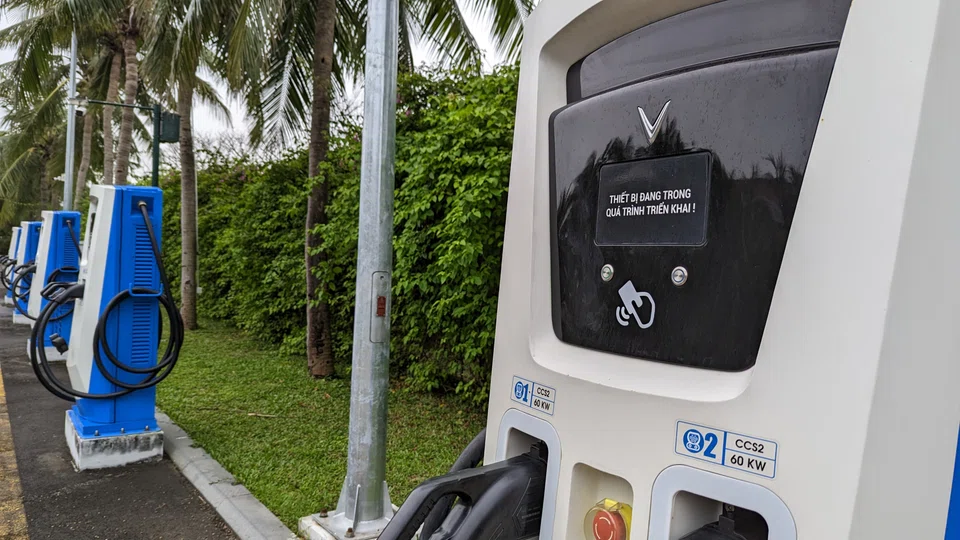
[HANOI] Vietnam’s richest man Pham Nhat Vuong has established a three trillion dong (S$171 million) electric-vehicle (EV) rental and taxi company, with plans to use 10,000 electric cars and 100,000 electric motorbikes provided by VinFast, the automobile arm of his Vingroup.
The setting up of the company – called GSM Green and Smart Mobility JSC – was announced on Monday (Mar 6), and comes six months after the rollout of 150 VinFast electric motorbikes in the central city of Da Nang by logistics firm AhaMove.
AhaMove hopes to rent some 1,500 EVs this year to transform part of its 120,000-strong fleet of vehicles across the country, said the company’s co-founder and chief executive Pham Huu Ngon.
With the first batch of 150 motorbikes purchased from VinFast, AhaMove enabled delivery workers to rent these vehicles at about 30,000 dong per day. The riders are saving on fuel at a time when petrol prices are fluctuating, and customers are enjoying lower delivery fees.
With GSM’s new rental business set to begin operations in Hanoi from April, Ngon said that AhaMove can minimise its upfront acquisition costs, as well as the risks associated with adopting new products such as EVs. He added, however, that these vehicles still face challenges in terms of their battery capacity, which could be a problem when they try to run longer distances in bigger cities, and where charging or battery-swapping facilities are still under-developed.
“Our EV provider is looking for solutions, such as improving battery performance or using two batteries for one vehicle,” said Ngon. “So far, delivery by electric motorbikes works well in small cities like Da Nang. But scaling up to bigger ones like Hanoi and Ho Chi Minh City presents a larger challenge, and we may need to make use of charging stations at Vincom (Vingroup’s chain of shopping malls).”
Vuong, the owner of Vietnam’s largest private conglomerate Vingroup, is not the only one doubling down on this green transition. Many home-grown startups have surfaced in recent years, joining hands to push the proliferation of EVs in the country.
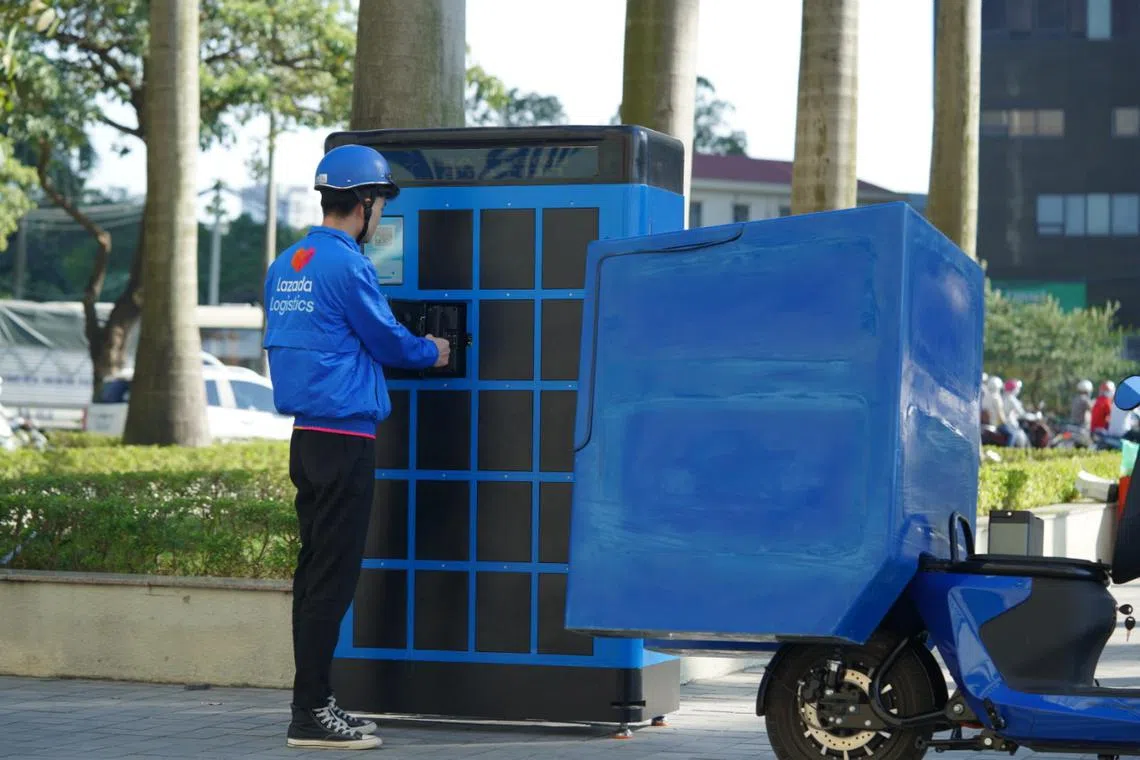
Last December, Selex Motors sold 100 “pickup” e-scooters to Lazada Logistics, a unit of e-commerce giant Lazada. The startup, which is also partnering with delivery giants such as Grab, Viettel Post and DHL, said that it optimises its EV designs to help clients raise delivery efficiency by between 30 per cent and 50 per cent.
“The rental model is a good intermediate option to boost the initial adoption of EVs, especially for those who are still sceptical or need further incentives,” said Nguyen Huu Phuoc Nguyen, the co-founder and chief executive officer of Selex Motors. “However, the sustainability of keeping the whole vehicle for rent is still in question, as manufacturers will have to bear larger upfront costs. For delivery companies, it is also more financially beneficial in the long term to buy vehicles dedicated to transportation, instead of renting from others,” he added.
This explains Selex Motors’ model of selling vehicles without batteries and focusing more on after-sales service.
The performance of components such as batteries often wears off over time if these are used without proper maintenance or upgrades. The firm is charging customers subscription fees for battery-swapping services at stations set up across the city, shaving off waiting time for recharging on the road.
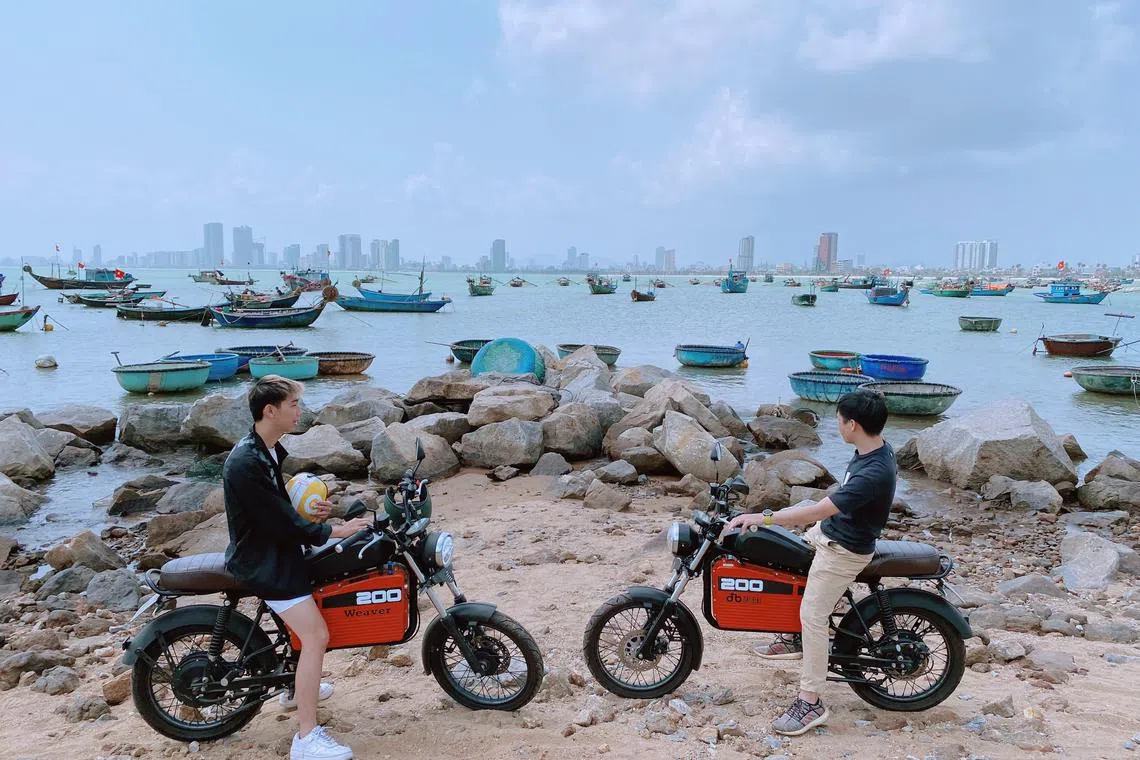
Dat Bike, an EV maker headquartered in Da Nang, closed a US$8 million funding round last November to ramp up production. The company snagged its first large order more than three years ago from a motorbike rental company called A Green Day (AGD).
The distinctive orange-and-black design caught the attention of both foreign and domestic tourists in Da Nang, where AGD offered 45 Dat Bike motorcycles for rent at places such as hotels and tourist attractions. Riders on these motorbikes can travel for up to 200 km on a single charge, with just an hour needed to charge the battery to go for another 100 km.
“By leasing the very first models of Dat Bike to tourists who prefer travelling by motorbike, we gave the startup project a channel to receive feedback from end-users to quicken product development,” said AGD founder Nguyen Van Chuong.
However, the majority of Dat Bike’s sales still come from users in Hanoi and Ho Chi Minh City instead of Da Nang and other Tier-1 cities, partly due to the high price range (at around S$3,762 for the latest model), as well as riders’ entrenched habits of using petrol vehicles.
There is a consensus among the Vietnamese that there is a need for stronger government incentives to bring about a large-scale uptake of this environmentally-friendly product in the country, which is still dominated by fossil-fuel vehicles.
Data from the Vietnam Register indicates that Vietnam had around 3,000 electric cars and 1.8 million electric motorbikes on the roads as at end-2022. Meanwhile, the number of cars and motorbikes in use across the country is around 4.9 million and 60 million respectively.
Last July, the country issued a national action programme for the transition to green energy and the mitigation of carbon dioxide and methane emissions from transportation. The programme targets a complete switch to green vehicles by 2050.
Though this effort is still on paper and pales in comparison with that of regional peers such as Singapore, Indonesia or Thailand, analysts say that it will help open doors for future policies that serve the usage and sale of clean-fuel vehicles in this country of 100 million people.
TRENDING NOW

Government to bring forward raising of retirement age, give employers more financial support to create flexi-load jobs

If Europe goes to war, the fallout will be felt in East Asia

Indonesia stocks suffer worst plunge in nearly 30 years as MSCI proposes standalone status

Vietnam’s northern provinces, not Hanoi or Ho Chi Minh City, are powering near 10% GDP growth

