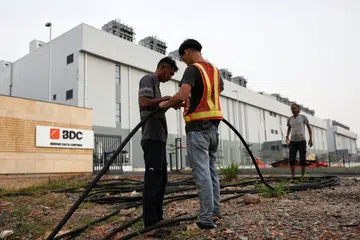
Rich families face tax audits as Indonesia races to plug deficit
The country’s tax ratio is among the lowest in the world, at about 10% of GDP last year
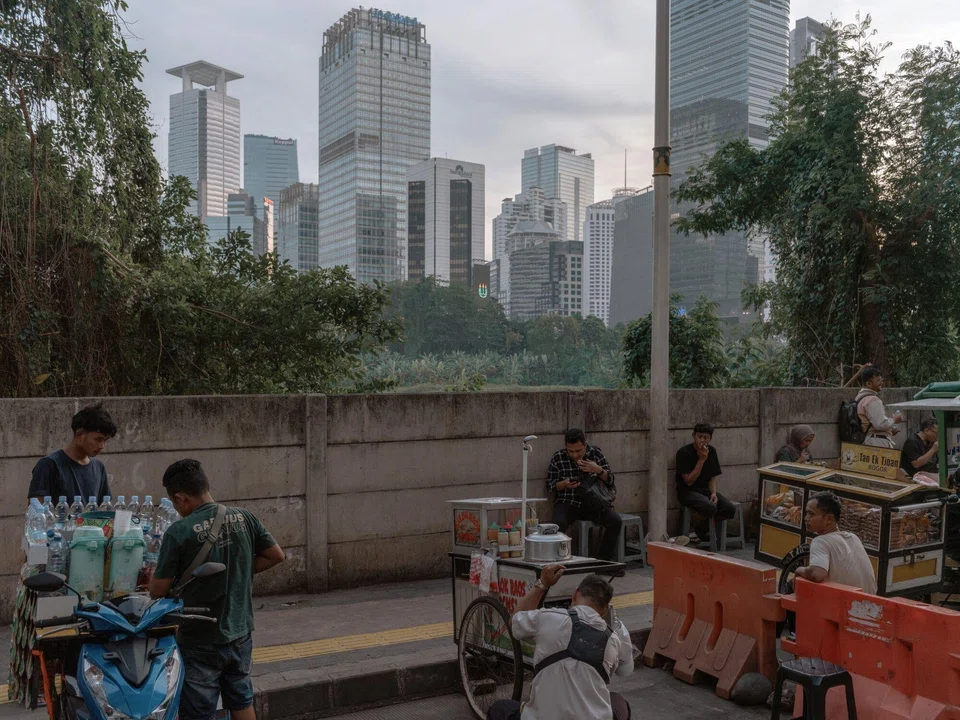
[JAKARTA] Indonesia is seeking to plug an unusually deep revenue shortfall before year-end by scrutinising wealthy individuals and big businesses for extra tax payments.
As the country’s Budget deficit projection edges towards a 3 per cent gross domestic product cap, tax officials have stepped up scrutiny of the rich, summoning some to review their returns in an effort to boost collections in what has been an anaemic year for receipts in South-east Asia’s largest economy.
Several sources familiar with the situation said officials have recently told big firms run by local tycoons to pay additional dues this year. A few family businesses were asked to pay more than US$5 million.
When several of those family-run companies pushed back, tax officials proposed they pay 30 per cent of the requested amount as a compromise, without giving a reason as to how they landed on that figure, the sources said, asking not to be identified because the matter is sensitive.
The tax office push has extended to some white-collar professionals as well, with investigators auditing returns for any errors, one source said.
Bimo Wijayanto, the Finance Ministry’s director general of taxes, confirmed recent summons of high-wealth taxpayers, describing it to reporters at a briefing on Thursday as “essentially a routine task of the tax office in order to clarify data”.
The ministry’s data, he added, is “increasingly complete”, and the summons “give taxpayers the opportunity to provide explanations, voluntarily correct their tax returns and ensure compliance”.
Wijayanto did not identify the summoned taxpayers and it’s unclear how many businesses and individuals have been approached.
A spokesperson for the Directorate General of Tax declined to comment on individual cases, but said the office routinely monitors and clarifies data with large taxpayers as part of a standard supervision process.

Any tax corrections are ultimately based on clear grounds, and taxpayers have the right to respond or pursue legal remedies, the spokesperson said.
Year-end efforts to boost tax revenue are relatively common in Indonesia, where critics and business elites describe the practice as “hunting in a zoo”, a reference to efforts often directed at a relatively small group of large, formal taxpayers that are easy to monitor rather than broadening compliance across the sprawling informal economy of the world’s fourth most populous nation.
But the size of this year’s gap has raised the stakes.
Tax income is running unusually short of targets, with finance ministry data last week showing that collection to November had reached 79 per cent of an already lowered full-year goal, down from nearly 90 per cent at the same time last year. In 2021, 2022 and 2023, tax collection exceeded annual targets.
“Definitely, it is more aggressive” this year, said Wijayanto Samirin, an economist and lecturer at Paramadina University in Jakarta.
The weak collection – partly a reflection of lacklustre economic conditions and softer commodity prices, economists say – has pushed the country’s much-watched Budget deficit forecast to 2.78 per cent of GDP, the highest in two decades not including the pandemic years, Bloomberg data going back to 2005 showed.
Kevin O’Rourke, a principal at Jakarta-based consultancy Reformasi Information Services, said last-minute “last-ditch efforts to reach revenue targets tend to take place around this time most years”.
“It would be understandable if these efforts are particularly assertive this year, given the shortfall in collections to date,” he said.
In past drives, one common practice by some taxpayers is to pay up at the end of the year and then set about reclaiming sums via appeals in the new year.
This particular year’s end push is adding to unease among rich Indonesians already rattled by what many see as a crackdown on the affluent under President Prabowo Subianto.
Indonesia is home to some of the wealthiest billionaires in South-east Asia, where 10 of the richest have a combined net worth of more than US$180 billion.
The government, earlier this year, called on the country’s wealthiest tycoons to buy so-called Patriot Bonds with below-market coupons to support investments by fledgling sovereign wealth fund Danantara.
Prabowo’s new administration has also confiscated millions of hectares of what it describes as illegal palm oil and forest lands, including tracts held by wealthy landowners.
While some high-net-worth families are frustrated and anxious about the administration’s moves, many also feel helpless, concerned about the repercussions should they not comply with the requests, the sources familiar with the situation said.
Indonesia’s tax ratio is among the lowest in the world, at about 10 per cent of GDP last year. Hashim Djojohadikusumo, Prabowo’s younger brother and one of his closest advisers, recently criticised the country’s tax system as weak and having failed to make significant improvements over the past decade.
The Finance Ministry has been trying to boost tax collection. A new online system was rolled out earlier this year to simplify and unify procedures, and officials have been using more third-party data to determine taxation.
In September, Finance Minister Purbaya Yudhi Sadewa said that the government would pursue about 200 cases of tax evasion, with total arrears of around 60 trillion rupiah (S$4.6 billion), mostly owed by companies. His office has collected about 13 trillion rupiah till mid-December.
Using tougher tactics could lead to a possible loss of trust in the tax authority, worsening future compliance, said Fajry Akbar, chief of tax research at the Center for Indonesia Taxation Analysis in Jakarta.
Businesses, particularly conglomerates that drive the economy, “will definitely think twice about investing or developing their business in Indonesia if they feel that they are being treated unfairly”. BLOOMBERG
Decoding Asia newsletter: your guide to navigating Asia in a new global order. Sign up here to get Decoding Asia newsletter. Delivered to your inbox. Free.
Share with us your feedback on BT's products and services