Ringgit to continue strengthening in 2023 as investors regain confidence in Malaysia: analysts
Fitch Solutions projects inflation to reach 3.1 per cent this year and 2.3 per cent in 2024
 Add BT as a preferred source
Yong Hui Ting &
Tan Ai Leng
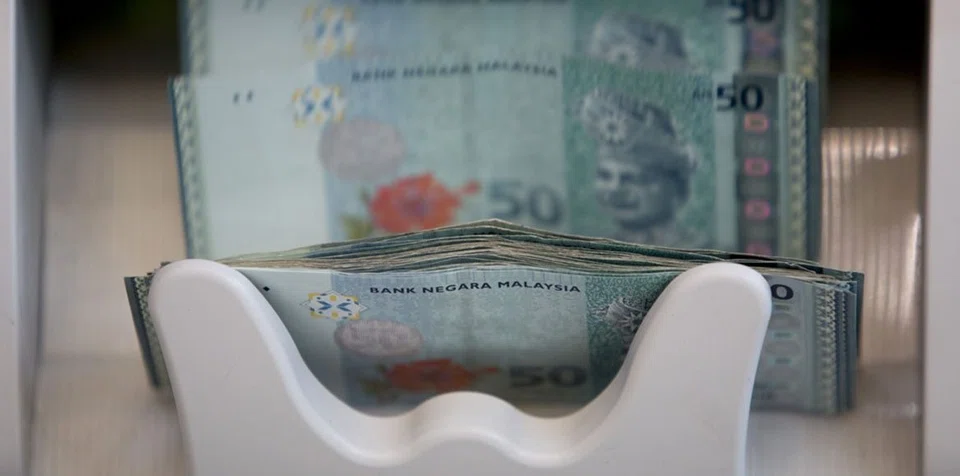
THE year 2023 will be one of greater stability for Malaysia, on both political and foreign-exchange fronts.
While the ringgit is expected to consolidate in the near term, Fitch Solutions analysts noted some broader upsides in a report on Friday (Jan 6).
The ringgit appears slightly overbought, said the analysts, who noted that the currency has risen 7.7 per cent against the US dollar since its trough in early November. As such, they feel that further gains in the near term are likely to be limited.
However, in the longer term, the ringgit could be boosted as the US Federal Reserve’s rate hikes draw to an end in 2023, coupled with expectations of an additional 50-basis-point hike by Bank Negara Malaysia over the coming months. This would allow interest rate differentials to narrow, which could be positive for the ringgit.
RHB Research economist Chin Yee Sian noted several factors driving the strengthening of the ringgit, including how the US economy performs, and other major developments such as China’s reopening of its borders.
“Our forecast shows that the US dollar will continue to strengthen in the first quarter this year, catalysed by the Fed’s rate hikes and nominal gross domestic product (GDP) growth,” she told The Business Times (BT).
“However, the US economy is expected to weaken in the second half of the year due to seasonal factors and there will be more volatility in the US dollar movement.”
On the ringgit’s outlook, RHB Investment forecasts the currency to hover at around RM4.45 to RM4.55 against the greenback, and strengthen to between RM4.20 and RM4.30 by the end of this year.
The ringgit fell to an all-time low of RM4.75 against the US dollar on Nov 5 last year. It recovered after the general election later that month, which saw long-time opposition leader Anwar Ibrahim become prime minister and a unity government formed with other political coalitions.
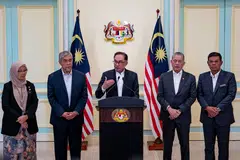
As of Jan 6, the ringgit has strengthened by nearly 8 per cent against the US dollar. Against the Singapore dollar, the ringgit has rebounded by around 4 per cent to RM3.26 on Friday, from its low of RM3.40 on Nov 11 last year.
Sunway University Business School professor of economics Yeah Kim Leng said the ringgit’s movement was battered by continuing political instability over the past two years, but added that the market has gradually factored in these political risks.
“The retracement trend also reflected the market’s confidence towards Anwar’s government as the investors are revaluing the ringgit, taking into consideration recent political developments – namely, Anwar’s policies in tackling the high cost of living, improving the economy and governance, as well as fighting corruption,” he told BT.
The ringgit’s strength could be boosted further if Malaysia continues to keep inflation below that of the US. Fitch Solutions analysts projected that Malaysia’s inflation would reach 3.1 per cent this year and 2.3 per cent in 2024, lower than that of the US at 4.5 per cent and 2.5 per cent respectively.
Further, Fitch expects Malaysia’s current account to remain in a surplus, despite weakening terms of trade of late.
The country’s net exports will likely be supported by slower import growth due to elevated commodity prices above pre-Covid levels, which the analysts believe will overcompensate the slowdown in goods export over a slower global economic growth and semiconductor down-cycle.
On the political front, Fitch raised the country’s short-term political risk index score in a separate report on Friday, noting Prime Minister Anwar Ibrahim’s strong majority support at a confidence motion in December 2022.
Post-election, Anwar’s unity government now has an exact two-thirds majority after all members of parliament, except the 74 members in the opposition Perikatan Nasional coalition, signed a cooperation pact on Dec 16.
Fitch expects this to lead to greater political stability in the country, boosting investor confidence and possibly catalysing a stronger real GDP growth in 2023.
However, it remains to be seen if the Pakatan Harapan-led coalition government will be able to formulate and implement policies as effectively as the previous Barisan Nasional government before they were defeated in the 2018 general election, said Fitch.
It said: “The make-up of the cabinet suggests that Anwar will still have to walk a political tightrope when implementing his policy agenda in order to maintain support from parties with diverse interests and ideologies, which may weigh on the policymaking process.”
Decoding Asia newsletter: your guide to navigating Asia in a new global order. Sign up here to get Decoding Asia newsletter. Delivered to your inbox. Free.
Copyright SPH Media. All rights reserved.