


Ringgit continues downward spiral to hit fresh low of RM3.55 to Sing dollar
The Malaysian currency is approaching a historical low against the US dollar
Tan Ai Leng
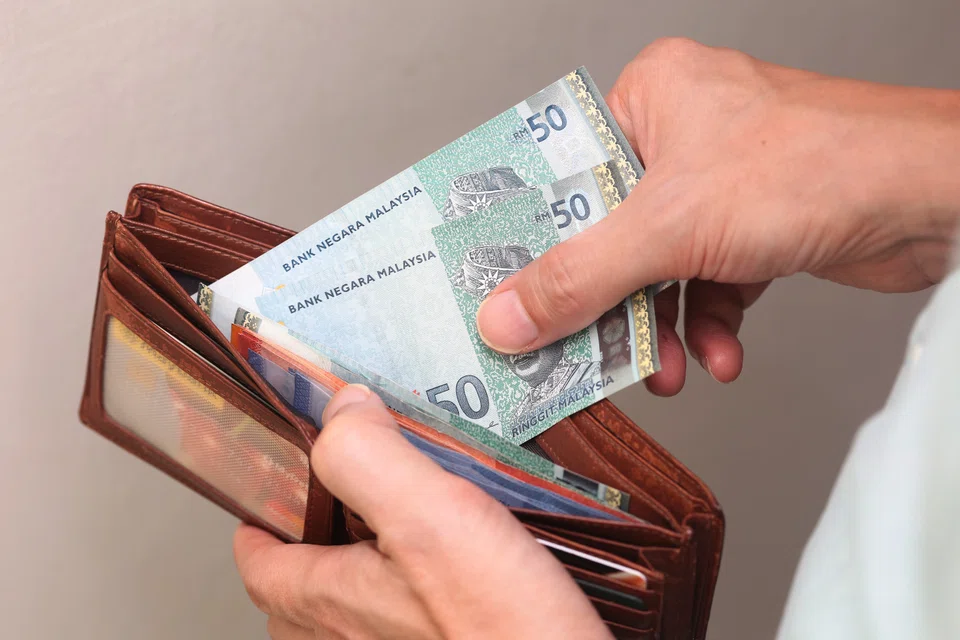
[KUALA LUMPUR] The Malaysian ringgit – the worst performing currency in emerging Asia in 2023 – slid into new territory on Wednesday (Feb 7) morning as it touched a historical low of RM3.55 against the Singapore dollar.
It improved slightly to RM3.545 in the evening, with the exchange rate likely to be cheered by the thousands of Singaporeans who are expected to cross the Causeway over the upcoming Chinese New Year weekend.
Compared to a year ago, the ringgit has depreciated by about 10.5 per cent against the Singapore dollar. Over the past 20 years, the ringgit has fallen by 60 per cent from the point when one Singdollar could buy RM2.24.
The ringgit is also faring quite poorly against the US dollar, trading at RM4.76 on Wednesday evening – 3.7 per cent lower than the RM4.59 it stood at, at the start of the year. For the whole of 2023, the ringgit depreciated by 4.2 per cent against the greenback.
The current exchange rate is still better than last October when the ringgit plunged to a record low of RM4.78 against the US dollar. This was the weakest close since the Asian financial crisis in 1998.
Market observers The Business Times spoke to said the US Federal Reserve’s hawkish stance, Malaysia’s ongoing political uncertainty, and an overall less attractive yield are among the main reasons for the ringgit’s weak showing.
Last week, the US central bank kept interest rates steady for a fourth straight policy meeting and signalled an openness to cutting them, although Fed chair Jerome Powell suggested that rate cuts are not likely in March.
This position has weighed heavily on many Asian currencies, especially the low-yielding ones like the yen and the ringgit.
Jeff Ng, head of Asia macro strategy for SMBC’s global markets and treasury business, said a lack of a catalyst could be why there is a loss of potential inflows to Malaysia, which has in turn affected the ringgit’s performance.
“Countries in the Asia-Pacific region are competing intensely for foreign direct investment, with increasing funds flowing into India and Vietnam which have more attractive offerings,” he told BT.
“Key markets for electrical and electronics like South Korea and Taiwan are also seeing returning interest, and this has benefitted their own currencies as well,” he said.
Nevertheless, he predicts that the ringgit will rebound in the second half of the year towards the RM4.50 mark against the US dollar, with the anticipation of the Fed’s rate cuts starting from mid-2024 and as “peak pessimism from China passes”.
UOB market strategist Quek Ser Leang said the ringgit’s current movements appear to be part of a consolidation phase.
He expects the ringgit to trade at a range of RM4.7040 to RM4.7080 against the greenback in the near term.
“A further advance above RM4.77 cannot be ruled out, but the next major resistance, at RM4.79, is likely out of reach for now. To maintain the momentum, the ringgit must stay above RM4.7350 against the greenback,” he added.
In an interview with Bloomberg last week, State Street Global Advisors head of Asia-Pacific Ng Kheng Siang remarked that the ringgit may weaken to as low as RM5.00 against the US dollar if there is a significant loss of confidence in Malaysia’s political stability.
The country’s Pardons Board recently announced that former prime minister Najib Razak’s jail sentence for corruption has been halved from 12 years to six years, and that his earlier RM210 million fine had been reduced to RM50 million.
The royal decision ended up fuelling growing dissatisfaction against Malaysian Prime Minister Anwar Ibrahim and his government.
Election watchdog Bersih 2.0 has even warned that it may organise a mass demonstration against the government if no concrete steps are taken towards political reforms, including fulfilling its previous promises to deal with corruption.
Rising costs
Although the weakening ringgit may benefit Malaysia’s exporters, most business owners in the country – especially the smaller enterprises – are feeling the pinch of rising costs.
A recent survey by the Associated Chinese Chambers of Commerce and Industry of Malaysia revealed that over half of the 684 respondents said their profits were shrinking due to the rising costs of raw materials because of the ringgit.
Over 90 per cent said that reduced consumer purchasing power, persistent cost pressures and the future of the ringgit were their main concerns.
“Although most respondents anticipate brighter sales prospects in the first six months of 2024, they felt that the profit margins will be eroded by rising cost factors, such as higher raw material cost, subsidy rationalisation and other new taxes,” the organisation said.
TRENDING NOW
He built the Vingroup empire. Now South-east Asia’s richest man is handing some key roles to his sons
Grab executives buy back shares after stock hits 3-year low on Atome deal
US dollar falters after Iran’s offer to reopen Hormuz sends oil lower
Martin Modern, Wallich Residences properties linked to money laundering case sell for S$16.3 million at auction



