Ringgit hits new low of RM3.50 against Singapore dollar; further slide expected
Central bank says Malaysia economy ‘not in crisis’ as the fundamentals and banking sector remain resilient
Tan Ai Leng
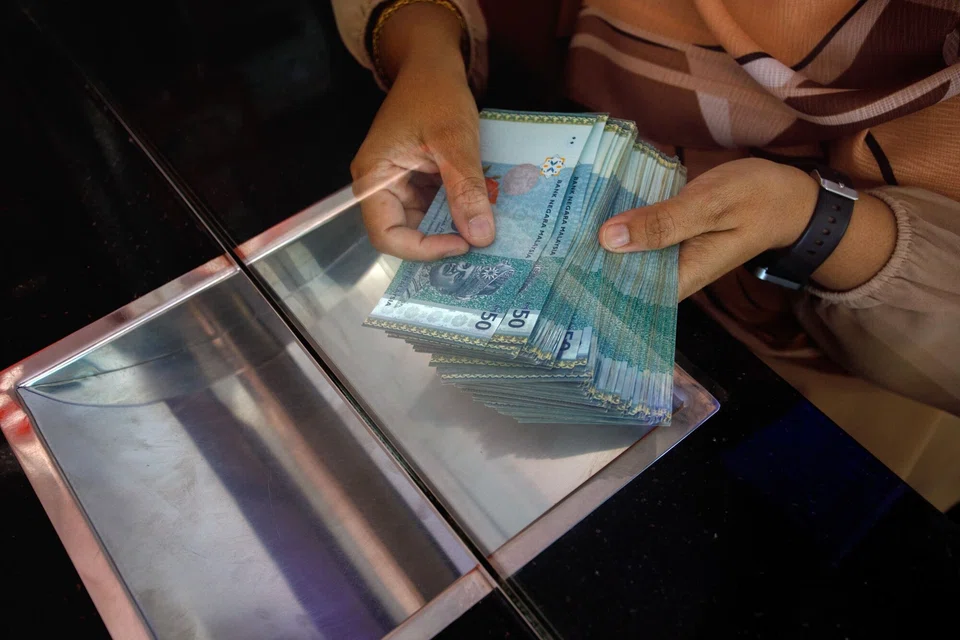
[KUALA LUMPUR] The Malaysian ringgit – already one of Asia’s worst-performing currencies in 2023 – sank to a new low of RM3.50 against the Singapore dollar on Tuesday (Oct 24), with economists expecting the downtrend to continue as the US dollar strengthens further.
Since the start of the year, the ringgit has fallen by nearly 6.6 per cent against the Singapore dollar, from RM3.2742 on Jan 3.
Against the greenback, the ringgit was trading at RM4.7850 on Tuesday – 8.6 per cent weaker than the rate at the start of the year – as the Malaysian currency continues to be affected by declining exports and a growing interest-rate differential with the US.
Among Asian currencies, the ringgit’s year-to-date decline is the second worst, behind only the Japanese yen.
Economists whom The Business Times spoke to said the ringgit’s poor performance was due to investors turning their attention to the stronger US dollar amid the ongoing conflict in the Middle East, the Russia-Ukraine war and the US-China tech war.
Some said that the new mark of RM3.50 against the Singapore dollar could be a “new normal” as an improvement is not on the cards any time soon.
“The current level is part of a trend due to Singapore’s monetary policy,” said Jeff Ng, the new head of Asia macro strategy for SMBC’s global markets and treasury business.
He does not expect a turnaround soon, especially as US interest rates are higher than Malaysia’s overnight policy rate (OPR).
Malaysia’s central bank maintained OPR at 3 per cent after its three monetary policy meetings this year. Economists believe that the rate will be maintained for the rest of 2023, after Bank Negara’s comments that the current rate “remains supportive of the economy”.
Bank Negara is set to hold its final monetary policy meeting of the year next week.
Yeah Kim Leng, an economics professor at Sunway University, said that the ringgit’s poor showing will improve only if the US economy enters a downturn in 2024, which would bring some relief to Asian currencies in general.
“But the strong US dollar environment may be prolonged as the US job market is still showing a good performance,” he added.
In a report on Oct 13, Standard Chartered Bank in Singapore noted that the preference by onshore exporters to hold the US dollar, and Bank Negara’s decision to rebuild Malaysia’s foreign reserves in a weaker US dollar environment may limit the ringgit’s gains.
There are some pluses to having a cheaper ringgit, said economists, as they pointed to export-oriented industries and the tourism sector getting a much-needed boost.
Bank Muamalat chief economist Mohd Afzanizam Abdul Rashid, however, said that the currency’s depreciation is a double-edged sword as this means the cost of imports will be higher.
“Singapore is also one of Malaysia’s top importers. For those who import from Singapore, obviously they will have to bear a higher cost,” he added.
In September, Singapore’s exports value to Malaysia rose 7.6 per cent year on year to RM12.1 billion – accounting for 12 per cent of the country’s total imports.
Dr Yeah pointed out that the ringgit’s weaker exchange rate with most other Asian currencies should not be seen as the only barometer when it comes to the health of Malaysia’s economy.
“The real effective exchange rate showed that the ringgit’s depreciation rate ranged between 1 per cent and 2 per cent, which was lower than the flexible exchange rate. This is a reflection that the country’s fundamentals remain intact,” he said.
Analysts said that this is also one reason why Bank Negara chose not to intervene in the foreign exchange market, even though the ringgit’s current level of RM4.7850 to the US dollar has reached levels last seen during the Asian financial crisis.
On Monday, Bank Negara governor Abdul Rasheed Abdul Ghaffour stressed that Malaysia’s economy is “not in a crisis”, given the relatively strong economic growth and the well-capitalised banking system.
The Department of Statistics Malaysia expects Malaysia’s third-quarter gross domestic product to expand by 3.3 per cent, up from the 2.9 per cent expansion in the second quarter.