



Ringgit rallies, erasing year’s losses against SGD
Favourable external conditions and rosier prospects have strengthened the Malaysian currency by nearly 4% this year


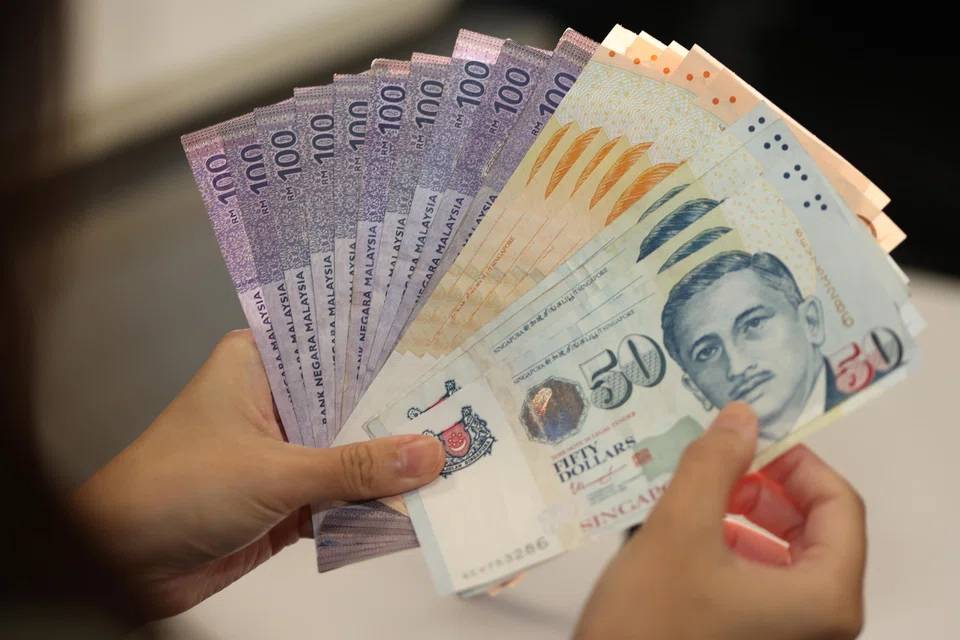
THE ringgit – named the worst-performing currency in emerging Asia last year – has erased all its losses for the year to gain 3.7 per cent against the Singapore dollar since January.
The star performer in Asia in the past three months, the Malaysian currency was trading at 3.35 against the Singapore dollar as at 5.30 pm on Monday (Aug 5) – a threshold last breached in May 2023.
The Malaysian currency hit a 26-year low of 4.8052 against the US dollar on Feb 21, when it was at its weakest level since the Asian Financial Crisis in 1998. That day, the ringgit traded at a record-low of 3.57 against its Singapore peer.
The ringgit is now charting its longest-winning streak against the greenback in 14 years. It was trading at 4.42 against the US dollar at 5.30 pm on Monday.
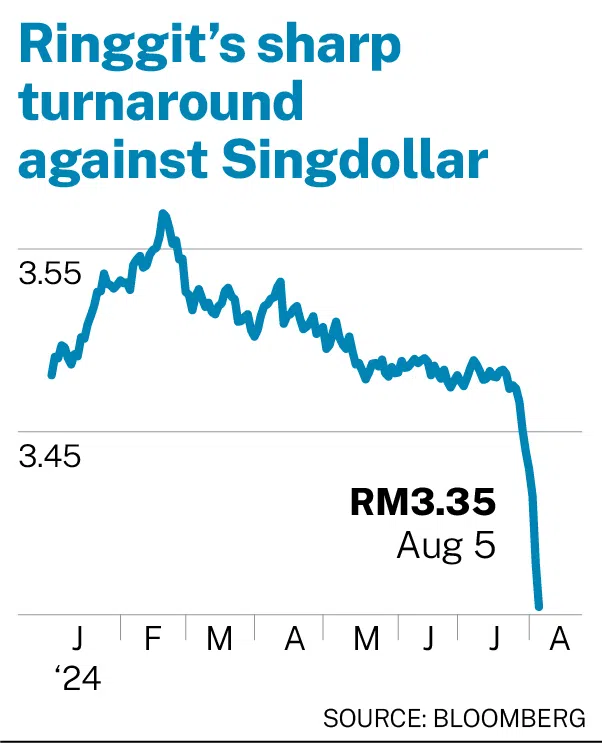
The rally of the once-beleaguered currency is being driven by external factors that have turned more conducive and rosier domestic conditions, said economists.
As the Federal Reserve signals a dovish pivot, key drivers that previously underpinned the ringgit’s weakness – such as yield differentials, a higher-for-longer interest rate narrative and a softer renminbi – are easing, said OCBC’s foreign exchange strategist Christopher Wong.
“The domestic side of the equation is also looking promising,” he added. “Global semiconductor upcycle is feeding into Malaysia’s tech exports, while Q2 gross domestic product, foreign investments and foreign inflows are looking positive amid stable policies.”
The anticipation of a rate cut has been building over the past few weeks, noted Bank Muamalat chief economist Mohd Afzanizam Abdul Rashid.
The ringgit saw significant upward movement after the release of the US non-farm payroll, which missed market estimates.
“The Fed rate cuts will narrow the interest rate differential between the Fed Fund Rate and Malaysia’s Overnight Policy rate (OPR), indicating a better prospect for rates of return in Malaysia, as Bank Negara is expected to keep the OPR unchanged at 3 per cent throughout the year,” he told The Business Times.
Apart from the US rate cut factor, he observed that Malaysia’s economic reform narratives have gained traction.
The removal of the diesel subsidy in June received positive reviews from credit ratings agencies and global investment banks, and led to inflows of foreign funds, effectively creating demand for the ringgit.
Jeff Ng, head of Asia macro strategy for Sumitomo Mitsui Banking Corporation’s global markets and treasury business, echoed Afzanizam’s comments, but noted that the export growth in coming months will significantly affect the ringgit’s movement.
“There will be a potential downside risk to the ringgit if external demand continues to weaken,” he told BT.
Malaysia’s exports have decelerated for two consecutive months; it was at 1.7 per cent year on year in June, after recording 9.1 per cent shipment growth in April.
The latest export figure also undershot economists’ forecast of 4.6 per cent in a recent Reuters poll.
Ng expects the ringgit to trade at 4.40 against the US dollar by the end of the second quarter.
In a note on Aug 5, UOB market strategist Quek Ser Leang said the ringgit appreciated 3.44 per cent against the greenback last Friday, reaching 4.4950. This marks the largest one-week decline for the US dollar since March 2016.
“Despite being severely oversold, the impulsive downward movement, coupled with the fact that the next significant support is some way off at 4.38 against the greenback, suggests that the ringgit’s strengthening will continue,” he said, noting that the next support level will be at 4.40.
Said OCBC’s Wong: “There may still be room for the ringgit to appreciate, but given the sharp move recently and taking into consideration the rout in global equities, we are cautious about the risk of a snap-back (that is, the ringgit giving up some gains) in the short term.”
Dr Mohd Afzanizam shared a similar view, noting that the steep appreciation of the ringgit might trigger profit-taking, which will slow down the pace of the currency appreciation.
“More importantly, if the anticipation of the US recession gained further ground, demand for the safe-haven currency, namely the US dollar, would start to kick in, which again could disrupt the appreciation of the ringgit,” he added.
TRENDING NOW
Green fuels, autonomous ships: How Singapore is future-proofing its shipping industry

US trade chief to consider trade deal tariff caps in excess capacity probe

Grab CEO’s wife Chloe Tong on life with Anthony Tan and finding her purpose

Deal between tycoon friends sparks scrutiny of Philippine power sector

