



Ringgit’s surge pressures Singapore shoppers and Malaysians working across borders
Observers say it could continue strengthening, but that a return to below the 3.00 level against the Singdollar is unlikely

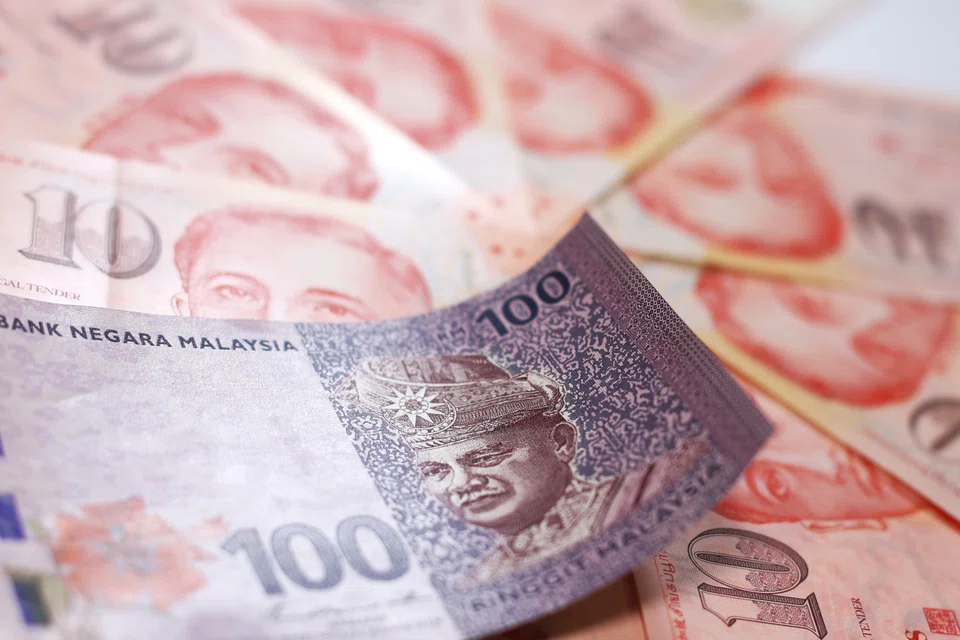
[KUALA LUMPUR] The Malaysian ringgit’s surge against the Singapore dollar – driven by the actions of the country’s central bank, economic prospects and a weakening greenback – could reshape the cross-border shopping habits of those looking to stretch their dollar.
The ringgit’s ascent has also raised speculation about it breaking below the 3.00 level, which was last achieved in February 2020, when it was at 2.90 against the Singdollar. There is also talk that the strength of the currency could hit the country’s tourism and economic outlook if it persists.
It remains to be seen how sustainable the ringgit’s northward rise could be, as it is still early days and most analysts expect currency volatility ahead.
Sim Moh Siong, a currency strategist at Bank of Singapore (BOS), said: “The immediate impact of the ringgit’s strengthening is likely to be felt by Singaporean tourists travelling frequently to Johor Bahru, as they find that they need to spend more on the same things.”
Carol Lye, portfolio manager and senior research analyst at Brandywine Global Investment Management, said that although the currency’s strength could curb cross-border shopping from Singapore, the recent gains have merely restored the Singdollar-Malaysian ringgit exchange rate to a “10-year fair-value average” of around 3.20. This was the level it had been trading at before its “massive” undervaluation on the back of a rallying US dollar.
Against the Singdollar, the ringgit has strengthened to around 3.22, up from around 3.48 on Jan 1. From its record low of 3.57 on Feb 21 this year, it has gone up by nearly 10 per cent.
DBS senior currency strategist Philip Wee pointed out that at current levels, the decline of the Singdollar against the ringgit is “the worst since 2005”.
“Pay cuts”, rising mortgage payments
For many, the impact has been felt on a personal level.
Debbie Leong, a Malaysian freelance designer who works for a Singapore firm based in her country, used to bask in the favourable exchange rate led by a weaker ringgit. Under a two-year contract, she earns S$3,500, which is converted into ringgit and deposited into her Malaysian bank account.
She told The Business Times: “When I first started, the conversion rate from Singapore dollar to ringgit was around RM3 to S$1. As the ringgit weakened, my monthly salary rose to around RM12,200 (S$3,790). It felt like a pay rise.”
Lately, she feels the tables have turned. Her most recent pay cheque came in at RM11,200. “I am worried that my income will continue to shrink as the ringgit becomes stronger... If it returns to the 2020 level, it would be like taking a pay cut.”
The stronger ringgit is also affecting those who work in Singapore but who own Malaysian properties. Malaysian software engineer Alvin Chong, for example, has lately had to pay S$110 more for his monthly ringgit-denominated mortgage for a semi-detached home in Selangor.
He said: “It’s not too bad. I was servicing lower monthly repayments of up to S$1,350 for a while (from the favourable exchange rate). Back in 2019, when I first bought the house, my payments were even higher, at around S$1,500.”
Tourism still a sweet spot
CIMB’s treasury and market research head, Michelle Chia, offered some perspective in terms of the impact on the country’s tourism: “First, when we look at the real effective exchange rate, the ringgit has appreciated by only about 6 per cent – much less than the 14 per cent against the US dollar, and 8 per cent against the Singdollar. This means that many tourists won’t feel a huge difference.”
Second, she added that Malaysia remains a great value destination, offering affordable and competitive tourism options even with the recent fluctuations.
Top-performing currency
The ringgit has appreciated by more than 12 per cent against the US dollar this quarter, making it the top-performing emerging-market currency. As at Oct 1, the exchange rate stood at 4.14 against the greenback, reflecting a 10 per cent increase from the levels at the start of the year.
Exchange rates have been volatile in recent years and the ringgit, not unlike regional currencies, has been influenced by economic factors including inflation, interest rates and geopolitical events.
Jerome Tay, investment manager for Asia fixed income at abrdn, attributed the ringgit’s recent outperformance to a strong domestic economy, offshore repatriation and robust foreign inflows.
“We expect this trend to continue in the near term, driven by favourable interest rate differentials, as upside risks to inflation remain after the removal of fuel subsidies,” he added.
DBS’ Wee expects the ringgit to benefit from stronger domestic fundamentals and economic reforms led by Malaysia Prime Minister Anwar Ibrahim as the US Federal Reserve embarks on rate cuts.
Appreciating ringgit

He expects the ringgit to strengthen up to 3.1680 against the Singdollar. By year’s end, he forecasts it to be at 3.26 against the Singdollar and 4.20 against the US dollar, driven by positive economic indicators and investor confidence.
BOS’ Sim pointed out that Bank Negara and the government’s efforts to repatriate the ringgit have played a crucial role in the currency’s appreciation. With Malaysia’s export performance improving and foreign direct investment (FDI) on the rise, the outlook for the country’s long-term growth looks promising.
Brandywine’s Lye noted that the ringgit may appreciate further if Malaysian exporters keep bringing back foreign currency and government-linked companies cut back on overseas investments.
Will the ringgit return to below the RM3 level against the Singdollar?
Not many expect it to. In fact, Sim suggested that the ringgit’s momentum may pause, as it took time to climb from RM3.50 to RM3.20. “Don’t expect a return to the 2020 level anytime soon,” he said.
Potential weakness
Yet, Lye cautioned that Bank Negara might aim to rebuild its foreign reserves, which could temper the ringgit’s strength.
“The market is anticipating a 200-basis-point rate cut by the US Federal Reserve by mid-2025. If the United States surprises positively and inflation rises, we might see the Fed pause on rate cuts, resulting in a stronger US dollar and a weaker ringgit,” she added.
CIMB’s Chia noted that the recent gains on the ringgit have been fuelled by non-resident portfolio flows, FDI and a reduced demand for foreign currencies as yield differentials narrow. She attributes much of the ringgit’s significant rise since July to pent-up demand.
In the near term, CIMB expects the ringgit to stabilise against the US dollar at 4.15 and the Singdollar, at 3.20.
She continued: “We maintain a positive outlook for the ringgit into early 2025, driven by expectations of US monetary easing and Malaysia’s political stability.”






