



Rolex to runways: Vietnam’s luxury retail king leads a family empire built on discipline
Johnathan Hanh Nguyen is now looking to grow his half-a-billion-dollar conglomerate some more

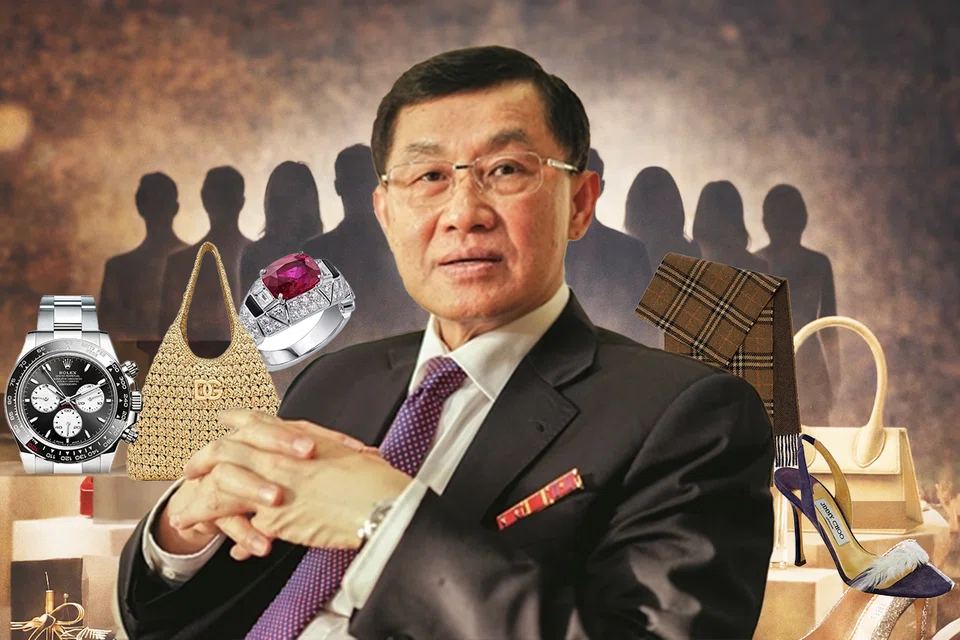
Inside Asia’s family empires: How they are transforming to seize the next stage of growth
[HO CHI MINH CITY] If, while in Vietnam, you buy a Swiss-made Rolex timepiece, a Burberry trench coat or a diamond-set Cartier bracelet, there is a good chance that the sale ran through one man’s half-a-billion-dollar network.
He is Johnathan Hanh Nguyen, the country’s “King of Luxury Brands”.
The 75-year-old controls Imex Pan Pacific Group (IPPG), a sprawling conglomerate that operates more than 1,200 retail outlets nationwide and generates an average annual revenue of about 14 trillion dong (S$685 million).
The group represents at least 139 global brands in Vietnam through its more than 25 subsidiaries and joint ventures spanning high fashion, food and beverage, duty-free retail and airport services.
Yet, for all its scale, IPPG remains unmistakably a family empire – one governed by discipline and integrity.
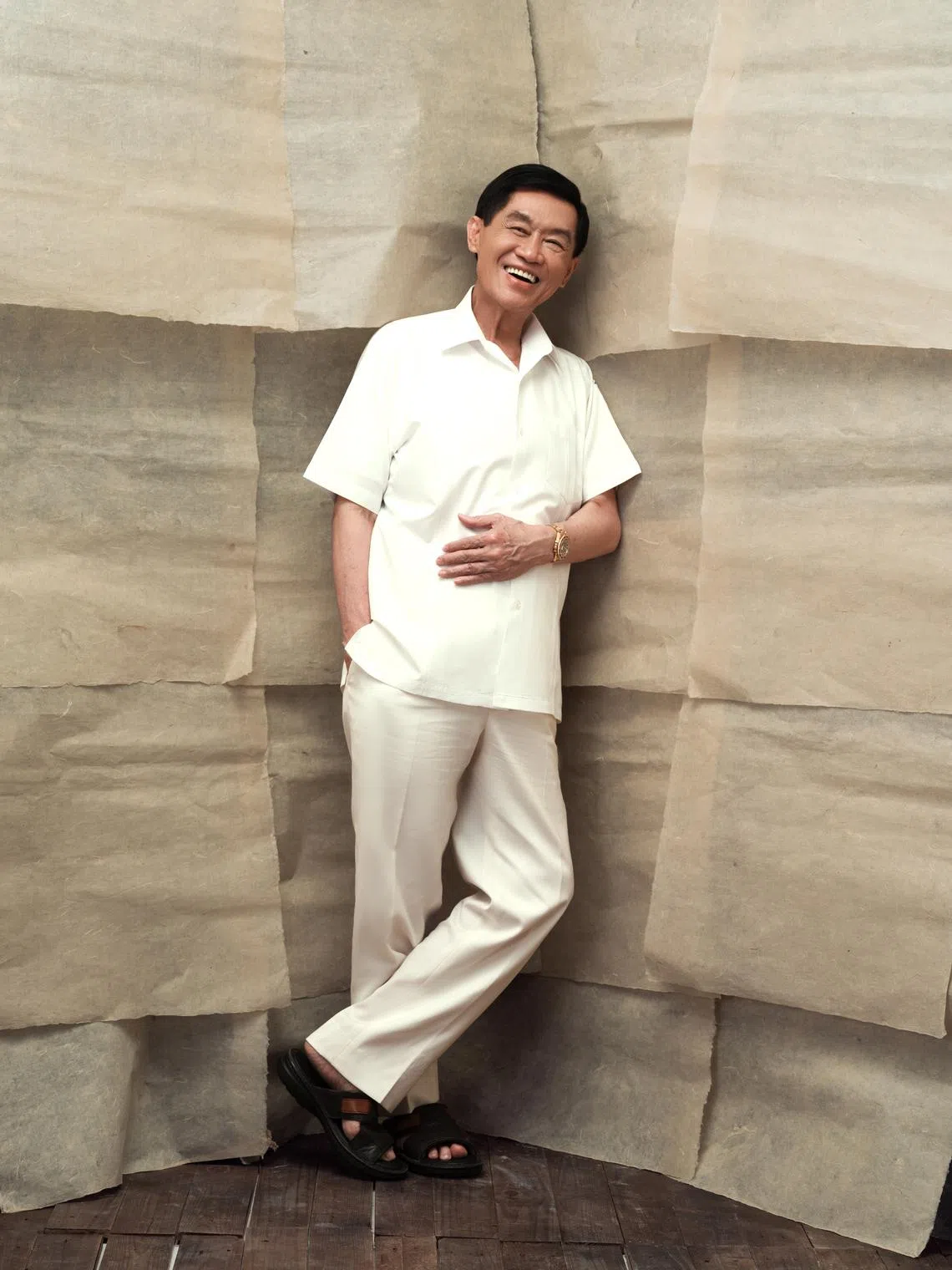
Nguyen has eight children – six with his first wife, a Filipina, and two with his current Vietnamese wife, who is also also IPPG’s chief executive. Seven of those eight children now work in the group, in a system where none competes with another sibling, he said.
“I divide responsibilities, so there’s no overlap and no conflict,” the founder and chairman of IPPG told The Business Times. “Each child runs their own area independently.”
This principle has been in place since IPPG’s founding four decades ago. The group now runs 10 key business units across six industries. Performances are reviewed annually, profits are distributed based on results, and authority is clearly delineated.
“I don’t micro-manage,” Nguyen said, adding: “Those who perform better earn more. Those who are weaker have to learn and improve.”
Discipline extends beyond the boardroom. Weekends are reserved for family meals – compulsory ones.
“If I call, everyone comes home,” he said, adding: “There are 20 seats, and every one must be filled.” Exemptions are given only if a family member is overseas on special assignments.
A father and now a grandfather as well, he takes pride in his close-knit, extended family that has become increasingly involved in running and strengthening the businesses conglomerate.
Parallel roads
Nguyen’s rise mirrors Vietnam’s own economic opening. As the country began accelerating its engagement with global markets in the 1990s, he moved quickly to secure distribution agreements with global luxury houses, betting that rising incomes and more inbound travellers would create a pool of new customers.
To him, luxury is not merely indulgence for the wealthy; it is a tool of economic development. He argues that luxury retail keeps the spending at home; it also supports tourism and creates jobs.
“Which Vietnamese goes to Singapore and doesn’t buy branded goods there?” he asked. “They always come back carrying branded shoes, wallets, handbags. If tourism grows without goods to shop for, visitors won’t stay or spend.”
IPPG’s drive to be the first to win distribution deals with luxury fashion brands such as Burberry, Ferragamo and Bally is rooted in this conviction. The group later expanded into premium spirits and cosmetics, including Hennessy cognac and Shiseido.
A pivotal expansion came in 2005, with the founding of Duy Anh Fashion and Cosmetics, the group’s high-end luxury distribution arm, led by Nguyen’s current wife, Le Hong Thuy Tien – a former actress and one of the most recognisable faces in Vietnamese cinema in the 1990s.
Four years later, IPPG moved downmarket, targeting a rapidly expanding middle class. Through Au Chau Fashion and Cosmetics, the group became the official Vietnam distributor for dozens of global mid-tier brands such as Nike, Gap, Calvin Klein and Mango.
“When you work with global brands, there are only three words (that matter): trust, trust and trust,” he said, noting that brands would terminate contracts immediately if local distributors are found to have mixed in counterfeit goods in pursuit of higher profits.
“We must maintain professional ethics at the highest level,” he asserted.
To reinforce brand positioning – the group claims to hold roughly 70 per cent of the high-end market share locally – IPPG also invested heavily in landmark retail real estate.
It renovated Ho Chi Minh City’s Rex Arcade in 2011, and Hanoi’s Trang Tien Plaza two years later, transforming both into luxury department stores anchored in the central business districts of Vietnam’s two largest cities.
The group also moved into franchised fast-food chains, opening outlets for popular global brands such as Burger King, Domino’s Pizza, Popeyes and Dunkin’ Donuts in major urban centres in Vietnam.
By 2015, as branded goods and services moved into Vietnam’s mainstream, IPPG was running about 600 outlets nationwide, cementing its dominance in a consumer market of nearly 100 million people.
Aviation backbone
Despite IPPG’s public image as a luxury retailer, much of its revenue and profit now come from its airport businesses, which contribute to roughly half the group’s earnings.
Nguyen’s roots in the sector run deep.
He had left for the US in 1974, at the height of Vietnam’s war for independence and reunification, to pursue higher education despite early financial hardship. After earning a master’s in business administration, he secured a much-coveted role as a financial inspector in a Boeing subcontractor in the early 1980s.
At the request of Vietnamese authorities, Nguyen returned home in1985 and leveraged his industry expertise and personal connections in the Philippines (through his first wife) to facilitate the setting up of a direct commercial air route between Ho Chi Minh City and Manila. This was one of Vietnam’s earliest post-war international commercial links.
“Titles such as ‘King of Luxury’ or ‘King of Aviation’ are labels others may choose to use, not ones I pursue,” he said.
“What has remained constant for me is aviation – it is where my discipline was formed, where my understanding is deepest, and where my responsibility has always been.”
IPPG and its related entities now hold strategic stakes in Vietnam’s leading airport service providers – about 45 per cent in Tan Son Nhat Airport Services (Sasco) and more than 10 per cent in Noi Bai Airport Services.
The group is now offering its services, particularly in duty-free retail store chains, in five airports in Vietnam’s most popular economic and tourism hubs – Ho Chi Minh City, Hanoi, Da Nang, Khanh Hoa and Phu Quoc.
“I invested because state capital was involved,” Nguyen said, referring to the partial state ownership of these companies – particularly Airports Corporation of Vietnam’s stake in Sasco. “If I make 100, the state receives 49. Why wouldn’t I do it?”
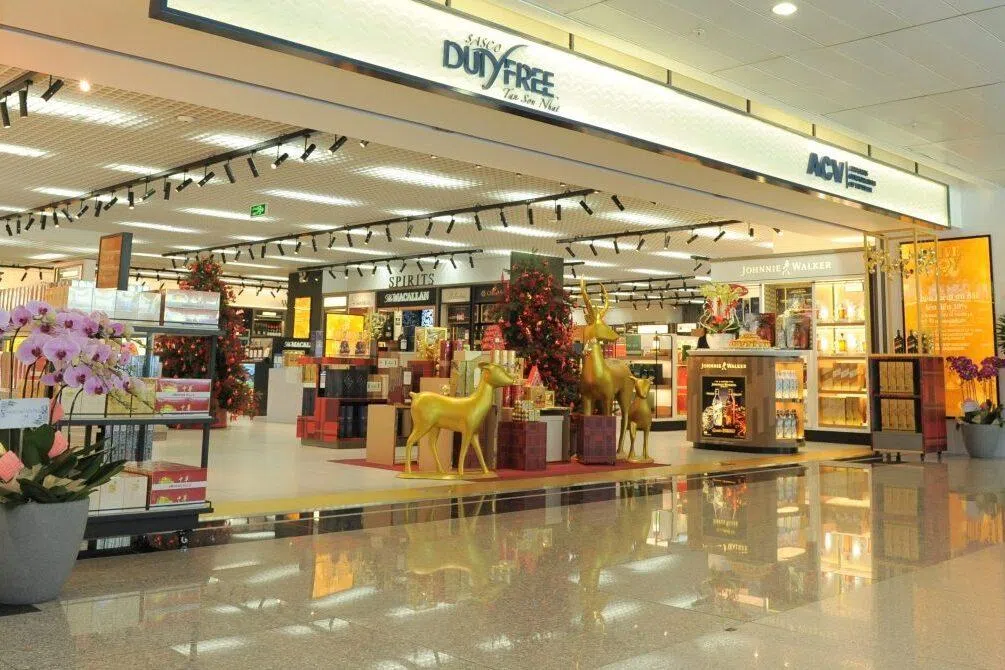
Nguyen was appointed Sasco chairman in 2017. By the following year, the company’s pre-tax profit had risen to 409 billion dong, nearly 2.5 times its level in 2014, before IPPG became a strategic shareholder.
“If state capital suffers any losses, I will compensate double,” he once said publicly, underscoring his commitment to safeguarding state capital in those joint ventures.
In 2016, IPPG broke ground on the US$180 million international terminal at Cam Ranh airport in the central Khanh Hoa province – home to the famous beach city Nha Trang.
The terminal project, 55 per cent owned by IPPG, began operations in June 2018 with an initial annual capacity of 2.5 million passengers; it is designed to grow its capacity to serve roughly eight million international passengers a year by 2030.
These strategic holdings enable the group’s key subsidiary IPP Travel Retail – run by his third son, Phillip Nguyen – to manage a broad portfolio of airport commercial services, including retail stores and advertising.
The duty-free segment typically accounts for between one-third and two-thirds of Sasco’s annual revenue and profit, depending on travel demand.
The Covid-19 pandemic severely hit the aviation sector between 2020 and 2023. But by 2024, IPPG’s airport services businesses had rebounded to pre-pandemic profit levels.
New airport infrastructure projects are expected to open up more opportunities for the conglomerate, including Tan Son Nhat International Airport’s Terminal 3 in Ho Chi Minh City, Long Thanh International Airport in Dong Nai and the expansion of Phu Quoc Airport.
A controlled succession
The senior Nguyen is pressing ahead with an ambitious development pipeline. IPPG has mapped out 45 projects across Vietnam, spanning luxury resorts, integrated urban complexes, premium retail and financial hubs, non-tariff zones and smart-city developments.
“These projects are strategically planned to align with our focus on aviation, tourism and retail,” he said, noting that IPPG is also willing to hand over project blueprints to the state and let other suitable partners execute them. “Even if only half of them move forward, that’s enough.”
The IPPG founder added that he draws confidence not only from the backing he gets from his family, but also the strong trust placed in him by the Vietnamese government. This is reflected in the roughly 400 awards and medals he and IPPG have received over the decades.
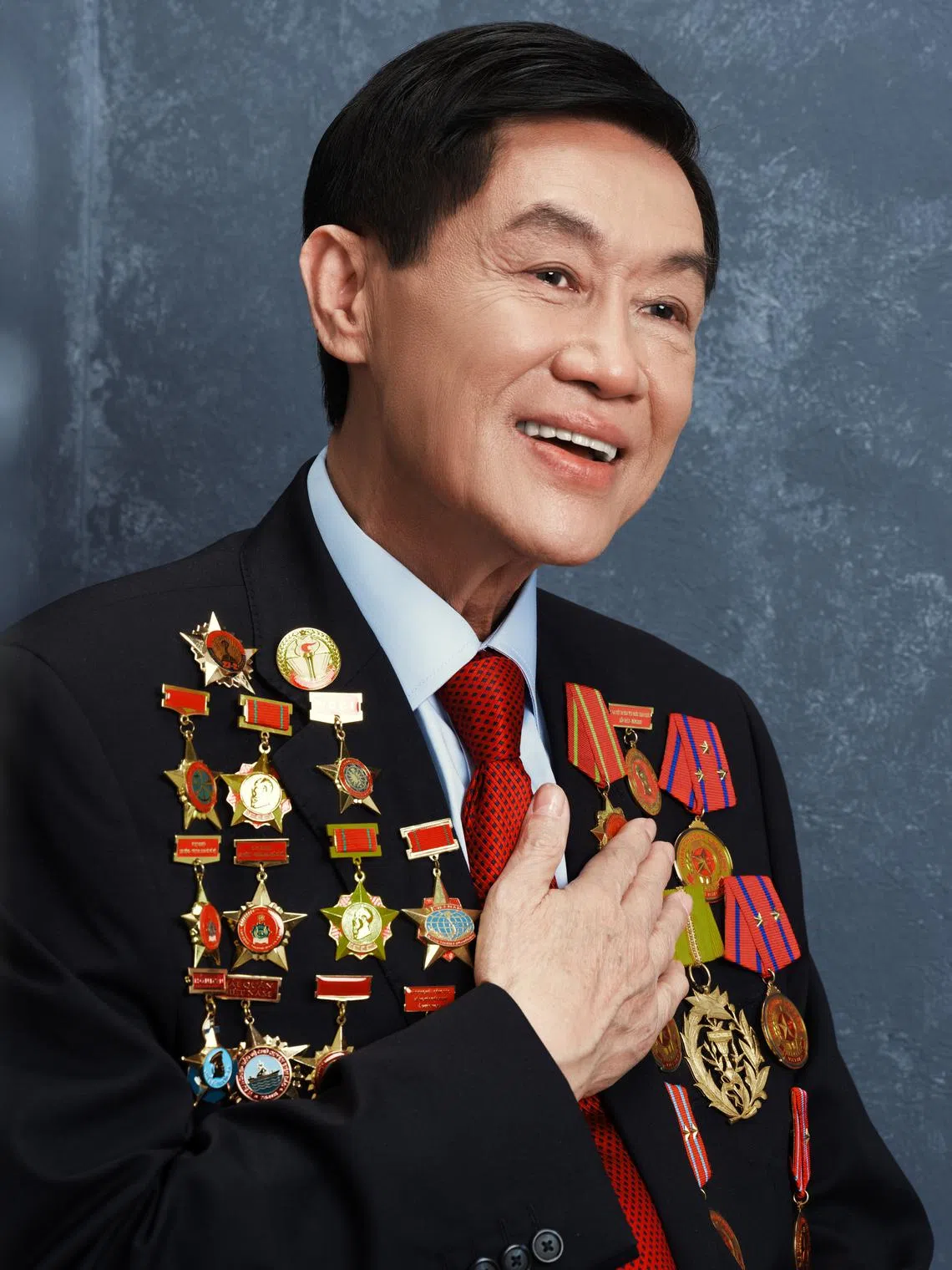
For him, that recognition is underpinned by an emphasis on transparency and strict legal compliance – values that he said must continue to be upheld in IPPG even after he steps down.
“The credibility of the leader – and of the father – matters,” he said. “Forty years is enough time for people to judge whether I do what I say. I’ve gone first and set the direction.”
He added that his life-long ambition is to grow Vietnam’s tourism sector, particularly shopping-led tourism, and to lift international arrivals towards 50 million a year, from about 20 million now.
He is confident that IPPG has built up enough scale to strengthen and dominate the country’s airport services and duty-free market – and support this vision.
“The key to success isn’t whether you’re smart or not. It’s whether you have strong relationships with brands. We have 139 of them. That takes care of everything.”
TRENDING NOW

Once staunchly pro-China, Malaysian Chinese businesses are now distancing themselves from Beijing

Looking beyond looming CEO succession, should UOB potentially pursue a transformative merger?

Could stablecoins be the future of money?

Grab CEO’s wife Chloe Tong on life with Anthony Tan and finding her purpose

