Rupiah plummets to 4-year low, breaches 16,200 per US dollar following week-long Eid break

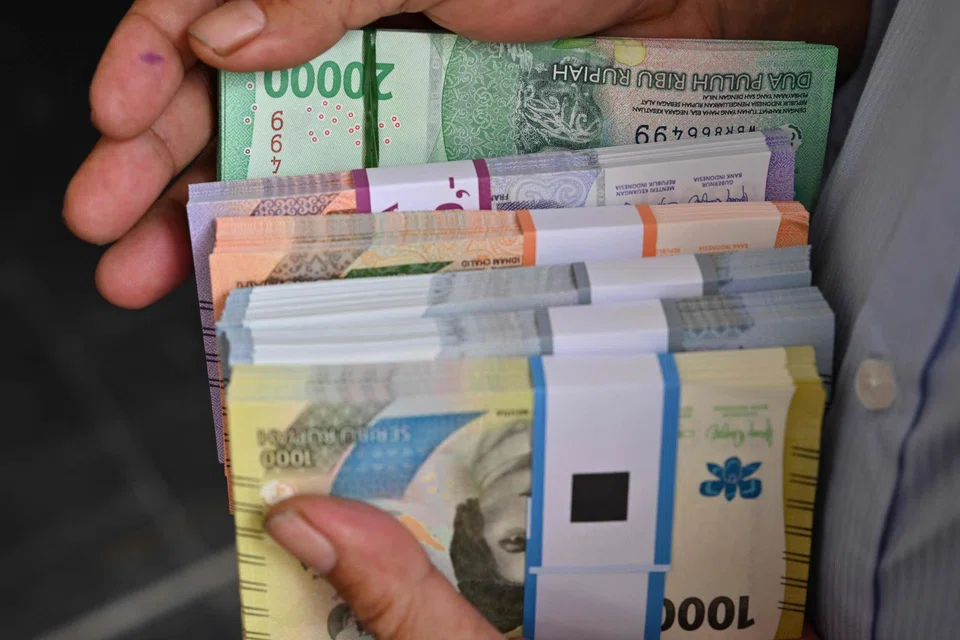
[JAKARTA] The Indonesian rupiah skidded past another fresh four-year low on Tuesday (Apr 16), prompting its central bank to intervene as activity resumed after a seven-day break for the Eid al-Fitr holiday.
Pundits are not ruling out a rate hike at Bank Indonesia’s (BI) upcoming meeting on Apr 24, given the battered currency.
The rupiah fell as low as 16,200 against the greenback during Asia’s morning session on Tuesday and has since been hovering just below that level. Year to date, the currency of South-east Asia’s largest economy has depreciated 2.2 per cent.
The US dollar has been rallying since the release of hot US inflation data and rosy macro data on Apr 10, suggesting that the Federal Reserve may not start its rate cuts soon.
Bahana Sekuritas equity research head Satria Sambijantoro said that if US inflation remains stubborn and jobs growth ticks higher until the presidential elections in November, it could potentially expose Indonesia’s balance-of-payments deficit.
This could further hurt the rupiah and exacerbate imported inflation, both of which are significant factors influencing BI’s policy rate decisions.
“We assign a 70 per cent probability that BI will hike rates by 25-basis points to 6.25 per cent during the next meeting on Apr 23-24,” he wrote in a note.
Barclays’ senior regional analyst Brian Tan told The Business Times that a rate hike by BI is not improbable if the US dollar-Indonesian rupiah exchange rate remains relatively high by the time BI holds its next monthly policy meeting. This suggests that the rupiah may have to hold around the 16,000 mark all the way to the meeting.
In October last year, when the rupiah breached the 15,800 mark, Indonesia’s central bank raised its benchmark BI-Rate by 25 basis points in a surprise move.
Indonesia was set to release March trade data on Tuesday but the announcement was postponed to Apr 22, its statistics bureau said. Typically, monthly trade data is released mid-month. It is unclear what had led to the change.
The country’s February trade figures revealed a steeper-than-expected decline in exports coupled with a larger-than-anticipated surge in imports.
“Indonesia’s once formidable trade surplus has progressively declined as exports have faltered on soft demand and much lower prices for key commodities. From a peak of roughly US$7.6 billion in 2022, the trade surplus is now just US$870 million, suggesting that Indonesia’s current account could fall into a deficit this quarter,” said ING Global Markets Research in a report last month.
The declining trade surplus could push BI to hold rates at next week’s meeting and beyond to support the weakening rupiah, said ING. The central bank had previously indicated that it would be willing to cut policy rates sometime in the second half of the year.
BI has been facing pressure to support the rupiah amid persistent US dollar strength and foreign capital outflows.
BI’s head of the monetary department, Edi Susianto, said that the increasing geopolitical tension in the Middle East has fuelled a stronger risk-off sentiment in emerging markets.
The central bank has taken steps to intervene in the market by maintaining supply-demand balance in the foreign exchange market through triple interventions, while a breach to 16,000 has been widely expected due to the strong US dollar.
“The central bank is intervening especially through the spot and domestic non-deliverable forwards, while boosting attractiveness of rupiah-denominated assets,” he told The Business Times.
Strong export
Indonesia’s robust export performance, particularly of commodities, is expected to help bolster the value of the rupiah, analysts said.
David Sumual, a senior economist at Bank Central Asia, said Indonesia is likely to post strong exports in March with a trade surplus of US$1.7 billion owing to robust prices of commodities such as cocoa, coal and palm oil.
The Bloomberg consensus forecasts a median trade surplus of US$1 billion for March, which would mark an improvement from the previous month’s figure of US$867 million.
Nicholas Mapa, senior economist at ING, indicated that the outlook for the export sector is positive but not excessively optimistic, given the ongoing weak global demand.
“We expect the currency to come under pressure for most of the year, with the rupiah likely to lag any potential rally by regional peers,” he wrote in a note.