Rupiah rides surge in Asean cross-border trade using local currencies
But uptake remains uneven, with activity concentrated among SMEs while bulk of trade settlements continue to be dominated by the greenback: analysts

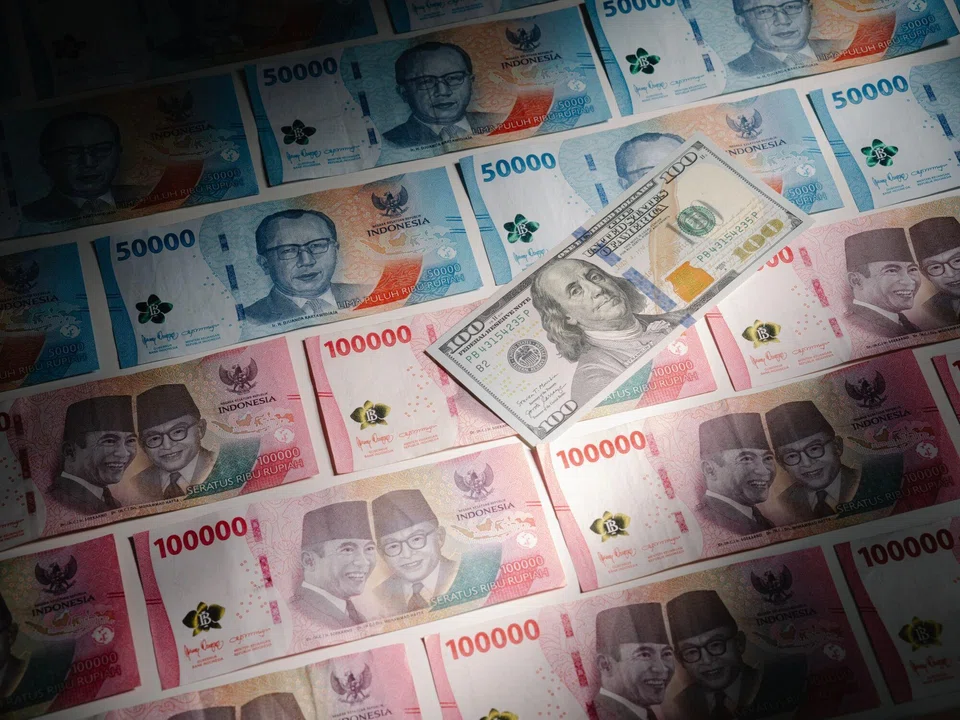
[SINGAPORE] The rupiah, ringgit and baht are gradually gaining ground as choice currencies in cross-border trade deals across South-east Asia by companies big and small, as the centre of gravity for global financial activity shifts to the east and companies diversify from excessive greenback exposure.
For the past six decades, South-east Asia caught a cold whenever the US dollar sneezed. But the almighty greenback is facing a crisis of faith from global investors and remains weighed down by bearish sentiment after notching its worst first-half performance at a pace unseen since the Vietnam War.
Though the world’s reserve currency still remains king, its peers are raising the stakes – most notably with China’s renminbi sizing up to be a barometer for regional currency swings and as a choice currency for exporters to settle trades in.
A similar trend is unfolding In South-east Asia, powered by central bank collaborations and cross-border initiatives rolled out by other financial institutions.
National push
Maybank’s deputy chief executive of group global banking, Farid Kairi, told The Business Times that transactions in rupiah between Malaysia and Indonesia via the local currency transaction framework (LCTF) have seen the highest growth.
The LCTF – first introduced by the central banks of Malaysia and Thailand in 2016 before expanding to include Bank Indonesia in 2017 – aims to encourage the usage of local currencies in regional trade settlement and facilitate Asean’s economic integration.
Maybank is one of several banks appointed to operationalise the framework in Malaysia and Indonesia, and works through a local partner in Thailand.
With the collaboration, a Malaysian importer can pay in ringgit while its Indonesian supplier will receive payment in rupiah, eliminating the need for the US dollar as an intermediary.
“Furthermore, this Malaysian importer can access a broad range of rupiah-denominated financial services, including deposits, financing and foreign exchange hedging directly from appointed banks,” said Farid.
This helps to minimise foreign exchange risks, reduce transaction costs, bank charges and other associated fees, added the Maybank executive.
He noted that some 75 per cent of the transaction volume arises from the Malaysian lender’s mid-cap and large corporate clients.
“We have found encouraging uptake by our SME (small and medium-sized enterprise) clients, and by mid-caps and large corporates that have the ability to book the respective currencies in their accounting systems,” added Farid.
Market-driven initiatives
Outside of the LCTF, products launched by other financial institutions to facilitate payments between businesses in different countries are also reporting greater interest and adoption.
UOB’s head of cash management sales, Adrian Ong, told BT that he expects growth in the usage of local currencies in cross-border trade payments to be substantial over time, and even more so with the lender supplementing it with its own platform.
Launched in March, UOB’s new cross-border payment service allows businesses in Singapore to pay recipients in their home currency. For now, the platform is rolled out to customers in Singapore but will be expanded regionally.
Ong noted that the platform’s transaction volumes in August grew 40 per cent month on month – with the rupiah its best-performing South-east Asian currency.
The take-up is particularly healthy among SMEs looking to diversify their supply chains across South-east Asia, he said.
“In these cases, because they may not actually have US dollars to start with, it makes sense for them to settle these trades with their suppliers in the neighbouring countries using local currencies,” he explained.
Aside from saving on foreign exchange conversion fees that arise from using a currency intermediary, companies get to save on transaction fees and enjoy certainty in payment time and amount, noted the UOB executive.
“These business-to-business flows usually go through traditional telegraphic transfer payments... and multiple correspondent banks (who) may levy certain fees and take time to process payments,” he said.
But when it comes to multi-national corporations, using local currencies to settle trades may not be as attractive as they are likely to deal with multiple countries and have two-way flows – in which accepting another’s currency would mean being able to pay them back in the same currency. Large corporates would also have the muscle to negotiate fees with banks, said Ong.
That said, while the draw may not be as strong for trade flows, companies are still eyeing local currency settlements for capital flows, added the UOB executive.
“For example, if I want to pay for a capital injection or my investments, or receive dividend repatriation or divestments, it would make sense to settle these sort of one-time things using local currencies.”
Localised growth
Other banks note that outside of such frameworks, the use of South-east Asian currencies for cross-border trade and investment settlement is scant.
Managing director and group head of global transaction services product management at DBS Bank, Sriram Muthukrishnan, told BT: “At this point of time, it is not very prevalent. We are not seeing significant ask around that, primarily because some of these currencies are a bit more volatile. However, there are indeed some clients looking to leverage lower borrowing costs in local currencies.”
It is also important to consider the firms’ natural hedging bases, he added.
Raising the case of Singapore, which he described as more of a re-export hub, he said: “When you are importing from another country, say, in US dollars, there’s no need for you to try to add on additional foreign exchange complexity by (taking) on exposure to a local currency.
“We also feel that it is better for customers to be able to hedge their cost base from their sales revenue base,” he added.
As far as commodities and large transactions are concerned, the greenback still continues to be the predominant currency for trade, said DBS’ Sriram.
Today, the US dollar accounts for close to 50 per cent of all global payments sent via financial messaging services provider Swift, far ahead of second-place contender, the euro, at some 23.1 per cent.
Excluding payments within the eurozone, the greenback’s share is even higher at 54.83 per cent in August 2025.
“If you look at our own trade book, an even larger proportion is meted in US dollars,” said Sriram. “Having said that, we do see a slow increase in the use of renminbi and some other currencies... But still we find the bulk of the settlements of trade happening in US dollars.”