



Security forces on alert as Filipinos vote in village polls
 Add BT as a preferred source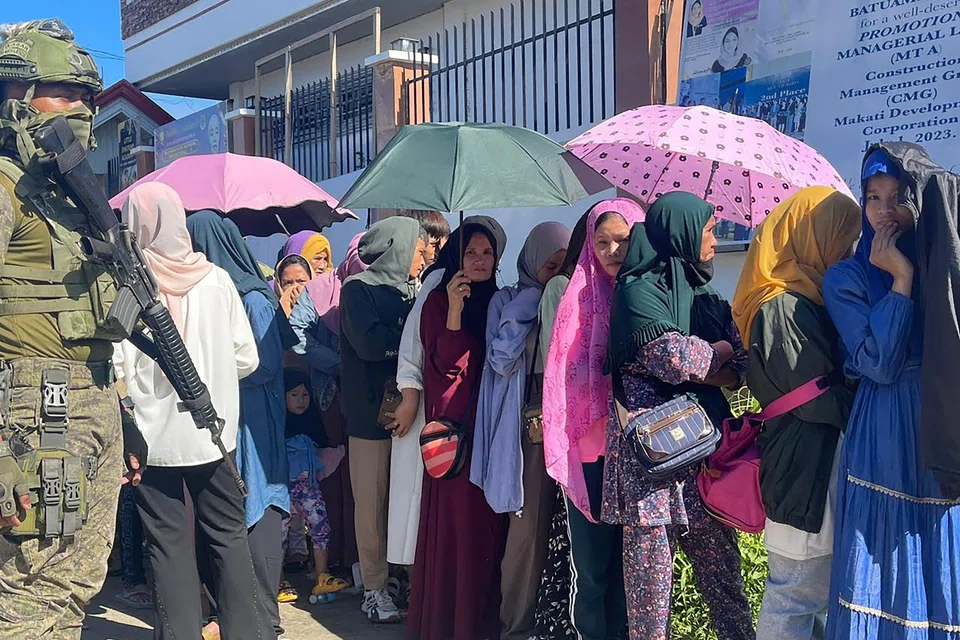
SECURITY forces were on high alert across the Philippines on Monday as millions of people voted for village leaders following months of deadly poll-related violence.
In the latest incident two people were killed outside a polling station on the restive island of Mindanao, police said as voting got underway.
More than 336,000 council positions are up for grabs in the long-delayed nationwide vote, including the influential post of village captain.
While villages are the lowest-level government unit, the council posts are hotly contested because they are used by political parties to cultivate grassroots networks and build a support base for local and general elections.
More than 300,000 police officers and soldiers have been deployed to secure polling stations in over 42,000 villages.
In the capital Manila, voters waited in long lines to cast their ballots at schools being used as polling venues.
“This is important for the people... we need to be able to consult someone over our problems,” said Rosemarie Garcia in the hardscrabble neighbourhood of Tondo.
“We need somebody who is easily approachable to his or her constituents.”
Elections are a traditionally volatile time in the Philippines, which has lax gun laws and a violent political culture.



Two people were killed and five others were wounded Monday outside a polling station in Maguindanao del Norte province on Mindanao, police said.
The incident happened during a confrontation between supporters of rival candidates for village captain, said Datu Odin Sinsuat municipality police chief Lieutenant-Colonel Esmail Madin.
Two schools to be used as polling stations in Maguindanao del Norte were also deliberately set on fire on Saturday, Commission on Elections chairman George Garcia told reporters Sunday.
In the run-up to Monday’s vote, there were 30 confirmed incidents of election-related violence, compared with 35 in 2018, the Philippine National Police said on Sunday, without providing an updated breakdown for the number of dead and injured.
Previous police data showed eight people had been killed and seven injured in poll-related violence between Aug 28 and Oct 25.
‘The result is very important’
More than 67 million people are registered to vote in the elections that President Ferdinand Marcos described Monday as “very important” for higher-level politicians.
“What happens here in the barangay (village)... are going to have an effect on the results of the mid-term elections and subsequently at the national elections,” Marcos said after casting his vote in his family’s stronghold of Batac City in the northern province of Ilocos Norte.
“If other barangays tell you ‘I will deliver 350 votes for you in my barangay’, rest assured, you will get 350. That’s why the result is very important.”
Voters will choose a village captain and seven councillors responsible for implementing national policies, resolving neighbourhood disputes and providing basic public services.
Village councils enabled politicians to “disseminate funds and other favours to secure votes”, said Maria Ela Atienza, a political science professor at the University of the Philippines.
Village elections are supposed to be held every three years, but the last vote was in 2018.
They were postponed by former president Rodrigo Duterte and then his successor Marcos on the grounds the government could not afford them. AFP
Decoding Asia newsletter: your guide to navigating Asia in a new global order. Sign up here to get Decoding Asia newsletter. Delivered to your inbox. Free.
Share with us your feedback on BT's products and services
TRENDING NOW
Firm loses wrongful dismissal case despite following termination clause

Vietnam seeks US$76 billion a year from capital markets to ease reliance on banks

Citi, OCBC downgrade UOB post-Q2 results; RHB upgrades on valuation

Soilbuild’s Lim Chap Huat sues Brookfield, claims it reneged on joint venture: WSJ

