



Seven things to know about Malaysia’s sector giants Sunway-IJM RM11 billion merger
The deal will merge two of the country’s leading construction and property firms into one powerhouse valued at nearly RM50 billion

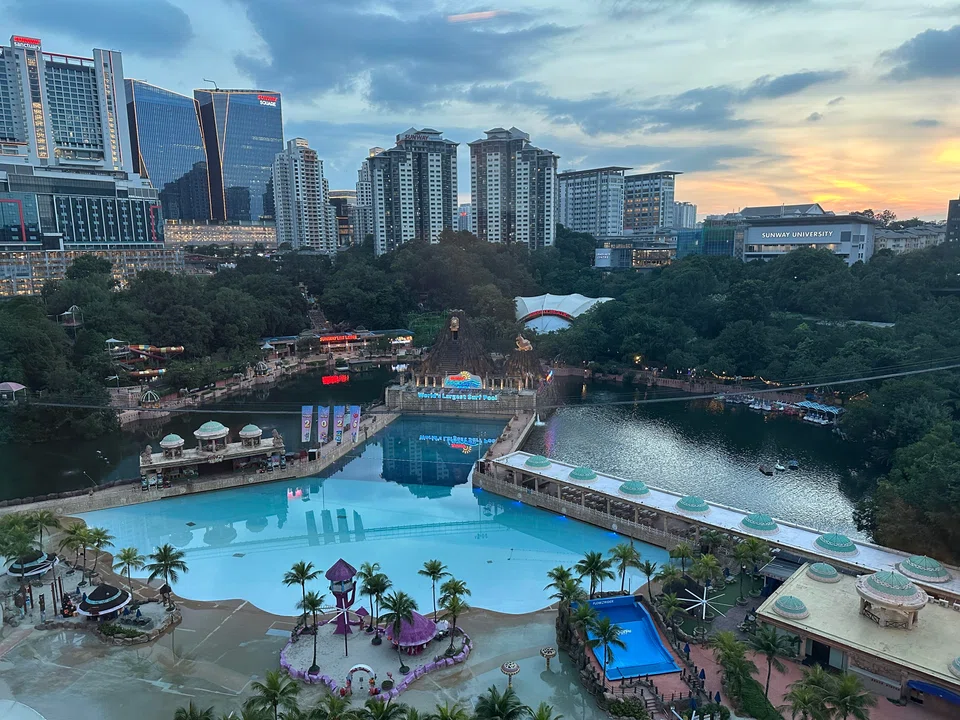
[KUALA LUMPUR] Shares of IJM Corp emerged as one of the most heavily traded counters on Bursa Malaysia on Tuesday (Jan 13), as investors reacted to the massive RM11 billion (S$3.5 billion) merger proposal from Sunway.
Trading activity was marked by intense volatility; after hitting a three-month high of RM2.97 in early trade, the share price fluctuated sharply throughout the session. At closing, the stock had surrendered its early gains, dropping to a low of RM2.74, slightly below its previous pre-suspension price of RM2.75, with more than 125 million shares traded.
The enthusiasm has been far more muted on the other end of the transaction. Sunway shares traded lower earlier in the session before closing nearly 1 per cent higher at RM5.65, with over 22 million shares done.
Sunway’s proposed RM11 billion share-and-cash takeover of IJM has sparked the market reaction. This deal would merge two of Malaysia’s leading construction and property firms into one powerhouse valued at nearly RM50 billion.
Sunway president Anuar Taib said at a media briefing on Monday (Jan 12) that the enlarged group would become Malaysia’s largest property and construction conglomerate by market value once the transaction is completed, which is expected by the third quarter of this year.
Heavy buying interest in these stocks has also helped lift the broader market. The Bursa Malaysia benchmark FTSE Bursa Malaysia Kuala Lumpur Composite Index rose nearly 0.8 per cent on Tuesday to 1,708.20 points, closing at a fresh seven-year high, supported by sustained interest in heavyweight counters.
Loong Kok Wen, deputy director and head of regional property at RHB Investment Bank, noted that mega-mergers face significant execution challenges as they hinge on a specific alignment of factors, such as attractive equity valuations, the sector’s current cycle and supportive government policy.
“Most crucially, a stable or easing interest rate environment is a primary catalyst for merger and acquisition activity, as it reduces the cost of capital and encourages asset acquisition. This trend is evident in recent market moves, such as Sunway’s acquisition of MCL Land and the uptick in asset purchases by various Reits (real estate investment trusts),” she told The Business Times.
Here are seven key things to know about the RM11 billion deal.
1. It’s a cash-and-share deal
The offer is structured as a 10 per cent cash payment, with the remaining 90 per cent settled through the issuance of new Sunway shares priced at RM5.65 each. An IJM shareholder holding 1,000 shares, for example, would receive RM315 in cash and about 501 new Sunway shares.
UOB Kay Hian noted that the issue price represents a 0.9 per cent premium to Sunway’s last traded price. The final consideration will be adjusted for dividends declared by both companies. However, IJM shareholders who accept the offer will not be eligible for the dividend-in-specie from Sunway’s upcoming healthcare IPO.
While some investors welcome the opportunity to become shareholders of a more diversified Sunway, UOB Kay Hian cautioned that the complexity of the share-swap structure – compared with a full cash offer – could affect acceptance levels, particularly among shareholders who prefer more immediate cash returns.
The deal requires an acceptance of more than 50 per cent and Sunway shareholder approval at a March 2026 extraordinary general meeting, as well as regulatory clearances from Bursa Securities and other relevant authorities to proceed.
2. What is IJM Corp?
Key facts of IJM Corp:
- Market capitalisation: RM9.6 billion (as at Jan 9)
- Landbank: 1,342 ha
- Potential gross development value: RM45.1 billion
- Outstanding orderbook: RM7.6 billion
- Revenue: RM6.7 billion (past 12 months up to September 2025)
IJM does not have a single named founder. The company was formed in 1983 when three alumni of Technical College Kuala Lumpur –- Yap Lim Sen, Koon Yew Yin and Koh Boon Chor – merged their respective companies: IGB Construction, Jurutama and Mudajaya.
The group was established to compete with well-capitalised foreign contractors and was listed on the Kuala Lumpur Stock Exchange by 1986. Under the leadership of Tan Boon Seng, better known as Krishnan Tan, who served as group managing director from 1997 to 2010, IJM diversified into property development, manufacturing, plantations and overseas markets such as India, Argentina, and the UK.
Today, IJM’s largest shareholders include the Employees Provident Fund with 18.4 per cent, Amanah Saham Bumiputera and Permodalan Nasional with 12.9 per cent, KWAP with 9.6 per cent, Public Mutual with 4.6 per cent, Vanguard Group with 4 per cent and Urusharta Jamaah with 3.7 per cent.
IJM operates across four core segments: construction; property development; industrial, including quarrying and the manufacture of building materials such as concrete products and precast piles; and infrastructure concessions, notably toll roads and port operations.
Together, these businesses form an integrated model in which construction and industrial capabilities support property projects, while concessions provide recurring income.
3. What is Sunway?
Key facts of Sunway:
- Market capitalisation: RM37.9 billion (as at Jan 9)
- Landbank: 959 ha
- Potential gross development value: RM73 billion
- Outstanding orderbook: RM5.4 billion
- Revenue: RM10.3 billion (past 12 months up to September 2025)
Sunway began in 1974 as Sungei Way Holdings, a small tin-mining and quarrying business in Selangor founded by Jeffrey Cheah with RM100,000 in capital.
After the collapse of global tin prices in the 1980s, Cheah pivoted into property development, transforming an 800 acre (323.8 ha) exhausted mining site into Sunway City Kuala Lumpur. Launched in the mid-1980s, the township became Malaysia’s first green-certified development under the Green Building Index.
By the 1990s, Sunway had listed on Bursa Malaysia and expanded into construction, hospitality, education, healthcare and retail. Today, the group employs about 16,000 people across 13 divisions in 50 locations worldwide.
Sunway’s model is anchored by its build-own-operate township strategy. In Johor, its flagship Sunway City Iskandar Puteri spans about 730 ha along the waterfront. The group is also developing a RM4 billion transit-oriented mixed-use project with MRT Corp at Bukit Chagar, which is positioned to benefit from the upcoming RTS Link to Singapore.
Regionally, Sunway has expanded aggressively into Singapore through its Sunway MCL arm. Following its RM2.4 billion acquisition of Hongkong Land’s MCL Land business in 2025, the group’s attributable project value in Singapore rose to nearly RM15 billion.
Sunway has also announced plans to list its healthcare arm by March 2026 in an IPO expected to raise more than RM3 billion, potentially the largest Malaysian listing since 2017.
4. Is it a fair deal for IJM shareholders?
RHB analyst Adam Mohamed Rahim said that while the RM3.15 a share offer price is below IJM’s previous target price of RM3.43, the voluntary takeover offers shareholders a chance to participate in the long-term upside of a larger, more diversified group.
Adam pointed to Sunway’s stronger land utilisation track record. Sunway’s gross development value averages RM30.9 million an acre, more than double IJM’s RM13.6 million an acre, suggesting that the combined landbank could be more effectively monetised under Sunway’s management.
Not all analysts agree. Kenanga Research analyst Teh Kian Yong described the offer as unattractive, arguing that IJM shareholders would be swapping “cheap” shares trading at 19.4 times earnings for “expensive” Sunway stock at 27.6 times earnings.
Adjusting for Sunway’s target price of RM4.73, Kenanga estimated that the effective value received by IJM shareholders falls to RM2.69, below IJM’s prevailing market price. While the merger promises operational synergies, Teh said, the financial terms do not adequately reflect IJM’s intrinsic value.
5. What does Sunway get?
RHB’s Loong said the merger would significantly lift Sunway’s market capitalisation to an estimated RM48 billion, making it the eighth-largest stock on Bursa Malaysia and increasing its weighting in the MSCI index.
“The deal would also eliminate a major competitor, strengthening Sunway Construction’s position when bidding for large projects,” she added.
The transaction would expand Sunway’s land bank, adding about 880 acres (356.1 ha) in Johor and 900 acres (364.2 ha) in Seremban, reinforcing its presence in Iskandar Malaysia and Negeri Sembilan. The inclusion of Kuantan Port would also provide recurring income linked to spillovers from the East Coast Rail Link.
CGS International director Chong Tjen San said the acquisition fills critical gaps in Sunway’s portfolio, notably IJM’s large Klang Valley townships such as the 501 acre (202.7 ha) Rimbayu and the 406 acre (164.3 ha) Seremban 2.
Sunway will also gain exposure to Penang through the Light City development and a sizeable industrial footprint via 992 acres (401.4 ha) in Malaysia-China Kuantan Industrial Park 2. Additionally, there will be diversification from IJM’s UK property ventures, its industrial concrete products business, toll road concessions and Kuantan Port, he added.
6. What happens after the merger?
Key estimations after the merger:
- Market capitalisation: RM47.7 billion (as at Jan 9)
- Landbank: around 2,300 ha
- Potential gross development value: RM118.1 billion
- Outstanding order book: RM13 billion
The consolidation would combine about 2,300 ha of land, RM118.1 billion in gross development value and a potential RM13 billion construction order book into a single, enlarged platform.
If Sunway secures only the minimum acceptance threshold, IJM is expected to operate independently for a period, while Sunway works to improve synergies and efficiency. If Sunway eventually achieves full control, IJM’s construction, manufacturing and quarrying businesses may be merged into Sunway Construction.
Sunway has stated that it does not intend to maintain IJM’s listing if public shareholding requirements are not met. Analysts expect Sunway to pursue delisting once full control is achieved.
Kenanga Research analyst Clement Chua estimated that while the deal could dilute Sunway shareholders by 13 to 26 per cent, the transaction would still lift fully diluted earnings per share by 7 to 22 per cent, supported by IJM’s earnings base and the RM5.65 issue price.
7. What are the risks?
The biggest risk lies in post-merger integration, said RHB’s Loong.
Sunway faces the challenge of absorbing 3,000 IJM employees into its 12,000-strong workforce (construction and property) while managing non-core or lower-margin assets. This will likely trigger a strategic exit from underperforming international markets like Argentina and India.
Management’s immediate focus is securing the takeover, followed by a detailed review of overlapping business units.
“A critical next step in this consolidation will be the integration of IJM’s construction division into Sunway Construction. Given the scale of this exercise, the realignment is expected to be materialised in late 2026 or early 2027,” she added.
TRENDING NOW

Once staunchly pro-China, Malaysian Chinese businesses are now distancing themselves from Beijing

Looking beyond looming CEO succession, should UOB potentially pursue a transformative merger?

Could stablecoins be the future of money?

Grab CEO’s wife Chloe Tong on life with Anthony Tan and finding her purpose

