



Shock 32% tariff piles pressure on Indonesia’s trade balance and its battered rupiah
Amid rising trade tensions, the country faces growing pressure to protect its exports and stabilise the currency amid shifting global trade currents

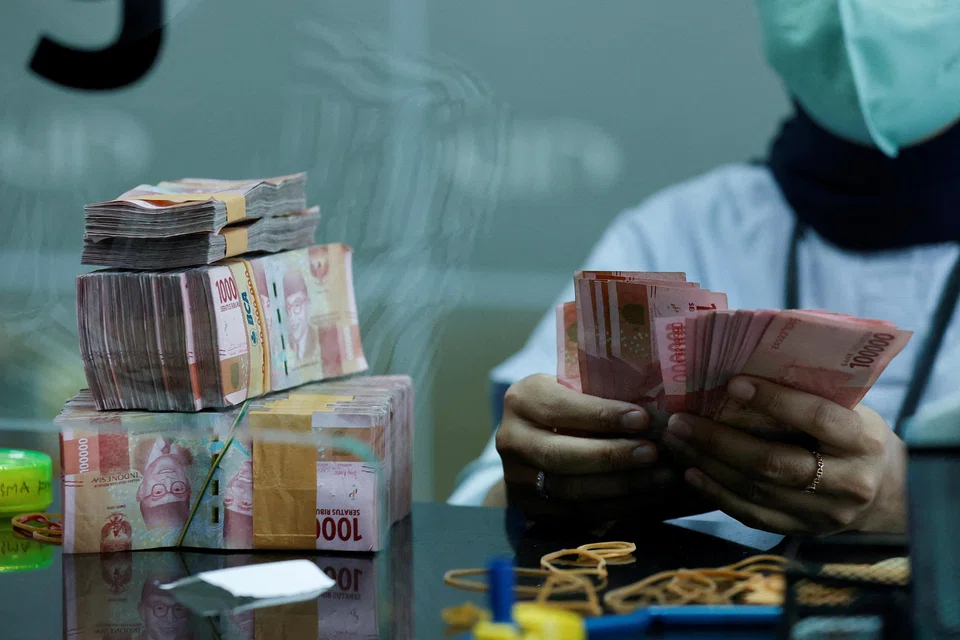
[JAKARTA] The United States’ plan to impose a 32 per cent import tariff on Indonesian goods threatens to upend South-east Asia’s largest economy by disrupting its trade balance, weakening the rupiah and clouding its long-term economic outlook – all while leaving the country’s exporters squeezed between shrinking demand and rising uncertainty.
The tariff hike could be particularly damaging, since Indonesia’s exports to the country consist mainly of manufactured goods such as electronics, footwear, apparel and furniture, rather than raw commodities, said Bahana Sekuritas economists Satria Sambijantoro and Purbiantoro Lintang in a recent note.
“Almost all of Indonesia’s key manufacturing exports to the US grew in 2024, benefiting from American economic resilience. However, if the tariffs are to be increased from the current 10 per cent to 32 per cent, these industries will face a major setback,” they warned.
The rupiah, mirroring the fate of its regional peers, took a hit on Thursday (Apr 3), sliding 0.36 per cent after US President Donald Trump unveiled reciprocal tariffs aimed at balancing bilateral trade deficits between the US and its trade partners.
The Indonesian currency stumbled to 16,745 per US dollar – teetering on the brink of its lowest point since the turmoil of the 1998 Asian financial crisis.
Indonesia ran up a US$17 billion trade surplus with the US last year, making the US the country’s largest supplier of foreign exchange.
Bahana Sekuritas, one of Indonesia’s largest investment banks and securities brokerage houses, has warned that the imposition of higher tariffs on Indonesian exports could significantly reduce the country’s trade surplus, and turn up the heat on its balance of payments.
With a shrinking surplus, Indonesia may struggle to maintain currency stability and finance its imports, and could be roiled by increased economic volatility.
Bahana Sekuritas noted: “If the US follows through with these tariffs, Indonesia’s monthly trade surplus could drop to between US$700 million and US$900 million, down from the current US$3 billion.”
The country’s current account deficit is also expected to widen to 0.9 per cent of its gross domestic product, nearing the upper end of Bank Indonesia’s target range of 0.5 to 1.3 per cent for the year. This puts the central bank in a tight spot, as it faces the challenge of stabilising the rupiah ahead of considering further rate cuts.
Call for mitigating action
Eisha Maghfiruha Rachbini, director at the Institute for Development of Economics and Finance (Indef), urged the Indonesian government to act swiftly to mitigate the impact.
She said: “The government must engage in immediate trade negotiations with the US to minimise the tariff burden on Indonesian exports. Strong diplomatic efforts are crucial to reducing the impact of this trade war.”
Negotiating with the US will pose a distinct challenge for President Prabowo Subianto, particularly as Indonesia is still without an ambassador to Washington. The position has been vacant since 2021, when Rosan Roeslani stepped down from his diplomatic post to become Minister of Investment.
Indonesian business leaders are also calling for a proactive response to safeguard the country’s economic interests.
Shinta Kamdani, who chairs the Indonesian Employers Association (Apindo), said that the organisation is working with the government and key stakeholders to craft strategic solutions for exporters hit by the tariff war. “We’re advocating for a bilateral agreement with the US to ensure Indonesia retains competitive market access. At the same time, it’s crucial to reassess reciprocal trade policies, including tariffs on US imports to Indonesia, to maintain a fair and balanced playing field.”
She also underscored the importance of market diversification, and noted that South-east Asia, the Middle East, Latin America and Africa offer abundant opportunities for Indonesian exporters.
Apindo urges the government to tap into existing trade agreements such as the Comprehensive Economic Partnership Agreement, and to expedite the one between Indonesia and the European Union, she added.
Diplomatic visit
Indonesia is doubling down on its diplomatic efforts with the US, reaffirming its commitment to constructive dialogue and proactive engagement.
In a statement late Thursday, the government announced plans to dispatch a high-level delegation to Washington for direct negotiations, while also implementing strategic actions, structural reforms, and deregulation policies aimed at simplifying regulations and eliminating barriers, particularly related to non-tariff barriers.
A key focus of the discussions is the latest National Trade Estimate report by the US Trade Representative, which flags Indonesia’s local content requirements as a trade barrier and regulatory challenge.
The statement read: “Prabowo has instructed the Cabinet to implement strategic actions, structural reforms and deregulation policies aimed at simplifying regulations and eliminating barriers, particularly those related to non-tariff measures.”






