Singapore fuel distributor Global Group doubles down on Timor-Leste with US$10 million oil terminal
Global Group unit is eyeing a Singapore listing

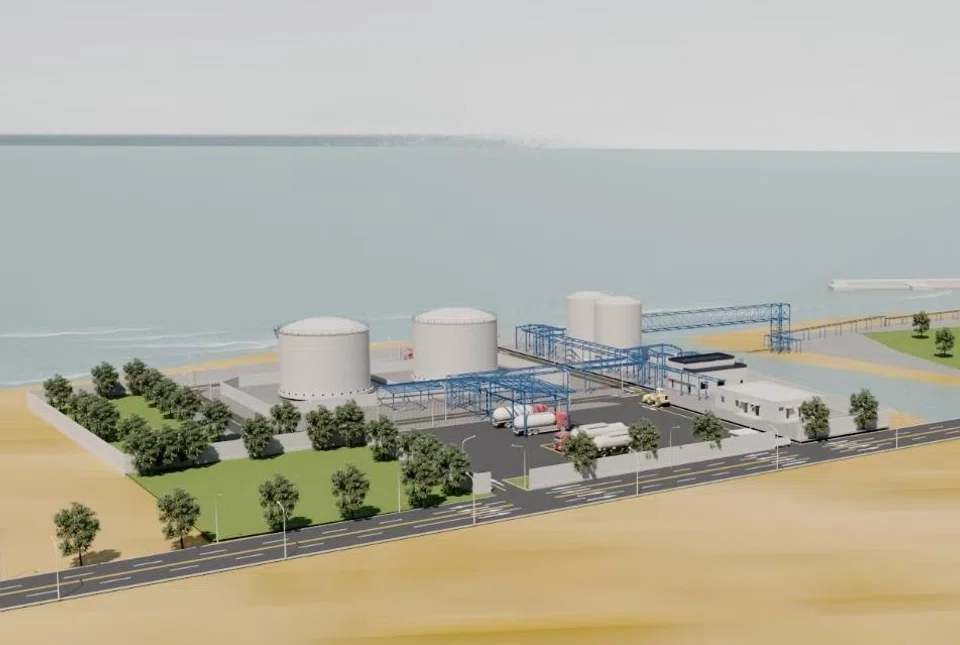
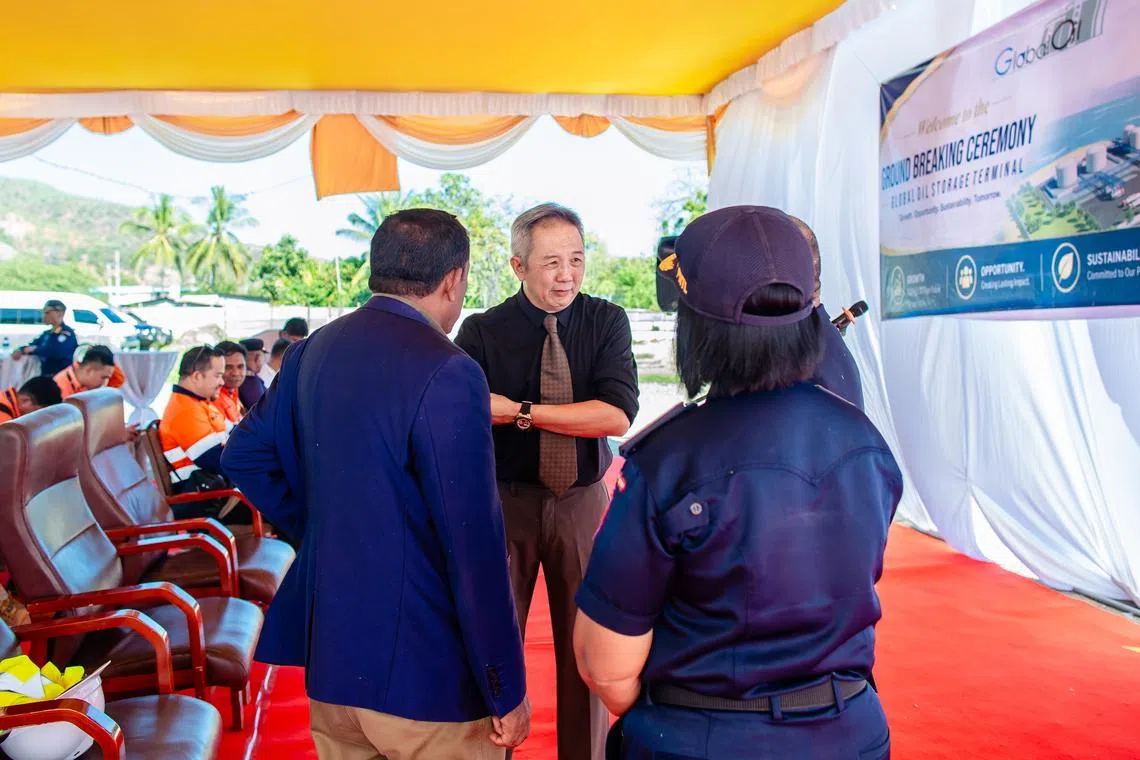
[DILI] Singapore oil and gas firm Global Group on Sunday (Jul 12) began the construction of its first fuel storage terminal in Timor-Leste, where the company said it commands nearly two-thirds of the onshore fuel market.
Targeted for completion in 10 months, the facility will comprise two floating-roof tanks that can store 3.5 million litres of diesel and 2.5 million litres of petrol. Further expansion of the group’s storage capacity is planned for 2030.
The US$10 million tank farm sits on a two-hectare plot of land – just about the size of three football fields – in Liquica, a municipality off the northern coast of the half-island nation.
Fuel stored there will be used to supply the group’s national retail and wholesale operations. It currently owns and operates nine petrol stations nationwide, and supplies fuel to major construction projects and naval vessels that call on the country’s ports.
Director Julian Chiang told The Business Times in an interview that building its own oil terminal affords the group’s Timor-Leste unit greater operational strength and better control of its fuel inventory.
Bullish growth outlook
“We are at a stage where the country is ready for a major spurt in growth,” he said, citing the young nation’s recent entry into Asean, the government’s intentions to chair the regional bloc in 2029, its national development plans and growing investor interest.
Chiang noted that the group’s Timor-Leste operations have seen consistent top-line growth of at least 8 to 10 per cent every year, with sales from its wholesale division having risen from some 300,000 litres a month in 2014 to more than 3.5 million litres a month in 2024.
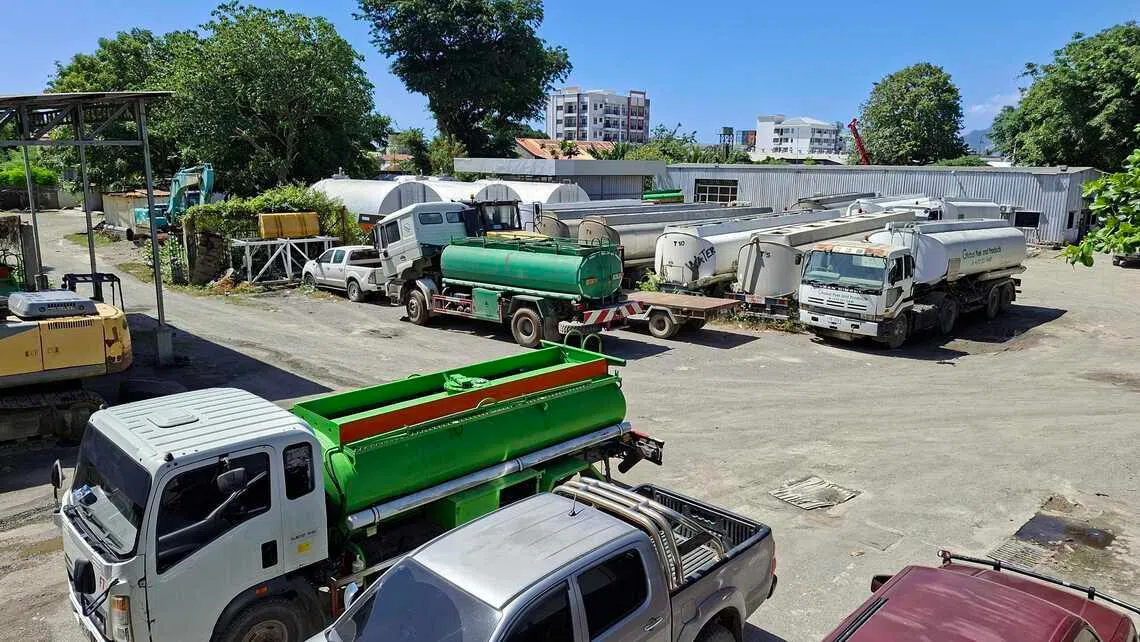
Started by three brothers, Global Group made its debut in Timor-Leste in 2012 as a heavy-equipment supplier to test the market, before venturing into fuel supply, focusing on private projects developed by foreign state-owned companies. It now has the largest fleet size in the country with about 50 fuel trucks.
The fuel distributor has planned for a second phase of construction to start in 2030 on the remainder of the site, which can “easily” hold another two storage tanks, said Chiang.
SEE ALSO
“We are pretty confident that we will need the extra capacity because we have seen a sharp increase in investor activity,” he continued, noting a growing number of business visits and fact-finding missions. “As long as that is still happening, there is potential for new industries to come up and new businesses to set up, which would require extra capacity from us.”
Building its own storage facility would also contribute to cost savings and reduced dependence on third-party terminals, said Chiang.
For the past six years, the group’s Timor-Leste operations have been using an oil terminal operated by a subsidiary of Indonesian state-owned energy giant Pertamina for its monthly fuel imports.
Throughput fees for fuel imported from the group’s mother operations in Singapore cost it some US$1.8 million a year, biting into an annual turnover of some US$50 million to US$60 million, said Chiang.
Profits from the group’s Timor-Leste operations amount to some US$2 million to US$3 million, he noted.
Moreover, Pertamina’s oil terminal is slated for decommissioning and is expected to be relocated to a new site in Liquica, based on a 2018 environmental management plan commissioned under the government’s request.
Today, the facility sits in a densely developed area of Dili, among residential neighbourhoods, cafes and diplomatic missions, including the US and Malaysian embassies.
Once built, Global Group’s oil terminal will be Timor-Leste’s third such facility. Pertamina’s has been operating since the 1980s with a total storage capacity of 5.3 million litres; the second tank farm run by Timorese energy company ETO has a capacity of 9.2 million litres.
The new terminal will strengthen Timor-Leste’s energy security, added Chiang, noting that 150,000 litres of fuel will be reserved for the government to tap at any point in time.
While the oil-reliant, resource-rich country still has offshore petroleum potential, its onshore reserves are largely depleted and production halted – what is left is stored in the nation’s Petroleum Fund that stands at some US$18.75 billion as at May 31.
Continued withdrawals from the fund to finance fiscal deficits would lead to its full depletion by the end of the 2030s, warned the International Monetary Fund in a September 2025 report.
Listing plans
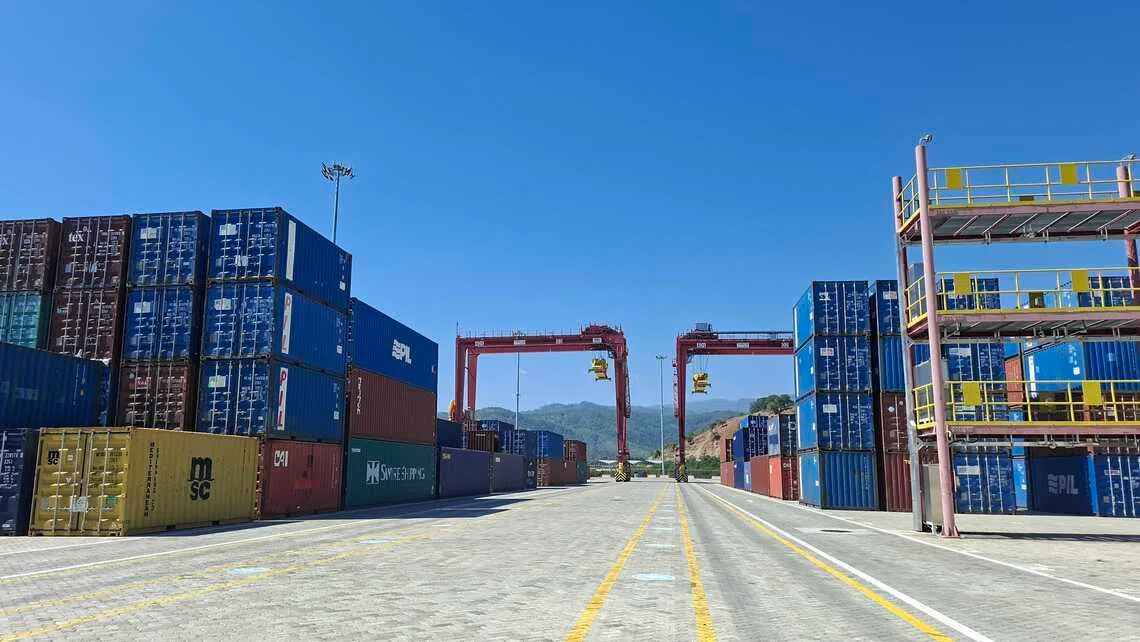
Major projects within Timor-Leste that the group has supplied fuel to include Tibar Bay Port, a new international container seaport that commenced operations in 2022 and the country’s first public-private partnership, as well as a highway backed by multilateral financial institution Asian Development Bank, said Chiang.
Around two years ago, the director sought a listing on the Singapore Exchange’s Catalist board for the group’s Timor-Leste unit, but met with no success as the country was deemed “too high risk”.
Chiang hopes that this will change with the group’s ground-breaking and a recent visit by Singapore Prime Minister Lawrence Wong.
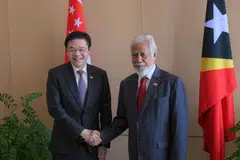
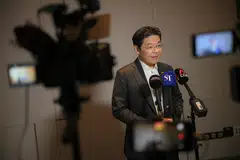
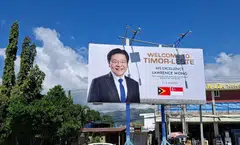
PM Wong was in Dili from Jul 2 to 3 on his inaugural trip to the young nation, which marked the first visit by a Singapore head of government there.
During his trip, the prime minister noted that Singapore is one of the largest investors in Timor-Leste, with businesses exploring opportunities across a wide range of sectors. He added that Singapore firms can tap emerging prospects there, and that local business associations may consider mounting overseas missions.
Asked why he is determined to list, the 57-year-old Chiang replied: “We are looking for legacy. We want the business to continue after we retire.”
Opening the company up to regulatory scrutiny and strict corporate governance limits the potential for internal rot, he added, citing the third-generation wealth curse – a phenomenon where wealth created by the first generation is said to be squandered by the third.
Should a Singapore listing still remain out of reach, Chiang told BT he intends to turn to Hong Kong.
He said: “Global Group has been operating in Timor-Leste since 2012. We have not taken a single cent out of this country – whatever business profit we have made has been piled back into the country, and we will continue to reinvest in it.”
Besides its Timor-Leste operations, the diversified family business founded in Singapore also has presence across Malaysia, Indonesia, Myanmar, Cambodia and China in the energy, logistics and infrastructure sectors.
Decoding Asia newsletter: your guide to navigating Asia in a new global order. Sign up here to get Decoding Asia newsletter. Delivered to your inbox. Free.
Copyright SPH Media. All rights reserved.