Singapore-Malaysia QR code payment link a boost to cashless drive

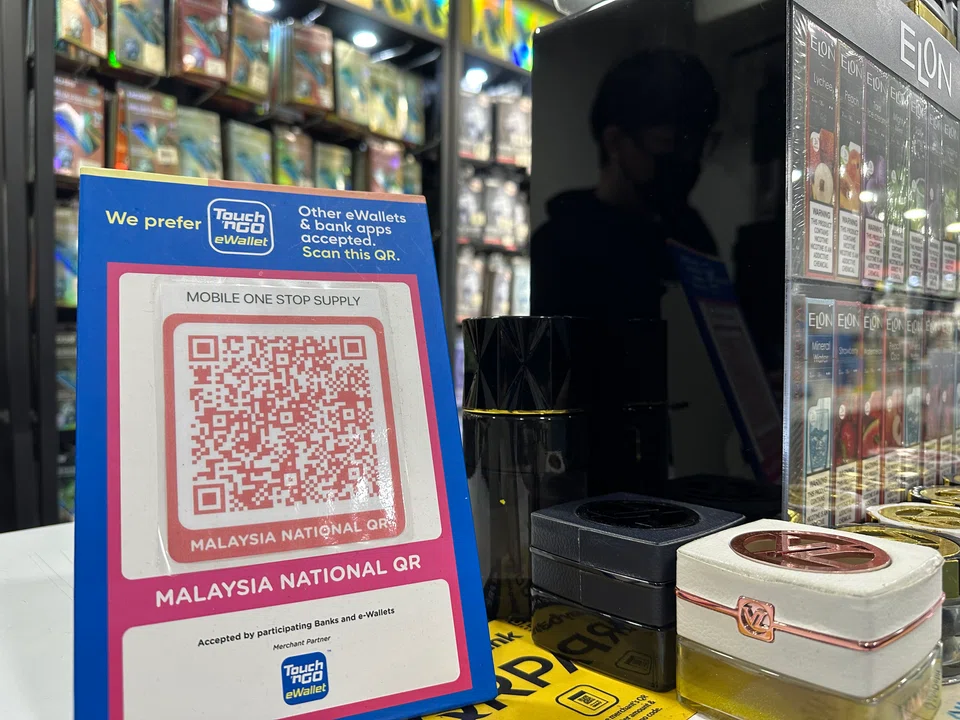
[KUALA LUMPUR] Cashless payments are all the rage these days in Malaysia, and the number of such transactions is set to rise sharply this year with the recent launch of a cross-border QR code payment linkage between Singapore and Malaysia.
Many smaller businesses told The Business Times that receiving payments via QR code will benefit them greatly, as such transactions are instant and allow them to receive funds immediately. This is unlike credit and debit cards, which may require several days before the funds are transferred to them.
Customers also do not have to worry about carrying excessive amounts of cash with them as they can use the QR code payment option even for a few ringgit.
On Mar 31, the central banks of Singapore and Malaysia launched the cross-border QR code payment linkage, which allows customers of certain financial institutions to make retail payments by scanning their Nets QR code (for payments in Singapore) or DuitNow QR codes (for payments in Malaysia).
The system supports in-person payment through the scanning of physical QR codes displayed by merchants, as well as online cross-border e-commerce transactions.
The service is available to customers of Singapore’s three local banks – DBS, UOB and OCBC. In Malaysia, it can be used by customers of Maybank, CIMB, Hong Leong Bank and TNG Digital.
Kevin Tay, a food court operator in Johor Bahru, said the greater convenience will enable more tourists, especially from Singapore, to spend more freely “as they can order as much as they like without worrying about not having enough cash”.
He said that almost all the 25 stall owners at the food court now allow this mobile contactless payment option for their customers.
“Safety is a key reason. Many of us prefer not to handle a lot of cash or prepare small change,” he said.
Eddie Eo, the manager of Supwave, a car wash and detailing centre in Johor Bahru, said the real-time feature of the QR code payments is “like receiving cash” instantly.
While he is open to all forms of cashless payment methods, including credit cards, he said he now prefers customers to pay via QR code so that he does not have to wait as long as a week to receive the payments from the banks.
Observers said that the launch of this cross-border real-time payment service is timely, given how many merchants and consumers in Malaysia have already switched to mobile contactless payment methods.
According to latest data from Bank Negara, Malaysia’s e-payment transactions grew by 31.5 per cent to reach RM9.5 billion (S$2.85 billion) in 2022, from RM7.2 billion the previous year. On average, each Malaysian made 291 e-payment transactions last year, with two-thirds carried out through contactless payment such as mobile e-wallets.
Malaysia was recently ranked by ACI Worldwide as the world’s fifth fastest-growing real-time payments market, with a compound annual growth rate of 26.9 per cent. In 2021, Malaysia recorded 1.1 billion real-time payment transactions.
Ong Kian Ming, the director of the philosophy, politics and economic programme at Taylor’s University, said: “This is a natural progression (to have this QR code real-time payment option) between Singapore and Malaysia. Singapore has also established real-time payment recognition with India, and hopefully this momentum will continue and (the service) can expand to other markets in Asia.”
Danny Chua, the chief commercial officer of TNG Digital, said the transparent nature of paying via scanning an authorised QR code is beneficial to tourists who want to know how much a transaction would cost in their home currency.
The company’s Touch ‘n Go e-wallet app displays the live currency exchange rate after the customer scans the DuitNow QR code when making retail purchases.
TNG Digital currently has over 19 million registered users, and Chua said that the launch of the cross-border QR code payment linkage means that Touch ‘n Go e-wallet now has more than 130,000 acceptance points in Singapore.
In a joint statement when the payment linkage went live, Bank Negara and the Monetary Authority of Singapore described the initiative as a “testament to both countries’ commitment to improve the cost, speed, access and transparency of cross-border payments”, in line with the Asean Payment Connectivity Initiative and the G20 Roadmap for Enhancing Cross-border Payments.
The next phase will see the two central banks expand the payment linkage to enable cross-border account-to-account fund transfers and remittances.
This will allow users to make real-time fund transfers between Singapore and Malaysia using just the recipient’s mobile phone number via PayNow and DuitNow. This service is expected to go live by the end of 2023.