Singapore may tighten monetary policy as oil shock lifts prices
The Singapore dollar has slipped against the greenback since the war in Iran started
 Add BT as a preferred source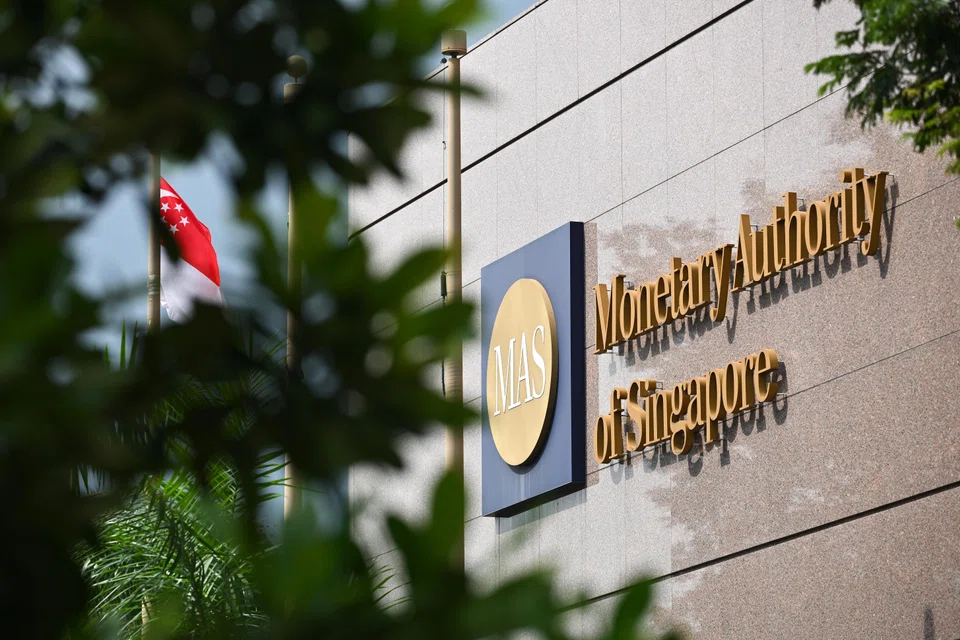
SINGAPORE’S central bank is poised to tighten policy on Tuesday (Apr 14) as the Iran war drives up import costs and threatens to push inflation beyond current projections, potentially becoming one of the first in Asia to adjust settings following the Middle East conflict.
Fifteen out of 18 economists in a Bloomberg survey expect the Monetary Authority of Singapore (MAS) to tighten policy at its Apr 14 review. Three forecast no change. An escalation in the Middle East and the possibility of a global recession were cited as the biggest tail risks in the survey conducted between Mar 27 and Apr 9.
On Tuesday, the trade ministry will also release how the economy fared in the first quarter after Singapore warned that growth will take a hit this year. Economists expect Singapore’s gross domestic product to shrink 1 per cent in the first three months, compared with the fourth quarter. On an annual basis, the economy is estimated to have expanded 5.9 per cent.
The MAS, which holds four policy reviews per year, has flagged it will update its inflation outlook, a signal economists say could intimate a policy move. Core inflation this year is likely to be at 1.9 per cent, according to the median in the survey, that’s at the upper end of the government’s projection in February.
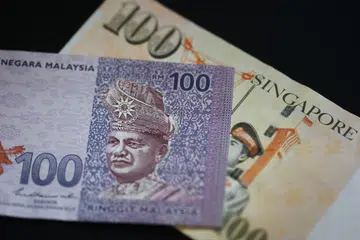
Unlike most central banks that use interest rates, Singapore maintains medium-term price stability by managing its currency against a trade-weighted basket – the S$NEER – within an undisclosed target band. The Singapore dollar has slipped against the greenback since the war in Iran started. Still, it’s outperformed its South-east Asian peers.
Singapore’s near-total reliance on imported energy leaves it exposed to the Middle East crisis. Fuel, electricity and transport costs are already rising, with businesses facing higher logistics and input prices. While the immediate impact is on headline inflation, economists warn the risk is that these pressures broaden over time.
Indeed, Foreign Affairs Minister Vivian Balakrishnan last week warned that the economic fallout from the war could worsen.
“I’m quite sure the markets are not fully pricing the worst-case scenario,” Balakrishnan told Bloomberg Television’s Avril Hong.
The geopolitical situation has shifted expectations towards a tightening bias.
SEE ALSO





“Past policy episodes illustrate how large swings in global energy prices can influence Singapore’s inflation outlook and, by extension, monetary policy settings,” OCBC strategist Christopher Wong wrote in a note on Apr 10.
He expects the MAS to tighten by raising the slope of the S$NEER. There’s also an outside chance of the central bank steepening the slope and recentering the policy band upwards, Wong added.
The Singapore dollar has strengthened steadily and is nearing the top of its policy band, according to Goldman Sachs estimates. This could signal that some investors are increasingly positioned for a tightening stance from the central bank as early as the April decision.
The case for tightening rests on how policymakers view the impact of the Middle East conflict. While higher energy costs are pushing inflation higher, the same shock threatens to weigh on global trade and demand, a key risk for Singapore’s highly open economy.
For MAS, the choice is increasingly stark: lean against a fresh inflation shock driven by war, or hold back as the same shock begins to weigh on growth. BLOOMBERG
Decoding Asia newsletter: your guide to navigating Asia in a new global order. Sign up here to get Decoding Asia newsletter. Delivered to your inbox. Free.
Share with us your feedback on BT's products and services