



Singapore ranks high for adoption of new energy vehicles in South-east Asia: study
Awareness of types of new energy vehicles is highest in the Republic, based on a survey by Inchcape

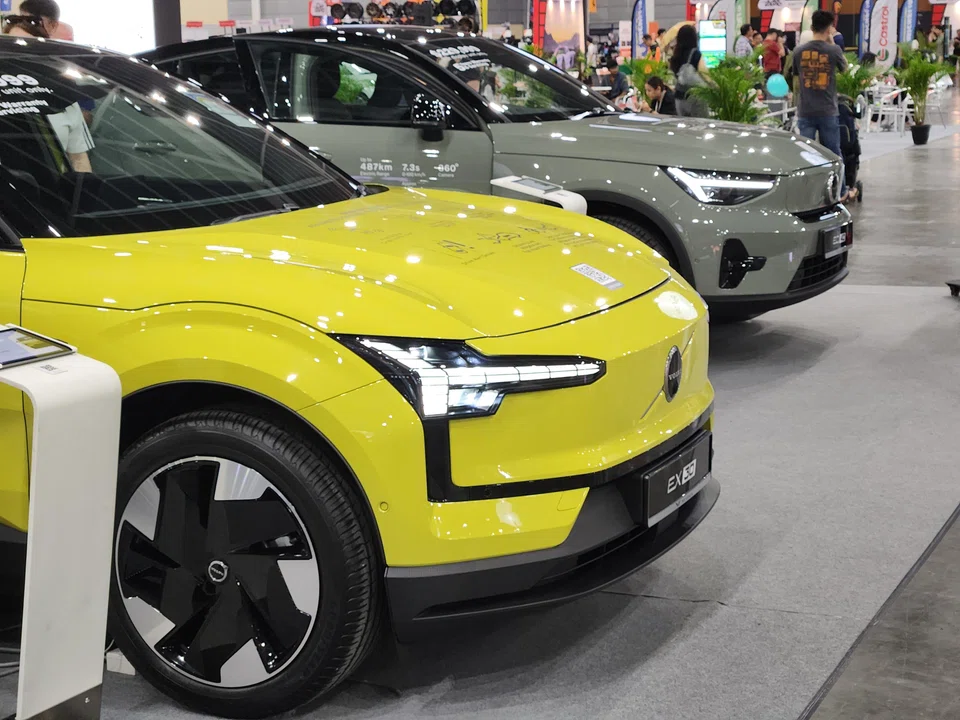
[SINGAPORE] About one-third of car owners in Singapore currently own an electric or hybrid vehicle, and nearly two-thirds of Singaporeans agree that governments should set deadlines to phase out internal combustion engine (ICE) vehicles.
These figures, from the latest study conducted by global automotive distributor Inchcape, put the city-state at the forefront of South-east Asia’s and the wider Asia-Pacific region’s electric vehicle (EV) transition.
Inchcape surveyed nearly 3,600 respondents across seven markets – Hong Kong, the Philippines, Indonesia, Vietnam, Thailand, Singapore and Australia.
The survey also revealed that awareness of the different types of new energy vehicles (NEVs), which include battery EVs, plug-in hybrids and hybrids, was the highest in Singapore compared with other Asia-Pacific markets surveyed.
Inchcape Asia-Pacific chief executive officer Phil Jenkins said: “There’s no one-size-fits-all model. Success depends on understanding each market’s unique realities. Singapore shows us what’s possible when policy, consumer sophistication and accessible solutions align.”
While governments in several of the markets surveyed have dangled incentives for consumers to transition to NEVs, Singapore’s government has arguably been the most aggressive. Beyond dangling incentives for consumers to transition to EVs, the government also wants to phase out pure-ICE vehicles by 2040.
The Business Times previously reported that incentives are still expected to drive EV adoption in the city-state this year.
Consumers currently get rebates of up to S$30,000 for EVs, which can be significant for Singaporeans who also have to contend with purchasing a Certificate of Entitlement (COE), which enables one to own a car in the Republic.
The price of a COE often costs upwards of S$100,000.
SEE ALSO
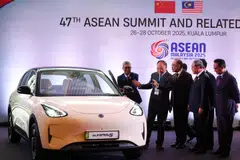
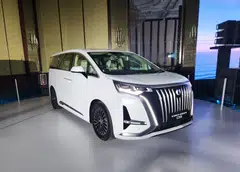
Apart from price, the city-state’s charging infrastructure is also more developed compared to other major markets in South-east Asia.
In the first nine months of 2025, EVs accounted for 43 per cent, or about 16,000 vehicles, of all new passenger vehicles registered in Singapore.
As for the broader region, the Inchcape study showed there is cause to be optimistic for the EV transition in Asia-Pacific.
Regional awareness of the different types of NEVs exceeded 80 per cent, with positive sentiment of NEVs averaging 83 per cent. More than half the respondents also see themselves owning a NEV.
Future purchase intent is even stronger – 57 per cent of Asia-Pacific respondents see themselves owning an NEV, with only 10 per cent expressing negative sentiments about such vehicles.
Decoding Asia newsletter: your guide to navigating Asia in a new global order. Sign up here to get Decoding Asia newsletter. Delivered to your inbox. Free.
Copyright SPH Media. All rights reserved.
TRENDING NOW

MSCI proposes standalone status for Indonesia; Jakarta stocks plunge 8%

Palm oil stocks slide after Singapore begins looking into which firms responsible for haze

High Court rules against Julius Baer’s Singapore trust arm in US$50 million family trust dispute

Why is the haze so bad in South-east Asia this year?

