



From Singapore to the world, Dell Technologies taps talent here to scale up
The tech giant has been orchestrating a massive transformation to become an end-to-end solution enabler for smart cities
The strategies and stories that shape today’s leaders
[SINGAPORE] Most people still view Dell Technologies through the prism of the traditional PC era – the hardware giant behind desktops, laptops and monitors that sit on office desks worldwide.
But behind the scenes, the legacy tech giant has been quietly orchestrating a massive transformation, expanding from a traditional hardware provider to an end-to-end solution enabler for smart cities.
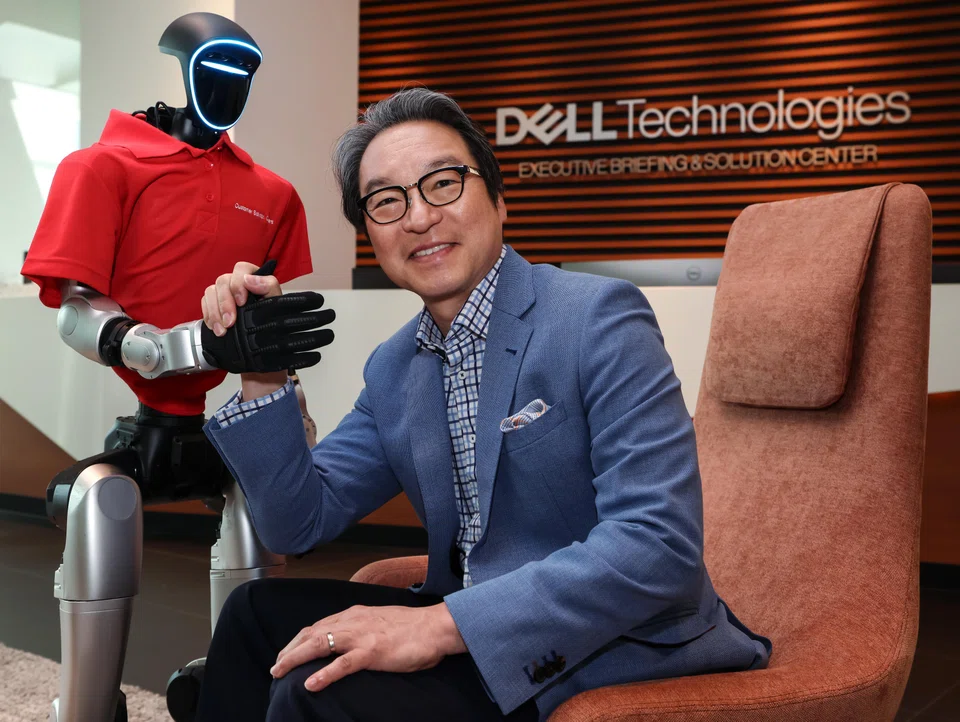
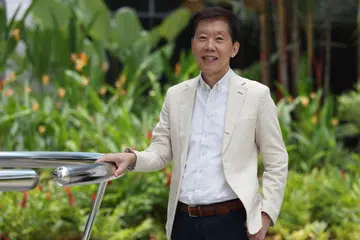
When visitors walk through the executive briefing centre at Dell’s Changi office, they are often surprised by the variety of solutions the IT company offers, said Andy Sim, vice-president and managing director of Dell Technologies Singapore.
“It’s certainly more than just hardware; it’s (also) consulting, the services and the collaboration.”
Finding success in a crowded market
Dell – previously known as PC’s Limited – was founded by current CEO Michael Dell in 1984 in his dorm at the University of Texas. What set the company apart from its competitors was its focus on selling custom-built computers directly to consumers.
The company – having its roots in hardware – is an end-to end provider for customers, serving up software solutions with the hardware to run them.
Singapore is home to Dell’s Global Innovation Hub, which was established in 2019, the first such facility outside of the US. This was followed by the Asia-Pacific and Japan AI Innovation Hub in August 2025.
The Global Innovation Hub was launched to enhance areas of augmented and mixed reality, data analytics, cloud-native technology, as well as cybersecurity and edge computing.
SEE ALSO


The AI Innovation Hub is where Dell prototypes, tests and refines artificial intelligence solutions for the region.
Since 2024, the AI Innovation Hub has done more than 100 proof-of-concepts, workshops and demonstrations in AI.
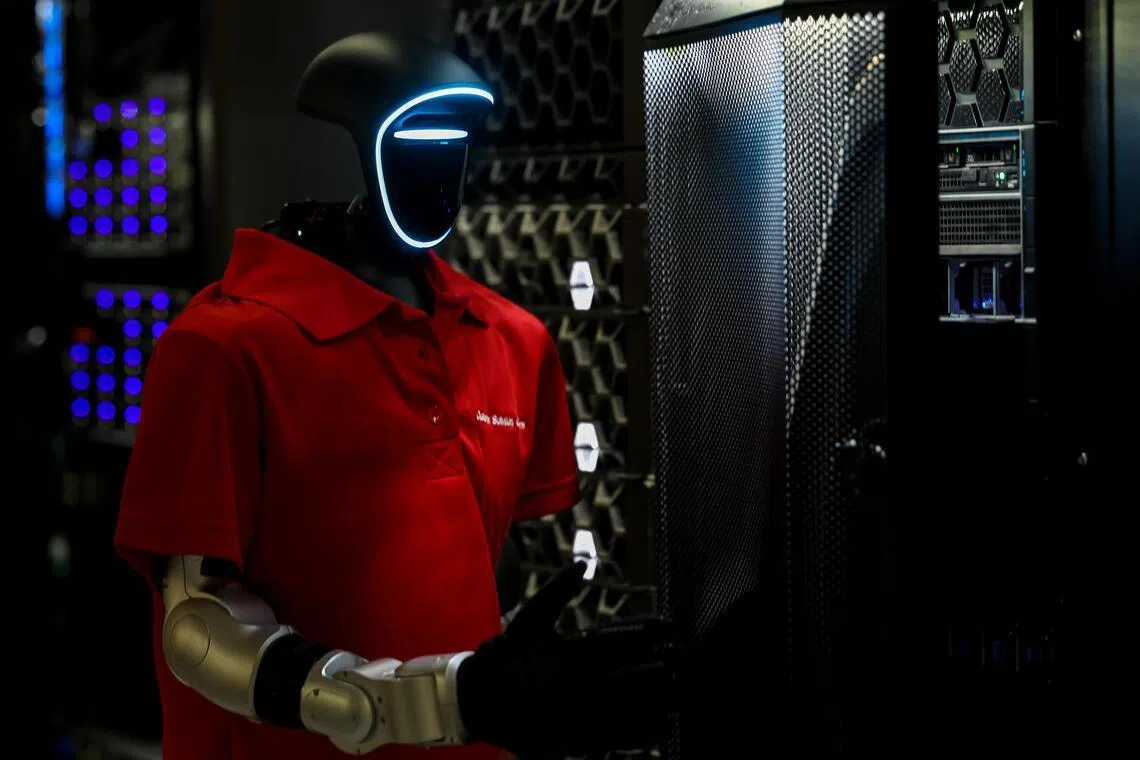
The hub has also developed over 50 AI engineering prototypes and data science models for enterprise deployment. Such projects include smart city operations and industrial AI work where robotics and infrastructure meet in real-world automation on the factory floor.
Sim noted that the whole premise is to help customers to standardise, to simplify, and then to automate their operations.
The Republic also does not just serve as a regional sales node. The company’s Jurong office, located at the International Business Park, houses the Dell Singapore Design Centre.
“Essentially all the display business, the peripherals like the mouse, bags and keyboards, are all designed and managed out of Singapore,” he added.
Pre-empting obsolescence
Sim recalled an internal leadership exercise that the tech giant’s CEO conducted some four years ago.
Senior executives were tasked with an uncomfortable mandate – brainstorm what future technologies could disrupt Dell and render the company irrelevant.
Rather than treating the exercise as a hypothetical threat, the leadership team used it to form the blueprint for the strategic action taken to transform Dell and ensure the company can thrive amid the disruption caused by AI.
This includes working with Nvidia and becoming one of the largest original equipment manufacturers of servers for its chips.
By leveraging its heritage in hardware, Dell is wrapping software solutions around physical products to offer enterprise clients relevant solutions.
Sim said that almost 90 per cent of customers believe in AI, but only about 20 per cent have implemented it. Now customers are looking for a way around to really run AI in their business.
“We want to partake in that because we believe that we’ve got the technology to help the customers to transform, and this is a really very exciting time for us,” he said.
The other aspect of making AI practical involves changing where data is actually processed. In a hyper-fast economy, latency is a liability.
Like other companies, Dell is aggressively pushing its edge computing technology.
“You really want AI to be at the point of collection (of data)... We want to bring the computation as close as possible to the point of collection,” noted Sim.
With that, the lag time between sending the data to the data centre for the AI models to analyse and flag for a decision to be made can be cut down.
Sim is acutely aware that scaling cutting-edge technology is impossible without simultaneously scaling human capital.
Dell is also helping to upskill and train some 11,000 working adults and students in how to use AI, he said.
Three questions with Andy Sim, vice-president and managing director, Singapore, Dell Technologies
Q: Was there a pivotal moment in your career or personal life that changed your approach to leadership?
There is always self-doubt, but for me it was a clear ambition to be a country manager of Dell, and that didn’t change. There were multiple opportunities that passed by, but the lesson I’ve learnt is be very clear about your north star, what you want to be. Don’t change that, but you change your approach and you learn and adapt yourself. With self-doubt, you learn and get better and you go for the next opportunity.
Q: What is one piece of “unconventional wisdom” you swear by that most business schools would tell you is wrong?
When you work with people who have differing opinions, don’t discount them. Ask yourself why they are different. I’ve learnt that and that allows me to be collaborative. I met the author of What Got You Here Won’t Get You There, who told me that there are many generals who make a mistake after becoming a general; so what got you here will not get you there. So constantly stay curious and be collaborative, we will thrive as a group.
When you feel burnout creeping in, what’s your non-business-related routine that helps you reset?
To avoid burnout, we must have a strong social support system; it could be your friends, colleagues or spouse. For me, I’m very fortunate to have a very supportive wife who helps me out. I also get into an exercise routine; I do gym work on a Wednesday, Saturday I do yoga, and on Sunday I do cardio. Getting into a routine lets you look forward to something. The other thing I do is to try to relax by listening to music, by reading. Recently, I’ve told myself not to work on Sundays, so I totally don’t touch the computer and rejuvenate.
Decoding Asia newsletter: your guide to navigating Asia in a new global order. Sign up here to get Decoding Asia newsletter. Delivered to your inbox. Free.
Copyright SPH Media. All rights reserved.
TRENDING NOW

Once staunchly pro-China, Malaysian Chinese businesses are now distancing themselves from Beijing

Britain’s mansion tax shows the difficulty of targeting wealth
Three hats, one goal: How Ng Kian Swan runs sustainability at NUHS

COE review: The gap between luxury and mass-market cars isn’t the only one worth bridging

